.png)
Guided Tours Are Safer Than Rented Pontoons for Families

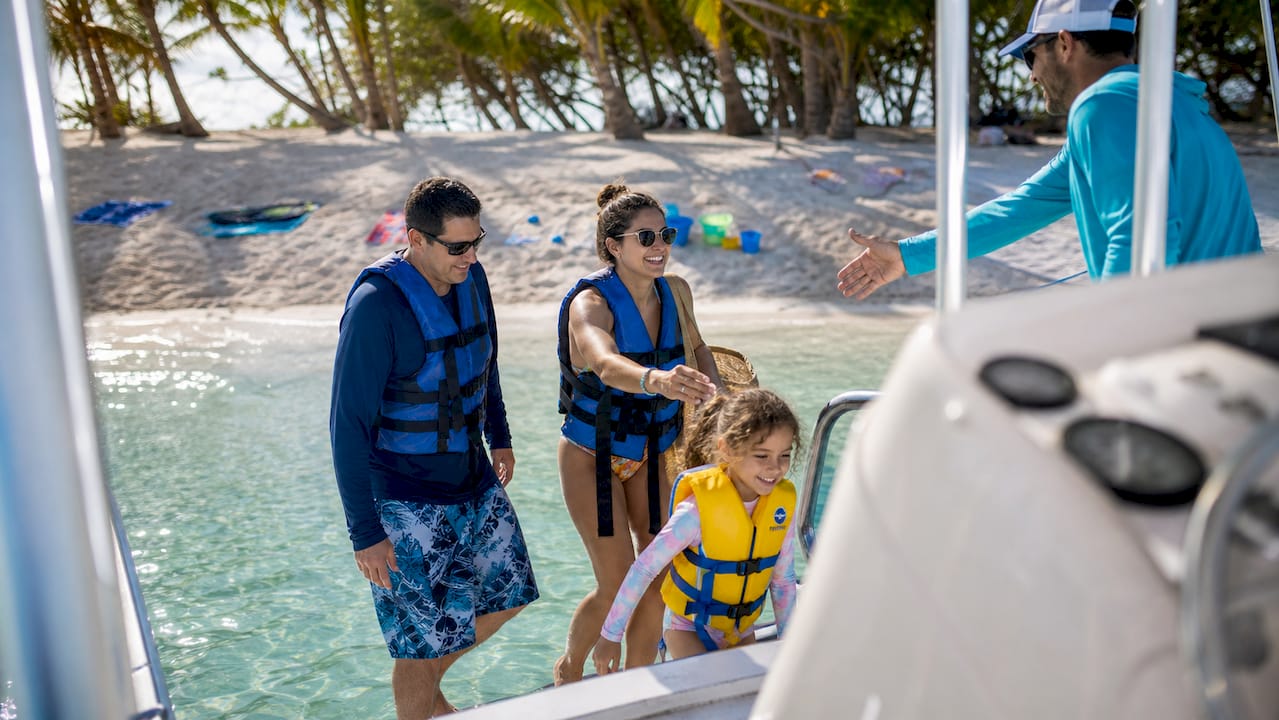
Guided boat tours are generally safer than self-driven rented pontoons for most casual boaters, first-timers, and families. The core reasons come down to three things: a trained, licensed captain handles all navigation and anchoring, local knowledge keeps the boat away from hazards specific to waters like Destin’s East Pass, and a professional crew is prepared to respond if something goes wrong. Affordable Crab Island Tours is one example of a captained option that removes every operational burden from guests entirely.
Here is what that safety gap looks like in practice:
A licensed captain meets U.S. Coast Guard (USCG) standards and state boater education requirements; a renter typically does not.
Captained tours carry documented maintenance records, onboard safety equipment, and liability insurance.
Emergency response on a guided tour is handled by trained crew; on a rental, it falls to whoever is driving.
Florida’s online boater education can be completed quickly with limited practical verification, meaning a renter’s certificate does not guarantee real-world competence.
Key Takeaways
Guided tours are safer than self-driven rentals for most families and first-timers because a licensed captain eliminates the leading causes of recreational boating accidents.
Point | Details |
Licensed captain is the core safety factor | A professional operator removes operator error, impairment risk, and navigation mistakes from the equation. |
Pontoons have real weather limits | Rough chop and open-bay conditions can swamp or destabilize a pontoon; a captain reads conditions and adjusts. |
Rentals shift full responsibility to you | Navigation, anchoring, sobriety, weather monitoring, and emergency response all fall on the renter. |
Cost gap is smaller than it looks | Captained tours running $300–$800 per outing often cost less per person than a rental once fuel, deposit, and gear are included. |
Crab-island-tours handles everything | Licensed captains, safety briefings, lifejackets, floats, and an onboard restroom included on every 4-hour Crab Island tour. |
Table of Contents
How do guided tours compare to rented pontoons on safety?
The table below covers the dimensions that matter most when you are deciding between a captained charter and a self-drive rental.
Dimension | Captained guided tour | Self-drive pontoon rental |
Operator training and certification | Licensed captain; USCG and state boater education standards | Renter may hold only a basic online certificate |
Emergency response and equipment | Trained crew; onboard first-aid/CPR; documented safety briefings | Renter responsible; equipment quality varies by operator |
Local/navigation knowledge | Captain knows local hazards, sandbars, and channels | Renter navigates unfamiliar waters with a brief orientation |
Risk of operator impairment | Captain stays sober; guests may drink legally onboard | Renter must remain sober; enforcement relies on self-policing |
Maintenance and safety checks | Regular maintenance logs; professional operator accountability | Varies widely; peer-to-peer and low-tier rentals often inconsistent |
Cost per group | Lower upfront per-boat cost; hidden costs in deposits and fuel | |
Flexibility and control | Fixed itinerary; captain decides routing | Renter chooses route and timing |
A few practical points for families and first-timers:
The cost difference shrinks fast when you split a captained tour across a group of six or more.
A rental’s flexibility only matters if the renter actually knows where to go and what to avoid.
For groups planning to drink, a captained tour is the only option where that is both legal and safe.
Captained charters lower stress and supply local knowledge in ways a short orientation briefing simply cannot replicate.
Children and non-swimmers are meaningfully safer when a professional crew is watching the water.
Why captained tours reduce risk on the water
Operator training and credentials are the biggest single factor. A licensed captain has completed formal boater education, holds state and USCG-recognized credentials, and typically carries first-aid and CPR certification. That is a very different baseline from someone who passed a 30-minute online quiz the week before vacation.
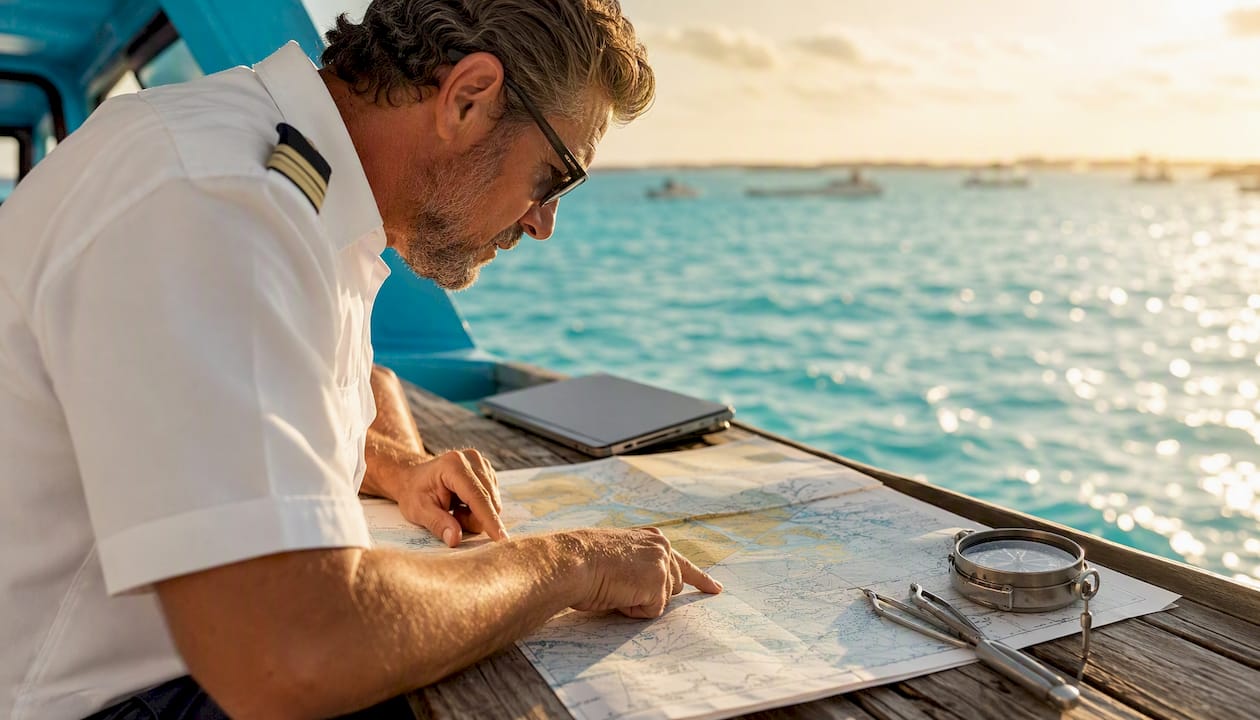
Local navigation knowledge is the second layer. Around Destin and Crab Island, that means knowing where the sandbars shift seasonally, which channels get congested on weekends, and how the East Pass current behaves when the tide turns. A captain who runs these waters daily has pattern recognition that no map or app can hand a first-timer.
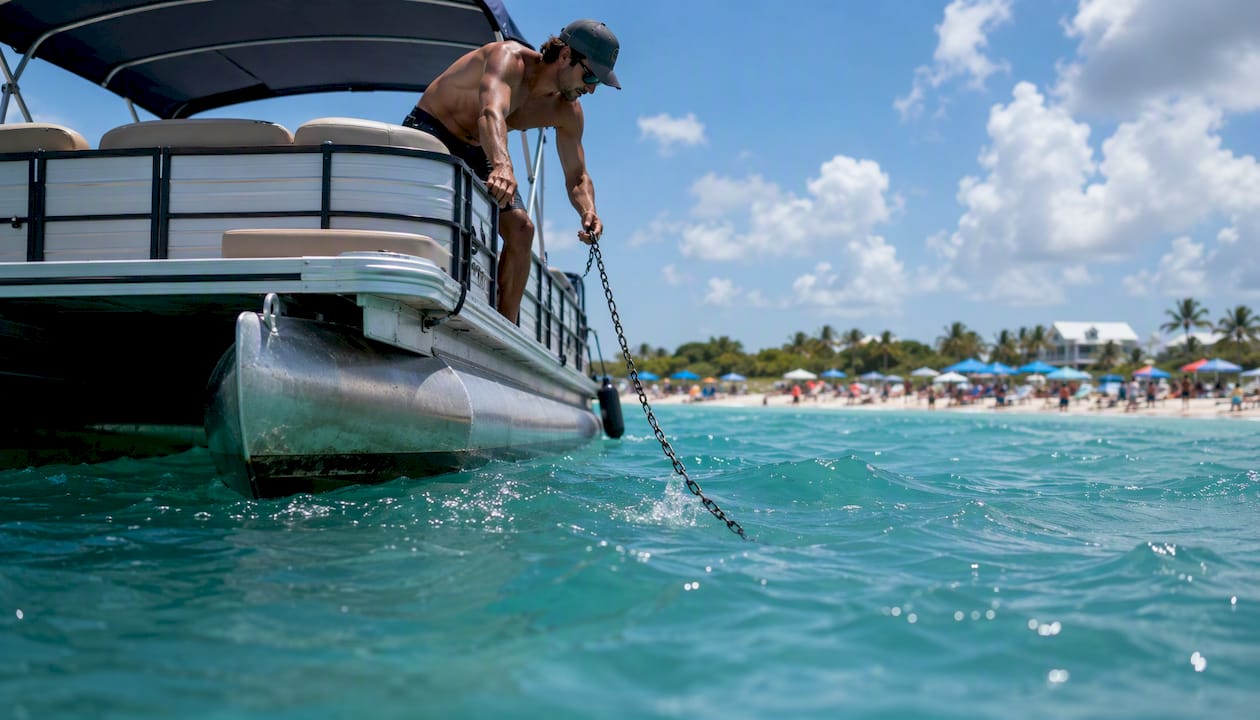
Operational safety covers the details most renters underestimate: proper anchoring so the boat does not drift into traffic, correct weight distribution across the deck, and managing passenger movement while underway. Captained charters handle anchoring, positioning, and all navigation tasks so guests never have to think about any of it.
Emergency readiness is where the gap becomes most serious. Guided-tour operators train crew in first aid, weather judgment, and evacuation procedures. If a passenger gets hurt or weather turns fast, the crew acts. On a rental, the group improvises.
Guides are typically trained in first aid and local hazards and bundle logistics that reduce the cognitive load and risk for guests — meaning the safety benefit is structural, not just a matter of the captain being more careful than the average renter.
Liability and maintenance follow the same logic. Professional operators keep maintenance logs, carry commercial insurance, and conduct documented safety briefings before every departure. That accountability chain does not exist on most rentals.
Pro Tip: When vetting any captained tour operator, ask specifically for the captain’s state boating license number and proof of commercial liability insurance. A legitimate operator will provide both without hesitation.
How rented pontoons can become unsafe
Operator inexperience is the most common failure mode. Poor situational awareness, misjudging distance when docking, and improper anchoring in a current are all mistakes that experienced captains avoid automatically. For a first-timer, they are easy traps.
Weather and water conditions catch renters off guard more than almost anything else. Pontoon boats are stable in calm, protected waters but are not designed for rough seas; exposure to large waves or heavy chop raises the risk of swamping or capsize. The Gulf around Destin can shift from flat to choppy in under an hour, and a renter watching the weather app from the dock is not the same as a captain who has read those skies a thousand times. Wind and wave action can swamp or destabilize pontoons that are perfectly fine in calm inland water.
Overloading is a quieter risk. Pontoons have a rated capacity, and party groups routinely push it. Extra weight raises the deck closer to the waterline, reduces freeboard, and makes the boat far more vulnerable to any wave action.
Alcohol impairment is both a legal and a safety issue. Boating under the influence (BUI) carries the same legal penalties as driving under the influence in Florida, and the renter operating the boat must stay sober. In practice, that boundary gets blurry on a party rental.
Common causes of pontoon accidents include operator inattention, overloading, alcohol impairment, and poor weather judgment — factors that show up repeatedly in rented-pontoon incidents specifically because the person at the wheel is not a professional.
Maintenance and equipment gaps round out the picture. Peer-to-peer and lower-tier rental models often miss routine maintenance checks, carry inconsistent safety inventories, and may lack adequate insurance. Those are exposures most renters never think to verify at pickup.
What rental companies usually provide and what renters are responsible for
Most reputable rental companies include a basic orientation, U.S. Coast Guard-required lifejackets, a standard safety kit (flares, fire extinguisher, throwable device), a fuel policy, and a security deposit. Some carry basic liability coverage; many do not cover the renter’s personal liability if they cause an accident.
What the renter owns entirely: navigation from departure to return, anchoring safely without damaging the bottom or drifting into traffic, keeping a sober operator behind the wheel at all times, monitoring weather and turning back when conditions change, and returning the boat on time with adequate fuel.
Documentation worth asking for before you sign anything:
Maintenance records for the specific vessel
Proof of the rental company’s insurance and what it actually covers
Written confirmation of the safety briefing topics
Verification of any state licensing requirement for the renter
Red flags at pickup: missing or expired lifejackets, no safety briefing at all, staff who cannot answer basic questions about the boat’s capacity or fuel range, and vague or verbal-only insurance explanations. Walk away from any of those.
When should you choose a guided tour vs. a rented pontoon?
Work through this checklist before you book:
Group experience: Has anyone in the group operated a powerboat recently, in similar water conditions? If the honest answer is no, a captained tour removes the risk entirely.
Water type: Calm, sheltered lake versus open bay or tidal channel? Destin’s waters include both, and the difference matters.
Weather forecast: Wind above 15 mph or afternoon thunderstorm potential? A captain reads that and adjusts; a renter usually does not.
Children or non-swimmers: Their safety depends entirely on adult supervision. A captain and crew provide a second set of eyes that a renter cannot.
Alcohol plans: If the group intends to drink, a captained tour is the only responsible choice.
Budget per person: Run the math on the full rental cost (boat, fuel, deposit, gear) divided by your group size before assuming a rental is cheaper.
Questions to ask any provider before booking:
What are the captain’s credentials and license number?
What is the emergency procedure if someone is injured?
How often is this vessel inspected and maintained?
What happens if weather makes the trip unsafe?
Choose a guided tour when your group includes first-time boaters, families with young children, anyone planning to drink, or when you are heading into unfamiliar or busy waters like Destin Harbor or the East Pass.
A rental can be reasonable when at least one person in the group holds a current boating license, has recent hands-on experience in similar conditions, and the rental company provides a thorough orientation and clean, fully equipped vessel.
Pro Tip: Splitting the cost of a captained tour across a group of eight to ten people often brings the per-person price below what a rental costs once you add fuel, deposit, and gear rental. Run the full math before deciding.
How Affordable Crab Island Tours reduces the risks
Crab-island-tours addresses the specific failure modes described above by design. Every outing runs with an experienced, licensed captain who handles all navigation, anchoring, and positioning. Guests show up and enjoy the trip; nothing else is required of them.
The safety package built into every tour includes onboard lifejackets, documented safety briefings before departure, regular vessel maintenance, and commercial liability insurance. The crew is trained in first aid and emergency procedures. For families with young children, that crew presence is a meaningful layer of protection that no rental orientation can replicate.
Crab-island-tours guests consistently highlight the attentive crew and the fact that they never had to think about the boat once they stepped aboard — which is exactly the point.
The practical guest experience: floats and snorkel gear are included, there is an onboard restroom, BYOB is welcome because the captain stays sober, and the boat comfortably seats up to 31 passengers. No navigation stress, no anchoring guesswork, no fuel math.
Trust signals at a glance:
Licensed, experienced captains on every departure
Onboard safety briefings and lifejackets for all passengers
Regular maintenance schedule and commercial insurance
Kid-friendly policies and onboard restroom
Floats and snorkel gear included; no extra gear rental needed
4-hour tours at a fixed, per-person price
What the accident data says about guided tours versus rentals
The U.S. Coast Guard’s annual recreational boating statistics consistently show that operator inexperience and inattention are the leading contributing factors in reported boating accidents nationwide. Alcohol use ranks among the top causes of fatal boating incidents year after year. These are precisely the risk factors that a captained tour eliminates by putting a professional at the helm.
Rental-specific data is harder to isolate because accident reports categorize vessels by type rather than rental status. What the data does show clearly is that the accident profile for pontoon incidents maps almost exactly onto the failure modes of self-drive rentals: operator error, overloading, and impairment. Florida’s relatively easy online boating education has increased rental popularity while raising safety concerns among local experts, who note that a completed online course does not equal real-world competence in tidal or high-traffic waters.
Guided-tour operators, by contrast, face commercial licensing requirements, mandatory safety equipment standards, and insurance obligations that create a documented accountability structure. Guided tours provide measurable safety benefits because guides are trained in first aid, navigation, weather judgment, and emergency procedures — a baseline that self-drive rental customers are not required to meet.
The case for captained tours, plainly stated
The safety math is not complicated. Every major category of recreational boating accident, from operator error to impairment to weather misjudgment, is either eliminated or significantly reduced when a licensed professional is running the boat. For families visiting Destin for a few days, the question is not whether they could handle a rental. It is whether the risk is worth it when a captained option exists at a comparable per-person cost.
Budget concerns are real, and they deserve a straight answer: a 4-hour captained tour for a group of eight often costs less per person than a half-day rental once fuel, deposit, and gear are added up. The safety benefit is free on top of that.
Book a captained Crab Island tour for your group
For families and first-timers, a captained tour is the straightforward choice: no navigation stress, no anchoring guesswork, and a licensed professional watching the water the entire time.
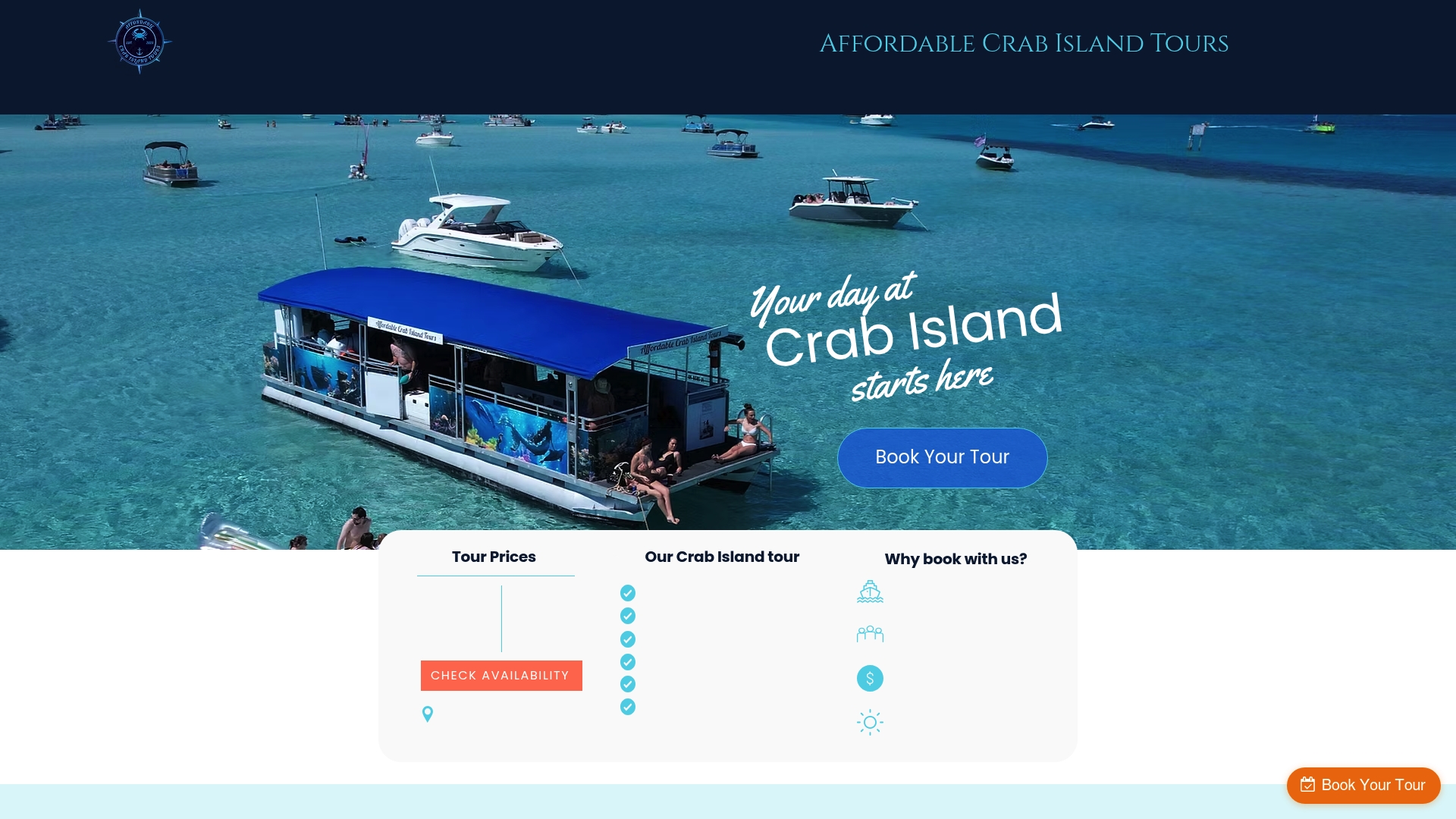
Crab-island-tours runs 4-hour guided tours to Crab Island with experienced captains, floats, snorkel gear, and an onboard restroom included. Groups of up to 31 can split the per-person cost and come away with a safer, more relaxed trip than any self-drive rental offers. Book your captained Crab Island tour and show up ready to enjoy the water.
Sources
The sources below come from the U.S. Coast Guard, state boating safety authorities, marine education organizations, and independent tour operators. They are worth reading directly if you want to go deeper on licensing requirements, pontoon handling limits, or the specific safety standards that captained operators must meet. Check your state’s boating authority for current licensing rules before booking any rental.
Crab Island Pontoon Rentals vs. Private Captained Charters: What Should You Actually Book?
Captained vs. Self-Drive Boat Rentals: Which Is Right for You?
Rental boats rise in popularity; some worry about safety concerns
What Is a Pontoon Boat (and Is It Safe to Use in the Ocean)?
Are Guided Tours Worth It? The Honest Truth | GuideR Adventure
Recommended
Comments