.png)
Boat Tour Outfits: 5 Copyable Activity Formulas

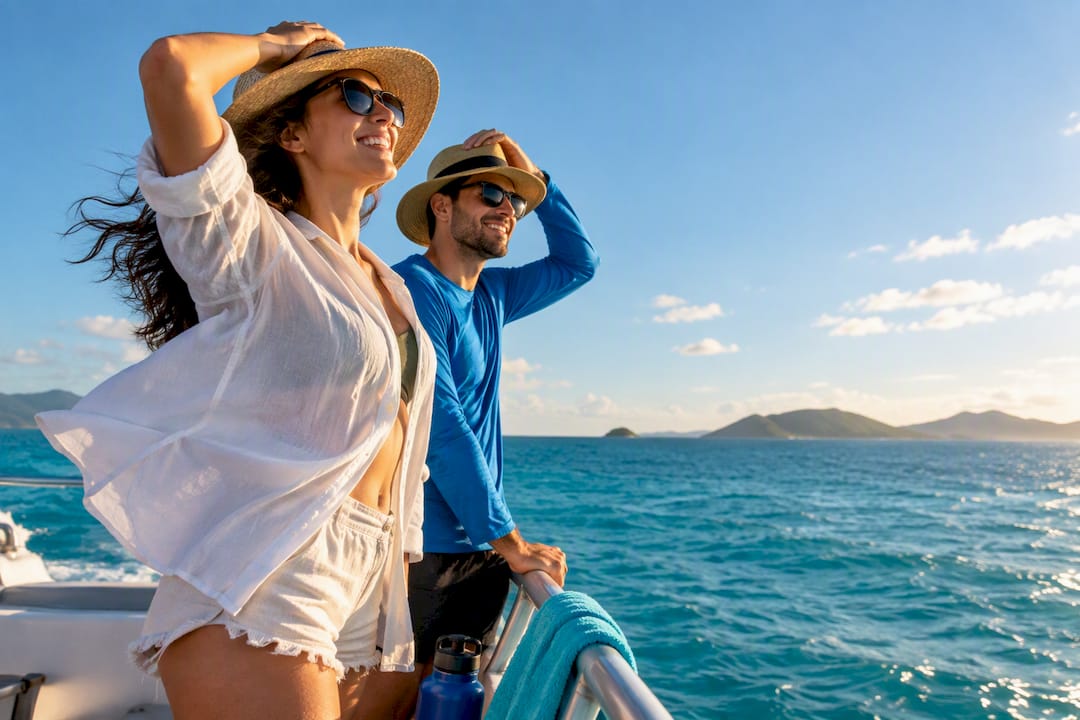
The right boat tour outfit comes down to four things: a breathable, quick-dry base like a swimsuit or wicking top, shoes with non-slip soles that strap on, a light windproof layer, and real sun protection. What you layer on top depends on the trip. Sightseeing, snorkeling, and a sunset cruise each call for a different combination, so treat this as your starting formula and adjust from there.
TL;DR:
Non-slip, strap shoes are essential for safety on wet, slippery decks, while loose, flowing clothing increases the risk of snagging or falling.
Swimsuits with rash guards and quick-dry layers are optimal for water activities, but cotton fabrics should be avoided as they soak up water and stay heavy.
A packable windbreaker and layers that can be added or removed help manage rapid weather changes and wind chill effects.
Sun protection requires a hat with chin straps, polarized sunglasses, and reef-safe sunscreen to guard against strong reflection and wind-blown spray.
Keeping valuables safe involves using waterproof pouches, preventing the loss of electronics, and avoiding unnecessary expensive items on the boat.
Table of Contents
Universal Rules Every Boat Tour Outfit Should Follow
Before you get into specific outfits, a few rules apply no matter what boat you’re on or where it’s headed.
Footwear comes first. Wet fiberglass and teak decks get slick fast, and smooth-soled shoes turn a simple walk to the bow into a fall risk. Loose, flowing garments are the second problem: a long maxi dress or wide palazzo pants can catch wind, snag on cleats, or drag through wet deck puddles. Sun exposure on open water is stronger than most people expect, since it hits you from above and bounces off the water below.
Choose shoes with rubber or non-slip soles and a strap or snug fit.
Skip anything with a hem that flaps below the knee in wind.
Wear sunscreen, a hat, and polarized sunglasses even on cloudy days.
Carry a small bag you can seal or that has a water-resistant zip pocket for your phone and wallet.
Pro Tip: Pack your sunscreen in a resealable bag inside your tote. One tipped-over bottle can ruin everything else you packed for the day.
Activity-By-Activity Outfit Formulas You Can Copy
Different boat activities need different clothing math. Here’s what to build around for five common trip types.
Day sightseeing or island-hopping. Start with a swimsuit as your base layer, add a short linen cover-up or button shirt, then tailored shorts or a breezy midi dress on top. Strap sandals or lightweight sneakers handle both the boat deck and any beach stops.
Snorkeling or swim stops. Wear your swimsuit under a rash guard for sun coverage in the water, pair with water shoes for rocky entry points, and keep jewelry to a minimum since rings and necklaces tend to disappear in the surf. Reef-safe sunscreen matters here more than anywhere else on this list.
Sunset or dinner cruise. This is where you can dress up a bit. A linen dress or wide-leg pants with a fitted top look sharp without restricting movement, and a lightweight wrap or blazer covers you once the temperature drops. Clean rubber-soled sandals or loafers keep the polished look without risking the deck.
Active sailing or fishing. Quick-dry pants or shorts and a UV-rated long-sleeve shirt protect you through hours of sun exposure, and a packable windbreaker handles spray and gusts. Closed-toe water shoes give you grip when you’re moving around the boat, not just standing still. Anyone heading out for a longer day on the water benefits from a dedicated packing guide built for fishing trips, since gear needs shift once fishing rods and tackle enter the picture.
Family-friendly adaptations. Kids go through clothes fast on a boat, so pack a spare top for every child under ten. Hats with chin straps stay on in wind, and shoes that slip on and off easily save you time getting little ones in and out of the water.
For a group outing built around beach time and water activities, the same layering and sun-protection logic used for organizing a beach day with friends applies almost directly to a boat trip.
What Shoes, Hats, Sunglasses, and Bags to Choose
Footwear and accessories make or break a boat tour outfit faster than clothing choices do.
Rubber-soled sandals, boat shoes, or water shoes grip wet surfaces and drain quickly if they get splashed.
Skip heels, wedges, and smooth-bottomed fashion sneakers. They’re unstable on a moving deck and often ruin easily in salt water.
A bucket hat or fitted cap with a chin cord stays on in wind, which matters more than style once you’re moving at speed.
Polarized sunglasses cut glare off the water, reducing eye strain during long stretches outdoors, and many guides recommend pairing them with a hat that has a retention cord to keep gear from blowing overboard.
A small dry pouch or dry bag inside your main tote protects your phone, wallet, and keys from spray.
Pro Tip: If your hat doesn’t have a strap, thread a piece of cord through the brim before you leave home. Losing a favorite hat to the wake is one of the most common regrets on boat tours.
Which Fabrics to Pick and Which to Avoid
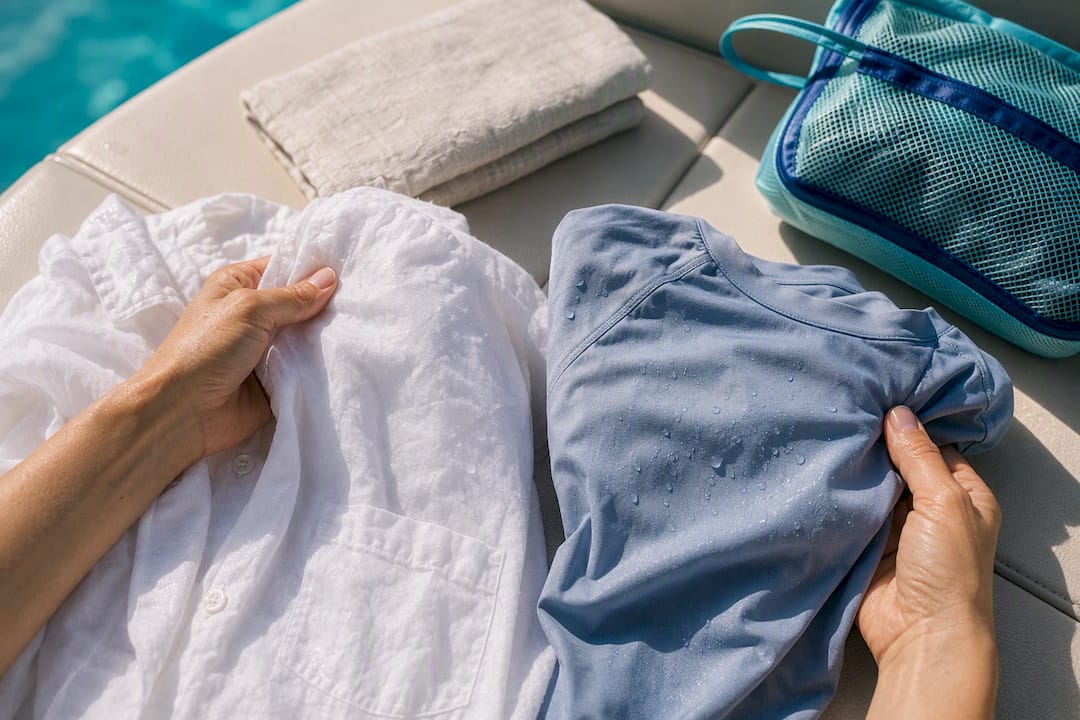
Cotton is the fabric to leave at home. It absorbs water and gets heavy fast, which means a splash turns your shirt into dead weight that takes hours to dry. Wet cotton also pulls heat away from your skin faster than synthetic fabric, so on cooler or windy days it makes you feel colder than the actual temperature suggests.
Quick-dry synthetic blends handle water and wind far better, and linen is the better pick for anything meant to look nice, since it dries reasonably fast when just damp rather than soaked. Look for UPF-rated fabric on anything you’ll wear for hours in direct sun. If you’re bringing anything delicate, a light waterproof spray beforehand and a separate bag for wet items once you’re back on land will save you from mildew later.
A Simple Layering System for Changing Conditions
Boat conditions shift fast, and layering is the most reliable way to stay comfortable once you’re actually moving. Build it in three parts: a swim or wicking base layer, a light long-sleeve or thin fleece as your mid layer, and a packable windbreaker as your outer shell.
Water and wind routinely make conditions 5 to 10 degrees Fahrenheit cooler than what you felt on land, and boat speed adds a wind chill effect most people underestimate until they’re already shivering. Pack at least one small outer layer even if the forecast calls for full sun.
Choose a windbreaker that folds down to fit in a small bag.
Store layers in a dry pouch so they stay wearable if the deck gets splashy.
Pro Tip: A cheap packable windbreaker is one of the best dollar-for-dollar purchases you can make for a boat trip. It weighs almost nothing but solves the one problem nearly every underdressed guest complains about afterward.
Copyable Packing Checklist for Any Boat Tour
Screenshot this list or copy it into your notes app before your next trip.
Hat with a secure strap
Sunscreen, reef-safe if you’re getting in the water
Polarized sunglasses
Refillable water bottle
Small dry pouch or dry bag
Swimsuit
Quick-dry top
Spare top (especially with kids)
Light packable layer
Secure, non-slip shoes
Towel plus a small separate bag for wet items
Motion-sickness remedy if you’re prone to it
Minimal first-aid basics (bandages, antihistamine)
Protecting Your Electronics and Valuables From Water Exposure
Phones, cameras, and wallets take the most abuse on any boat trip, and spray doesn’t wait for a dramatic wave to soak your bag.
Start with a dedicated dry pouch rather than trusting a regular bag pocket. A small waterproof pouch stowed inside your main tote keeps your phone and wallet dry even if the outer bag gets splashed or set down in a wet spot. If you’re planning to take photos on the water, a floating phone case or lanyard prevents the worst outcome: dropping your phone straight into the water where it’s gone for good.
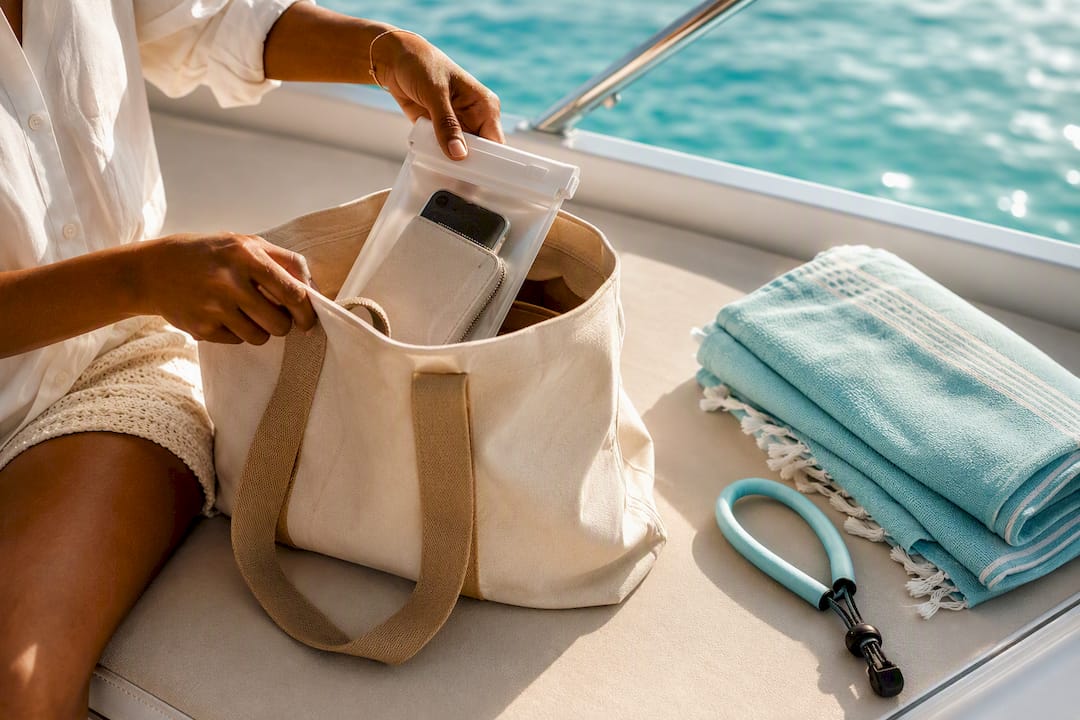
Leave anything you can’t afford to lose at home or locked in the car. Passports, expensive jewelry, and electronics you don’t need for the day don’t belong on a boat, no matter how careful you plan to be. For cash and cards, a slim waterproof wallet clipped inside your bag beats loose bills in a pocket, especially once you’re moving between seats or standing near the rail.
If you do bring a proper camera, a simple dry bag rated for submersion is worth the extra ten dollars over a basic zip pouch. Wind-driven spray on an open boat behaves differently than a light rain shower, hitting sideways and finding gaps that a regular bag won’t seal against.
What Our Crew Notices About What Guests Actually Wear
Running Crab Island tours for years of Destin trips teaches you something about outfits: guests overpack when they don’t have to. Our tours include floats, an onboard restroom, and experienced captains, so guests don’t need to haul dry bags full of gear or worry about logistics before they even leave the dock.
Most guests who show up in a simple swimsuit, cover-up, and non-slip sandals have exactly the right idea. The 4-hour Crab Island outing is built for that kind of easy, low-gear day on the water, with a reasonable per-person price and everything handled so you can focus on getting the outfit right, not the equipment.
— Troy
Sources
FAQ
What should I wear on a boat tour?
Wear a quick-dry or swimsuit base layer, non-slip shoes with a strap, a light windproof layer, and strong sun protection like a hat and polarized sunglasses. Adjust the specifics based on your activity, since a snorkeling stop and a sunset cruise call for different combinations.
What is the 3-3-3 rule for outfits?
The 3-3-3 rule is a packing method some travelers use to limit themselves to three tops, three bottoms, and three pairs of shoes for a trip, mixing and matching to cut down on luggage. For a single boat tour rather than a full vacation, the same logic applies on a smaller scale: pick versatile, quick-dry pieces that work across more than one activity.
What should a woman wear on a boat cruise?
A swimsuit under a linen cover-up or dress works well for daytime cruises, while a linen set or wide-leg pants with a fitted top suits an evening or dinner cruise. Nonslip sandals, a hat with a secure strap, and a light sweater or wrap for temperature drops round out a practical and photo-ready look.
What should a woman over 50 wear on a cruise?
The same principles apply regardless of age: comfortable, quick-dry fabric, secure non-slip shoes, and a light layer for wind and evening temperature drops. Many women in this group favor a relaxed linen dress or tailored separates over swimwear-only looks, paired with supportive sandals rather than flat, unsupported footwear for stability on the deck.
What fabric should I avoid on a boat tour?
Avoid cotton, since it absorbs water and stays wet, making you both uncomfortable and colder if the wind picks up. Quick-dry synthetics and linen are far better choices for both comfort and how fast they recover if they get splashed.
Recommended
Comments