.png)
Prevent Sunburn in 20 Minutes: Boat Day Sun Protection for Families

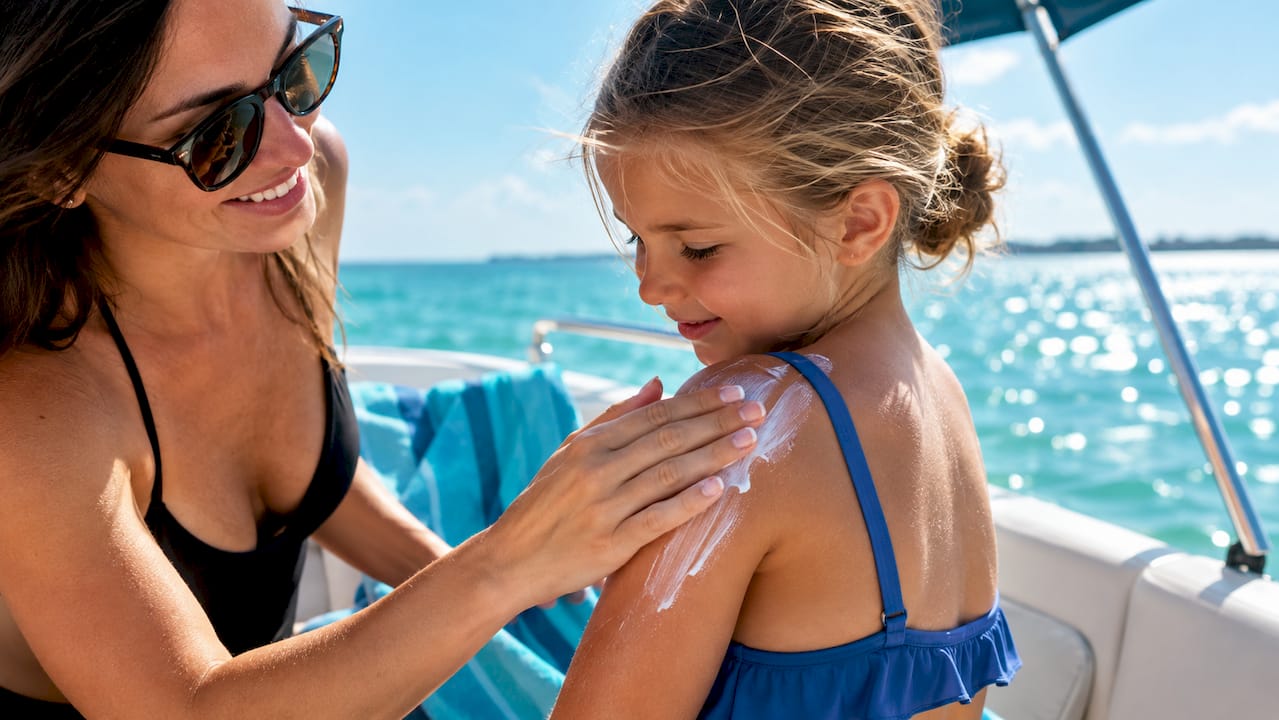
The fastest way to avoid sunburn on a boat day is to combine UPF clothing and reliable sunscreen, plus deliberate shade and a compact sun kit you can reach in seconds. Cover exposed skin with a wide-brim hat and UPF fabric first, since fabric never wears off. Apply broad-spectrum, water-resistant sunscreen 20 minutes before you leave the dock and reapply every two hours. Set up shade wherever the boat allows it and keep everyone drinking water, because heat and dehydration make sunburn worse.
TL;DR:
Wearing UPF clothing and wide-brim hats with chin straps offers reliable protection that does not degrade over a four-hour trip, reducing the need for frequent reapplication.
Reapply broad-spectrum, water-resistant sunscreen of SPF 40 or higher every two hours, especially after swimming or sweating heavily, to maintain full UV protection.
Shade structures like bimini tops or hard tops significantly lower the risk of sunburn and heat exhaustion, but reflective water UV adds exposure even in full shade.
Lotion or stick sunscreens are preferred over sprays for better coverage and to avoid damage to boat fabrics, with mineral formulas offering faster wash-off from water contact.
A well-packed sun kit with sunscreen, SPF clothing, shade, and hydration simplifies sun safety, especially on guided tours that manage shade and reapplication schedules.
Table of Contents
Boat Day Sun Protection Checklist: What to Pack First
A good sun kit fits in one dry bag, and packing it the night before beats scrambling at the marina. Every item should have one job: keep skin covered, keep it dry, and make reapplication fast enough that nobody skips it.
Here’s what actually earns a spot in that bag:
Broad-spectrum, water-resistant sunscreen (SPF 30 to 50+), roughly one ounce per adult per application, which is about a full shot glass for the whole body
A dedicated face stick or lip balm with SPF, since faces and lips get missed constantly and reapplied even less
A wide-brim hat with a chin strap for each person, plus a UPF rash guard or shirt
Polarized sunglasses and a small towel for drying hands before reapplying
A refillable water bottle per person, filled before boarding
Apply sunscreen 20 minutes before you leave shore, not after you’re already anchored and the sun’s had a head start. That window lets the product bind to skin instead of sweating off in the first ten minutes on the water. A labeled dry bag with everything in one place also means less digging through coolers when someone starts turning pink.
Sunscreen for a Boat Day: What to Buy and How to Apply It
Skip the debate over brand names and focus on three things: broad-spectrum coverage, a real SPF number, and water resistance. Broad-spectrum means the product blocks both UVA and UVB rays, and without that label on the bottle, you’re only getting partial protection no matter how high the SPF number climbs.
SPF 40 and Reapply Every Two HoursPractical Sailor sets a practical floor of SPF 40 for boaters, with broad-spectrum coverage and reapplication every two hours, or immediately after swimming or towel-drying.
Mineral sunscreens (zinc oxide and titanium dioxide) sit on top of skin and reflect UV rays, while chemical sunscreens absorb into skin and convert UV into heat. Both work when applied correctly, though mineral formulas tend to wash off faster from sweat and friction, which matters if you’re jumping in and out of the water all afternoon. If you’re anchoring near reef systems, look for formulas without oxybenzone or octinoxate, since several destinations restrict those ingredients to protect coral.
Skip the spray bottle. BoatUS recommends lotions and sticks over sprays on boats, since sprays drift in the wind, leave patchy coverage, and can damage vinyl seats and cushions. A cream you rub in by hand covers every inch, and a stick handles the nose, ears, and part line in your hair without the mess.
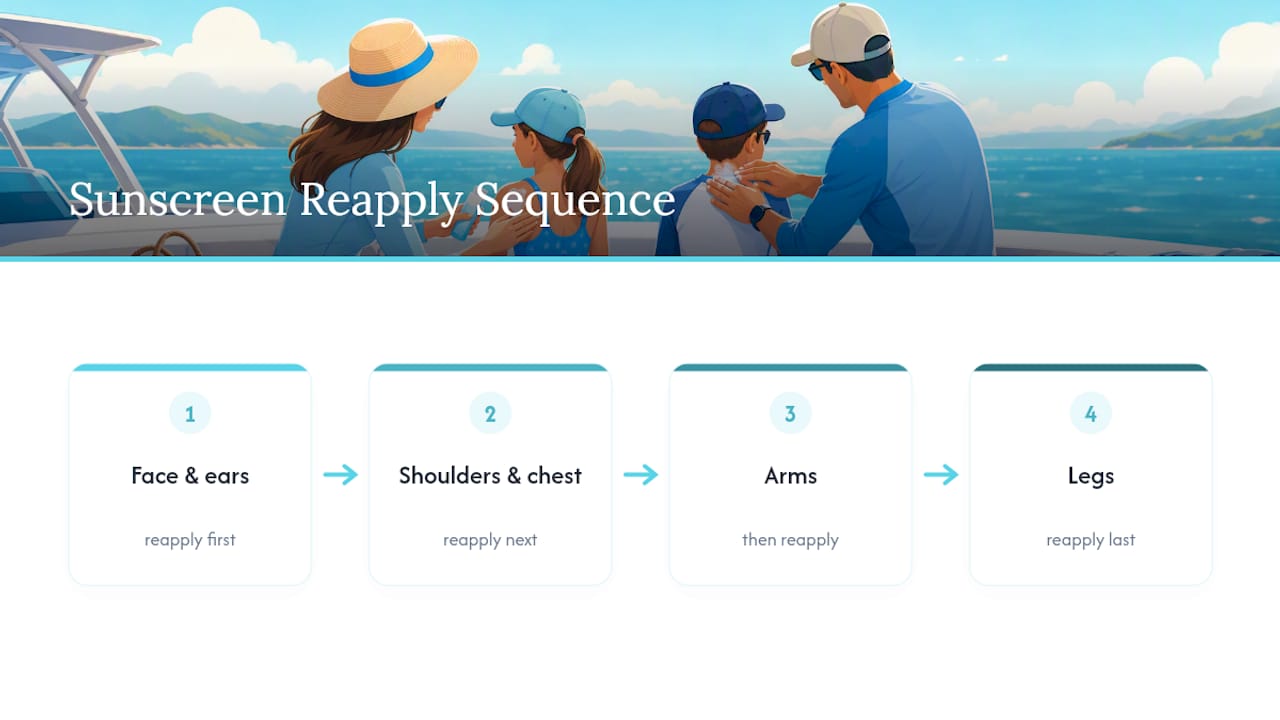
Pro Tip: Reapply in a set sequence: face and ears first, then shoulders and chest, then arms and legs, so you’re not guessing which spots got skipped last time.
Some mineral sunscreens now market improved wet performance, sometimes branded as water boosting or wet activation. Those claims can help, but they don’t cancel the reapplication rule. Treat any wet-performance label as a bonus, not a replacement for the two-hour clock.
Clothing and Hats: UPF, Materials, and Wind-Proof Choices
Fabric protection works even when you forget to reapply, which makes it the most reliable layer on a boat day. Look for a UPF 50+ rating, meaning the fabric blocks about 98% of UV rays, and a tight weave with moisture-wicking material so it stays comfortable when wet.
Rash guards and UPF shirts should be the default for kids and adults spending more than an hour on deck
Rigid, structured brims outperform floppy sun hats in boat wind, since floppy brims flip up and expose the forehead
A chin strap keeps a hat on your head instead of floating away behind the boat
Foam-brim or floating hat designs are worth the extra cost if you’ve ever lost one overboard
Wet UPF fabric still protects, but it clings differently, so size shirts a little looser for movement
Rash guards and UPF clothing offer protection that never wears thin over the course of a four-hour trip, unlike sunscreen, which degrades with sweat and water contact. That’s the real argument for putting clothing first and sunscreen second, rather than the other way around. A UPF shirt on a kid means one less thing to track during a busy afternoon of swimming and tubing.
Shade and Boat Gear: Biminis, Hard Tops, and Where to Sit
Shade does more to prevent heat exhaustion and sunburn than any single product, because it removes direct exposure instead of just slowing its effect. A bimini top gives partial, foldable coverage and works well for smaller boats, while a hard top provides full, fixed shade but adds weight and cost. Portable pop-up shades split the difference, offering flexible coverage you can angle as the sun moves.
Bimini tops cover the helm and rear seating well but leave the bow exposed on most boats
Hard tops block the most UV consistently but limit where you can stand up or move around
Pop-up or clip-on shades work for anchoring at a sandbar, though they need secure mounting in wind
Sitting with your back to the sun, rather than facing it, cuts direct facial exposure during long stretches
Reflected UV off the water’s surface adds real exposure on top of direct sunlight, which is why sitting in full shade still calls for sunscreen on hands, ears, and feet. Store fabric shades dry and out of direct sun when not in use, since UV-rated fabric degrades faster with constant exposure and salt residue. A shade that lasts three seasons instead of one is worth that five minutes of care.
Sun Safety for Kids and Babies on a Boat Day
Babies under six months should stay in shade as the primary defense, since their skin is too sensitive for regular sunscreen use in most cases. For toddlers and older kids, a UPF swim suit or rash guard covering shoulders to knees cuts down how much bare skin needs sunscreen at all.
Choose a stick or lotion formula for kids’ faces, since sprays are harder to control around eyes and mouths
Reapply on kids every two hours minimum, and immediately after any swim, tube ride, or splash fight
Watch for flushed skin, unusual fussiness, or reduced sweating, which can signal early heat stress
Offer water every 20 to 30 minutes, even if a child doesn’t ask for it
Coordinate sunscreen timing with life jacket fitting, applying sunscreen first so straps don’t rub it off immediately
For a squirmy toddler who won’t sit still, try applying sunscreen as a quick game, counting fingers or toes as you go, rather than a slow, careful process they’ll fight through. Ears, the back of the neck, and tops of feet are the spots parents miss most often.
Eye Protection: Polarized Sunglasses and the Right Fit
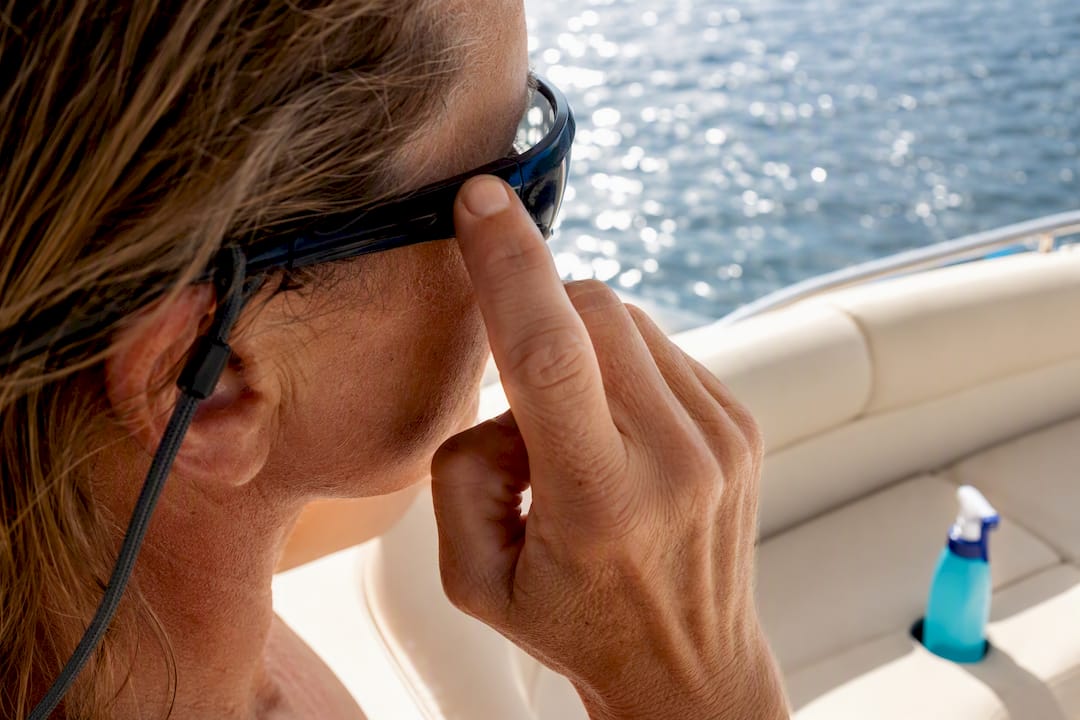
Polarized lenses cut glare off the water’s surface, which matters more on a boat than almost anywhere else, since flat water reflects sunlight straight back into your eyes. Choose sunglasses labeled 100% UV-blocking, not just polarized, since polarization reduces glare but doesn’t guarantee UV protection on its own.
Look for a snug, wraparound fit with rubberized nose pads and temple grips, since standard frames slide right off in boat wind and spray. Floating sunglass straps or foam-float frames are worth the small investment if you’ve ever watched a good pair sink. Rinse lenses with fresh water after every trip to clear salt residue, which otherwise builds up and scratches the coating over time.
Managing Protection During Swimming, Tubing, and Snorkeling
Water activities are where sun protection breaks down fastest, since swimming, toweling off, and tubing all strip sunscreen from skin. A UPF rash guard solves most of this by removing the torso and arms from the reapplication problem entirely, leaving just the face, neck, and legs to manage with sunscreen.
Keep a face stick and lip SPF in a pocket or clipped to a life jacket for instant touch-ups between swims
Reapply immediately after any towable ride, heavy sweating, or extended time in the water, not just at the two-hour mark
Time swims to start right after a fresh sunscreen application when the schedule allows it, so the product has already set into skin
Rinse and dry hands before handling a sunscreen stick again, so you’re not diluting the next layer
Pro Tip: Keep a second, smaller tube of sunscreen in your pocket or a clipped pouch for reapplication, so you’re not digging through the main dry bag every time someone gets out of the water.
Common Sun Protection Myths Boaters Still Believe
The breeze on the water feels cool, which tricks a lot of people into thinking UV exposure is lower out there. It isn’t. Reflected sunlight off the water surface adds to direct exposure, and that cooling wind does nothing to block UV rays, it just masks how much damage is happening.
A higher SPF number helps, but skipping reapplication cancels out most of that benefit anyway. SPF 50 applied once at 9 a.m. protects less by 1 p.m. than SPF 30 reapplied on schedule. Spray sunscreen feels convenient, but it drifts in boat wind, leaves gaps in coverage, and can leave residue on vinyl seating. And shade doesn’t mean skip sunscreen entirely, since exposed hands, ears, and the tops of feet still catch reflected UV even under a bimini.
How Professional Guided Tours Handle Sun Safety in Practice
Watching how experienced crews run a sun-safety routine tells you more than any product list. Most guided tours build shade positioning into the trip itself, angling the boat and reminding passengers to reapply at set intervals rather than leaving it to chance. Hydration breaks get scheduled the same way, with crew members prompting guests to drink water before anyone feels thirsty enough to ask.
A logistics-first approach beats debating sunscreen brands, since forgetting a hat or running out of water causes more sunburn and heat exhaustion than picking the “wrong” SPF number. Tours that include shade, an onboard restroom, and experienced captains remove several decision points that families would otherwise juggle alone, and the crew catches the small things, like a kid who’s been in full sun too long, before they become a problem. That structure is exactly why packing a sun kit and planning shade matters just as much on a DIY trip as it does on a guided one.
What Matters Most on a Boat Day, and What Doesn’t
Most sun-safety advice spends too much time arguing over sunscreen ingredients and not enough time on the two things that actually prevent sunburn: covering skin before you leave the dock and reapplying on a schedule you actually follow. The mineral-versus-chemical debate gets more attention than it deserves. Both work fine when applied correctly and reapplied on time, and the SPF number matters far less than whether anyone remembers to reapply at all.
Where conventional advice falls short is packing. Guides tell you what SPF to buy but rarely address the logistics of keeping it accessible on a moving boat with wet hands and restless kids. A sun kit that’s buried under a cooler doesn’t get used. Prioritize UPF clothing first, since it removes the reapplication problem for large parts of the body, then treat sunscreen as backup for what clothing doesn’t cover. Shade comes third, not because it matters less, but because it’s easier to arrange once the first two habits are locked in.
— Troy
A Simpler Way to Handle Sun Safety on Crab Island
You’ve read the checklist. Now picture skipping half of it because someone else already handled it. A four-hour Crab Island trip option exists that aims to remove much of the planning friction described earlier, so families can simply show up with key amenities like floats and restroom access provided.

Some tours include amenities such as an experienced captain, floats, and an onboard restroom, often offered as a package to simplify the experience without separate rentals or gear transport. That structure means less time spent second-guessing your sun kit and more time actually using it, since the captain manages shade positioning and timing on the water. For groups who’d rather follow a sun-safety checklist than build the whole outing from scratch, book a Crab Island tour and see current availability and pricing for your dates.
Sources
For deeper reading on sunscreen testing and marine sun safety, see Practical Sailor’s sunscreen guide, BoatUS on choosing sunscreen formats, and Mercury Marine’s boater sun-safety tips. If you’re pairing a boat day with snorkeling, check reef-safe sunscreen guidance for snorkelers and confirm any destination-specific ingredient rules before you pack.
FAQ
What is the best UV protectant for boats?
There’s no single best product, but a broad-spectrum, water-resistant sunscreen of SPF 40 or higher paired with UPF 50+ clothing covers the most ground. Practical Sailor sets SPF 40 as a practical floor for boaters, with reapplication every two hours as the real driver of protection.
What is the 1/3 rule in boating?
The 1/3 rule is a fuel-planning guideline, not a sun-safety rule. It has no connection to sunscreen or UV exposure, so avoid mixing it with reapplication timing advice.
What type of sunscreen is best for boating?
Lotions and sticks work better on boats than sprays, since sprays drift in the wind and can damage vinyl seating. Mineral and chemical formulas both protect effectively when applied generously and reapplied every two hours or after swimming.
What should I wear on a boat day?
A UPF 50+ rash guard or shirt, a wide-brim hat with a chin strap, and polarized sunglasses cover the essentials. Add closed-toe water shoes and a light layer for wind, since boat conditions change fast once you’re moving.
How often should sunscreen be reapplied on a boat?
Every two hours at minimum, and immediately after swimming, toweling off, or heavy sweating. Set a phone timer if you’re prone to losing track of time on the water, since that’s when most reapplication gets skipped.
Recommended
Comments