.png)
Why Destin Is Called the World's Luckiest Fishing Village

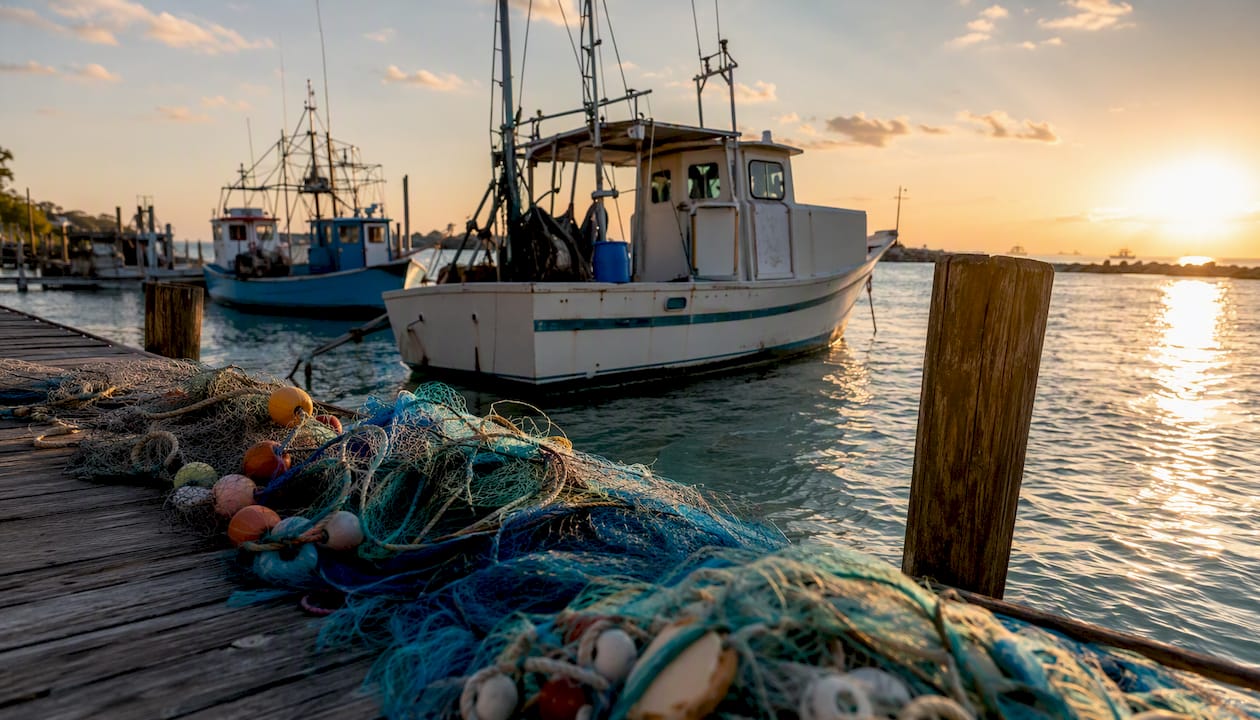
Destin earned the nickname “World’s Luckiest Fishing Village” for two reasons that reinforce each other: a founding family of commercial fishermen who built a working village around one of the Gulf’s most productive natural features, and a stretch of water where the continental shelf drops to 100 fathoms [roughly 600 feet] just about 20 miles offshore. That proximity, documented in local reporting on Destin’s history, means anglers can reach deep, species-rich water faster from Destin than from almost any other port on the Gulf Coast.
Three facts anchor the claim:
Leonard Destin, a Connecticut-born fisherman, settled the area around the mid-1800s and established the fishing community that still bears his name.
East Pass, the narrow channel connecting Destin Harbor to the Gulf of Mexico, gives boats direct, sheltered access to open water in minutes.
Destin now operates one of Florida’s largest charter fleets, and the Destin Fishing Rodeo has run every October since 1948, producing weigh-in records that verify the area’s sustained productivity.
Key Takeaways
Destin’s nickname is grounded in geography and history: the 100-fathom curve sits roughly 20 miles offshore, Leonard Destin’s 19th-century settlement built a fishing culture around that advantage, and the Destin Fishing Rodeo has verified the productivity every October since 1948.
Point | Details |
Historical origin | Leonard Destin settled the area in the mid-1800s; Governor Collins popularized the phrase in 1956. |
Geographic advantage | The 100-fathom curve lies ~20 miles offshore, cutting run times to roughly 20 minutes on a modern boat. |
Species and seasons | Red snapper, grouper, amberjack, king mackerel, tuna, and inshore species are all accessible from a single port. |
Modern verification | The Destin Fishing Rodeo has run since 1948; the charter fleet is among Florida’s largest. |
How to verify it yourself | Visit the Destin History & Fishing Museum, attend the October Rodeo, or book a charter and time the run. |
Table of Contents
Why Destin is nicknamed the World’s Luckiest Fishing Village: the origin story
The story starts with a man, not a marketing department. Leonard Destin arrived on the narrow peninsula between Choctawhatchee Bay and the Gulf of Mexico sometime in the mid-1800s. He was a commercial fisherman from New London, Connecticut, and he recognized immediately what the local geography offered: a natural harbor, a productive pass, and deep water close enough to reach in a single day’s sail. His family and a small cluster of other fishing families stayed, and the settlement took his name.
For decades, Destin existed in near-total isolation. There was no bridge, no paved road, and no reliable way in or out except by boat. The city’s own history pages describe a community that lived almost entirely off the sea, operating seasonal fish camps that gradually became permanent structures as families put down roots. The War Department eventually sold land parcels in the area, and when a bridge finally connected Destin to the mainland in the 1930s, the outside world got its first real look at what local fishermen had known for generations.
The phrase “World’s Luckiest Fishing Village” got its public debut in 1956, when Florida Governor LeRoy Collins visited. The story goes that he turned to his hosts and said something to the effect of:
The remark spread quickly. It appeared on signs, in promotional materials, and eventually became the city’s official tagline. The governor’s offhand comment stuck because it described something locals already knew to be true, not because it invented a reputation from scratch.
The Destin History & Fishing Museum preserves the primary documents, photographs, and artifacts that trace this arc from Leonard Destin’s original settlement through the fish-camp era and into the modern charter industry. The museum’s own description of Destin as “the luckiest fishing village in the world” is grounded in those archives, not in tourism copy.
The geography that makes the luck real
The nickname would be hollow without a physical explanation. Destin’s advantage comes from a combination of features that happen to align in one place.
East Pass and Choctawhatchee Bay form the harbor system. The bay sits behind the barrier island, giving boats a calm staging area. East Pass cuts through the island and opens directly onto the Gulf. The channel is narrow but navigable, and it puts boats in open Gulf water within minutes of leaving the dock.
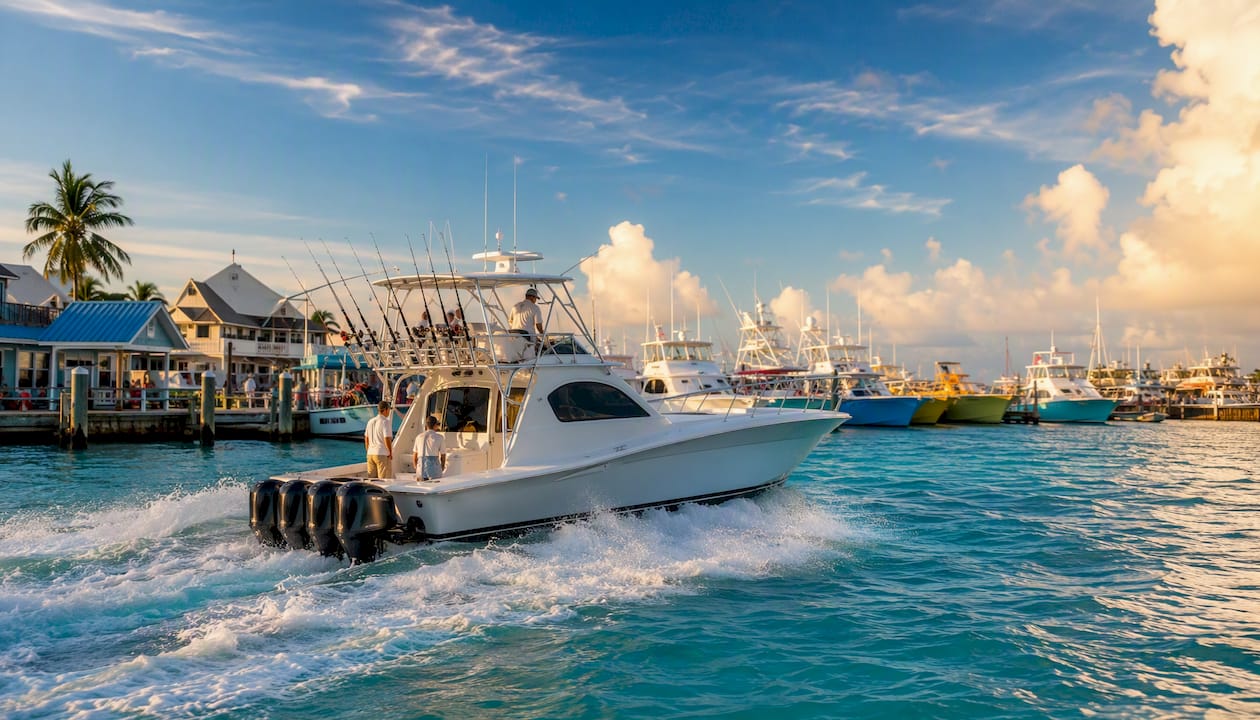
The 100-fathom curve is the critical number. Most of Florida’s Gulf Coast requires a run of 100 miles or more to reach water that deep. Off Destin, that same depth sits roughly 20 miles out, a run that takes as little as 20 minutes on a modern center console. The continental shelf edge at that depth creates a habitat gradient: warm surface water meets cold, nutrient-rich upwelling, bait concentrates, and predators follow.
Feature | Destin | Typical Gulf Coast Port |
Distance to 100-fathom curve | ~20 miles | 100 miles |
Typical run time (modern boat) | ~20 minutes | 2–4 hours |
Water types accessible | Bay, pass, nearshore, offshore | Primarily nearshore or offshore |
Visit Florida cites this proximity as the defining characteristic of Destin’s fishing reputation, noting that the combination of a large fleet and fast access to deep water is what separates the area from other Florida destinations.
The shelf edge also explains why Destin supports both inshore and offshore fisheries simultaneously. Shallow bay species like redfish and speckled trout live in Choctawhatchee Bay. Nearshore ledges hold grouper and snapper. The deep edge attracts pelagic species like tuna and wahoo. A single charter can target completely different fish depending on how far it runs, which is unusual for a single port.
How close deep water turned into a real economic advantage
Geography only becomes an advantage when people can use it. Before motorized boats and refrigeration, the short run to deep water was the difference between a profitable catch and a spoiled one.
Early Destin fishermen used seine boats and hand lines. A round trip to the shelf edge and back in a day was possible from Destin in a way it simply was not from ports farther east or west. Fish arrived at the dock fresh. They sold. The village survived and grew while other Gulf fishing communities struggled with longer runs and higher spoilage rates.
Local historians and captains have consistently made this point: the nickname isn’t just marketing. Before engines and ice, reaching deep water fast meant better market value and a more reliable income. The NWF Daily News historical retrospective frames the geography as the economic engine behind the village’s survival.
After motorization, the advantage shifted from spoilage to economics. Shorter runs mean lower fuel costs, more fishing time per trip, and the ability to run multiple charters in a single day. A captain who spends 20 minutes reaching the grounds instead of three hours has a fundamentally different business model. That math compounded over decades, attracting more boats, more captains, and more infrastructure to Destin’s docks than the area’s size would otherwise justify.
What fishing in Destin looks like today
The nickname still holds up under scrutiny. Destin’s charter fleet is among the largest in Florida, and the species list is long enough to keep anglers busy year-round.
Common target species and their peak seasons:
Red snapper: June through July (federal season) is the prime window, though state waters extend the opportunity.
Grouper (gag, red, scamp): Fall and winter are peak, with gag grouper particularly strong September through December.
Amberjack: Spring and summer, typically on nearshore ledges and wrecks.
King mackerel: Spring and fall migrations bring kings through the pass and nearshore zones.
Blackfin and yellowfin tuna: Late spring through summer on the shelf edge.
Inshore species (redfish, speckled trout, flounder): Year-round in Choctawhatchee Bay, with fall being especially productive.
Fishing destination guides note that artificial reefs and nearshore ledges add structure that concentrates bait and holds fish close to the harbor, reducing the need for long offshore runs even when targeting larger species. The Florida Fish and Wildlife Conservation Commission has documented reef programs in the area that have expanded productive habitat over time.
The Destin Fishing Rodeo runs every October and functions as an annual audit of the fishery. The tournament has produced weigh-in records across dozens of species categories since 1948, and its longevity is itself evidence that the productivity has not collapsed. Rodeo weigh-in data, publicly posted each year, gives researchers and anglers a multi-decade record of what the Gulf off Destin actually produces.
Pro Tip: If you want to maximize species variety in a single trip, book an offshore charter that targets the shelf edge in the morning and ask the captain to work nearshore structure on the return. The short run makes this kind of split-target trip practical in Destin in a way it rarely is elsewhere.
What the Destin History & Fishing Museum tells us
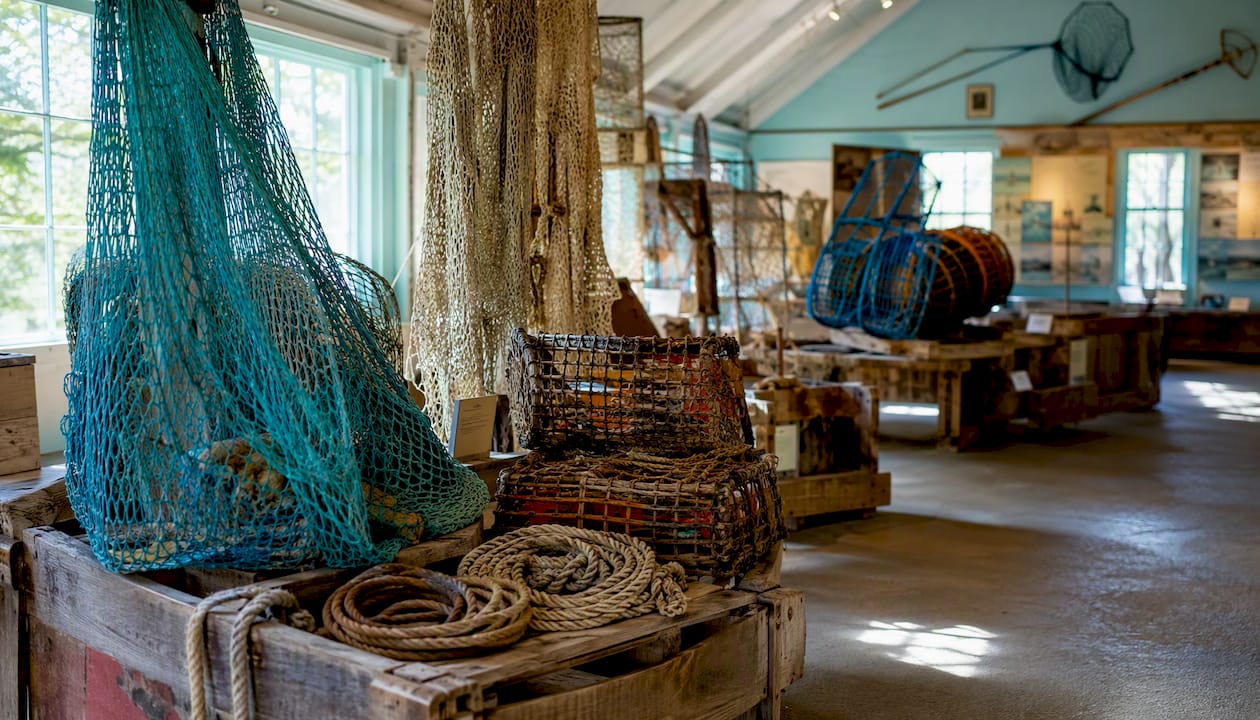
The Destin History & Fishing Museum is the most direct source for the nickname’s provenance. Its collection includes photographs of early fish camps, original seine nets, commercial fishing equipment, and documents tracing the Destin family’s settlement. The museum explicitly frames the town’s identity around the claim that it is “the luckiest fishing village in the world,” and it backs that framing with primary materials rather than promotional copy.
What the museum makes clear is that the knowledge behind Destin’s fishing success is intergenerational. Captains who work the harbor today learned from captains who learned from the fish-camp era, and those fishermen learned from Leonard Destin’s original community. The museum describes this arc from seine boats to modern charter fleet as a form of stewardship, with each generation passing down knowledge of the tides, the pass, the ledges, and the seasonal patterns.
Local captains who have spoken to museum staff and regional historians consistently return to the same practical point: the geography is not incidental. The short run to deep water shaped every decision the community made, from where to build docks to how to time the tides through East Pass.
Pro Tip: Visit the museum before booking a charter. Understanding the historical context of the fishery makes the trip more meaningful, and the staff can often point you toward captains whose families have worked these waters for generations.
How to test the luck yourself: practical tips for anglers
Destin’s variety of accessible fishing zones is the practical payoff for visitors. You can fish four completely different environments without leaving the area.
Zones by distance from the harbor:
Choctawhatchee Bay (inshore): Redfish, speckled trout, flounder. Best in fall and early winter.
East Pass (the channel): Cobia, Spanish mackerel, and jack crevalle during spring and fall migrations.
Nearshore ledges (5–20 miles): Grouper, snapper, amberjack on natural and artificial structure.
Offshore shelf edge (20+ miles): Tuna, wahoo, mahi-mahi, and large pelagics in spring and summer.
Charter booking checklist:
Ask the captain which zone they plan to target and why, given the current season.
Confirm trip duration. Most Destin offshore charters run 6–8 hours; the short run to the grounds means more actual fishing time compared to ports with longer transits.
Ask about the boat’s fish-handling setup. Fresh fish from a short run is one of Destin’s advantages; a good captain will have a proper fish box and ice.
Check whether the charter is licensed for the species you want. Red snapper, for example, has federal season restrictions that vary by year.
For Florida sportfishing rules and methods, review current regulations before you go — bag limits and seasons change.
Pro Tip: Tide timing through East Pass matters more than most visitors realize. Outgoing tides push bait through the channel and trigger feeding. Ask your captain to time the departure so you’re running the pass on an outgoing tide.
The nickname as culture, not just marketing
Ask a Destin local whether the “World’s Luckiest Fishing Village” label is marketing or truth, and you’ll usually get a pause before the answer. Most will say both, and they’re right.
The governor’s 1956 remark was genuine. The geography is real. But the city has also leaned into the phrase hard, putting it on signs, websites, and tourism materials for decades. The Destin Fishing Rodeo, the weigh-in stations, the dock festivals, and the charter fleet’s sheer size all reinforce the brand. There’s a feedback loop: the nickname attracts anglers, anglers generate weigh-in records, records reinforce the nickname.
What keeps it honest is that the underlying claim survives scrutiny. The 100-fathom curve really is that close. The species list really is that long. The Rodeo really has run since 1948. For residents, the nickname carries a specific kind of local pride that’s different from a marketing slogan because it’s tied to a livelihood, not just a logo. Fishing families here don’t say “World’s Luckiest Fishing Village” the way a hotel chain says “world-class.” They say it the way someone describes a place that fed their grandparents.
For visitors, the experience of booking a charter, running 20 minutes offshore, and landing a grouper before most Florida anglers have even reached their fishing grounds tends to settle the debate quickly.
Sources
Recommended
Comments