.png)
What Is a Group Boat Charter? A Clear Explanation

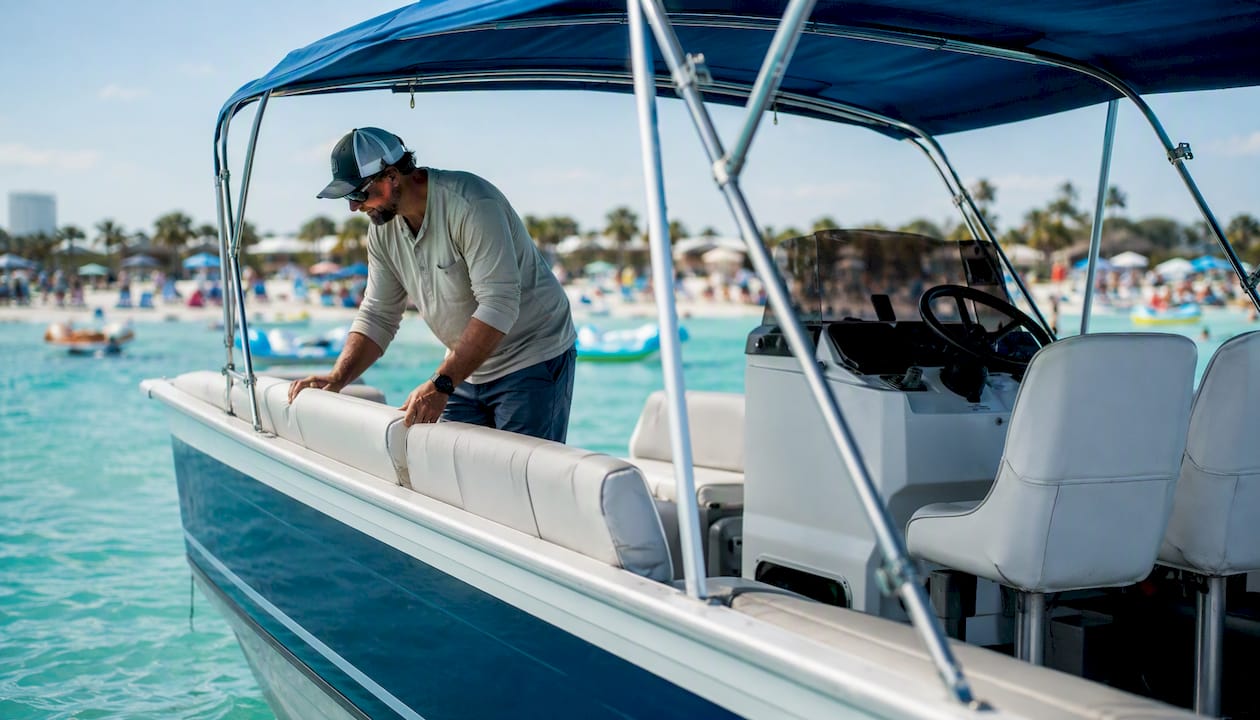
A group boat charter is a booked boat experience where your group reserves seats or the entire vessel for a coordinated outing, with a licensed captain and crew handling all the navigation. That separates it from a private charter, where one party books the whole boat exclusively, and from a basic boat rental, where you take the wheel yourself with no crew included.
One more thing worth knowing upfront: U.S. federal rules tie vessel classification directly to how many paying passengers are aboard and whether the owner provides crew. Those thresholds change what licenses and inspections an operator legally needs, so they matter when you’re picking who to book with.
Key Takeaways
A group boat charter puts a licensed captain in charge of the vessel while your group focuses on the experience, and the U.S. Coast Guard’s passenger-for-hire rules determine what safety standards and inspections apply to every commercial trip.
Point | Details |
Core definition | A group charter reserves seats or the whole vessel with a licensed captain included; you don’t operate the boat. |
Group vs private vs rental | Per-seat pricing suits small groups; per-boat private charters become better value as headcount grows; rentals require you to skipper the vessel yourself. |
Regulatory must-check | Any trip carrying at least one passenger for hire is commercial service under USCG rules, triggering licensing and inspection requirements. |
Booking tip | Always request an itemized written quote and confirm the vessel’s Certificate of Inspection passenger count before paying a deposit. |
Crab-island-tours | Guided 4-hour Crab Island tours in Destin with licensed captains, floats, onboard restroom, and per-ticket pricing for up to 31 passengers. |
Table of Contents
What is a group boat charter, explained in full
The industry term you’ll see on most booking platforms and Coast Guard documents is “passenger vessel charter,” but “group boat charter” is how most people search for and describe the experience. Both refer to the same thing: a structured, operator-led outing where your group pays for access to a vessel and its crew for a set period.
Discover Boating describes the core split clearly: bareboat charters put you in charge of the boat, while crewed charters hand navigation over to a licensed captain who often brings provisioning along. Group charters almost always fall into the crewed category, since the whole point is showing up and enjoying the ride.
The practical difference from a rental is responsibility. With a rental, you operate the vessel yourself and carry the liability. With a charter, the operator holds the license, manages safety compliance, and runs the boat. That shift in responsibility is also why charter operators face stricter federal oversight than rental companies.
Six common charter types and when each one fits your group
Understanding how does a boat charter work starts with knowing which type you’re actually booking. Yacht charter formats range from a single cabin berth to a full superyacht, and the right match depends on your group’s size, experience, and budget.
Bareboat charter: You rent the vessel without crew and skipper it yourself. Best for certified, experienced boaters who want full control of the itinerary. Not a beginner option.
Crewed/skippered charter: A licensed captain (and sometimes a mate or deckhand) comes with the boat. You show up, they drive. This is the format most group day trips and party boats use.
By-the-cabin charter: You book a berth rather than the whole vessel, sharing the boat with other passengers you may not know. Common on multi-day sailing trips and some dive liveaboards.
Party/group charter: The whole vessel is reserved for your group, typically for a half-day or full-day. Birthdays, bachelorette parties, corporate outings, and family reunions are the usual occasions. Capacity varies depending on the vessel class.
Fishing charter: A crewed trip focused on a specific catch or fishing zone. The captain handles navigation and often provides tackle; you focus on fishing. Half-day and full-day formats are both common.
Yacht/all-inclusive charter: Multi-day or weekly bookings on a larger vessel with full crew, provisioning, and sometimes an Advanced Provisioning Allowance (APA) built into the contract for fuel, docking, and food costs. These are the most expensive formats and the most hands-off experiences.
When choosing a boat for your group, the three factors that narrow the list fastest are group size, planned activities, and whether you want a crewed or bareboat experience.
How group charters differ from private charters and rentals
The pricing model is the clearest signal. Group charters sold per seat price each ticket individually, so a solo traveler or a couple can join without booking the whole boat. Private charters price the whole vessel as a unit, regardless of how many people fill it. As your headcount grows, per-boat pricing often becomes the better deal. A boat that costs $800 for the day splits to $40 per person for a group of 20, while a per-seat shared tour at $60 per person would cost that same group $1,200.
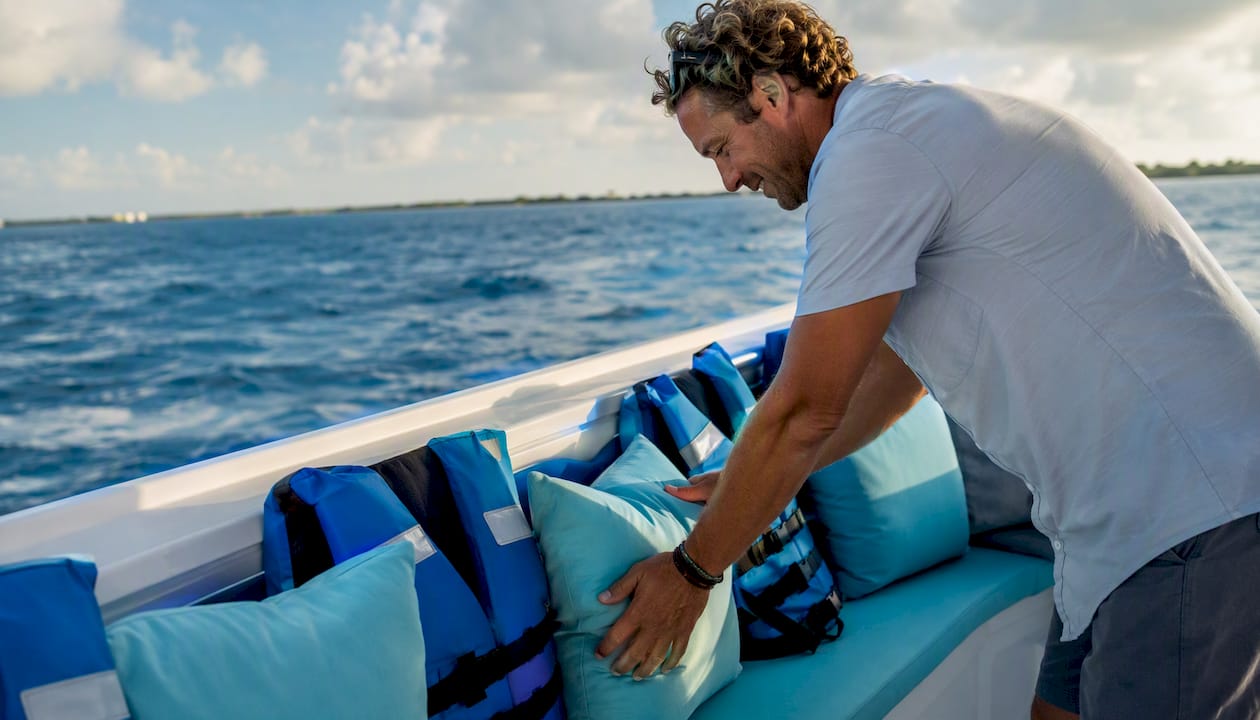
Who else is on the boat matters just as much as price. On a shared group charter, you may be seated alongside strangers. On a private charter, only your party boards. That distinction changes pacing, noise level, and how flexible the captain can be with stops and timing.
Rentals are a different category entirely. You operate the vessel yourself, which means you need boating experience, a valid state boating license where required, and you absorb the operational liability. Charters shift that responsibility to the operator.
A quick scenario illustrates the split well. A bachelor party of 12 that wants music, a cooler, and no decisions to make is a private charter situation. A family of four visiting Destin who wants a guided experience at a reasonable per-ticket price fits a shared group charter. A couple with a captain’s license who wants to explore at their own pace on their own schedule is looking at a bareboat rental.
What you can typically expect on board a group charter
Most crewed group charters include a baseline set of amenities, though what’s covered varies by operator and vessel size. Before you book, confirm which of these are included versus charged as extras.
Standard inclusions on most group charters:
Licensed captain and, for larger vessels, a mate or deckhand
U.S. Coast Guard-approved life jackets for every passenger
Pre-departure safety briefing (required by federal regulation)
Basic first-aid kit
Coolers and ice (sometimes water; alcohol is usually BYOB)
Sound system
Restroom on board (confirm this specifically for longer trips)
Floats or snorkel gear on tours designed around water activities
Common operator rules to know before you arrive:
BYOB is allowed on many charters but confirm the policy in writing
Tipping the captain and crew is customary, usually a moderate percentage of the charter fee.
Clean-up fees apply if the vessel is left in poor condition
Boarding times are firm; late arrivals may forfeit their spot
Passenger weight and count limits are set by the vessel’s certificate of inspection, not by the operator’s preference
Pro Tip: Ask specifically about restroom availability and the BYOB policy when you book, not when you board. Also confirm the maximum passenger count on the vessel’s certificate, not just the advertised number, since those two figures sometimes differ.
The charter agreement is the product, not just fine print. Duration, inclusions, cancellation terms, and liability allocation all live in that document. Read it before you pay a deposit.
U.S. regulations and safety limits you need to know
This is the section most booking guides skip, and it’s the one that matters most if something goes wrong.
SPV vs UPV: what the classifications mean
The U.S. Coast Guard classifies small commercial vessels into two main categories:
Uninspected Passenger Vessel (UPV): Carries 6 or fewer passengers for hire. Subject to federal rules but not required to undergo a formal USCG inspection.
Small Passenger Vessel (SPV): Carries 7 or more passengers for hire. Must be inspected and certificated by the USCG and meet stricter safety standards.
When does a trip become commercial service?
According to MSIB guidance for vessels under 100 gross tons, a vessel operates in commercial service when any one of three conditions applies:
It carries at least one passenger for hire
It is chartered with crew provided or specified by the owner
It is chartered without owner-provided crew and carries more than 12 passengers
That third condition catches a lot of people off guard. A “private” bareboat charter with 13 or more passengers aboard triggers commercial classification even without paid crew.
Scenario | Classification | USCG Inspection Required? |
Recreational trip, no payment | Recreational vessel | No |
1–6 passengers for hire | Uninspected Passenger Vessel (UPV) | No formal inspection |
7 or more passengers for hire | Small Passenger Vessel (SPV) | Yes, USCG certificated |
Bareboat charter, 13+ passengers | SPV or UPV (commercial) | Yes |
Passenger safety orientation
46 CFR §185.506 requires the vessel master to give every passenger a safety orientation before departure. That orientation must cover life jacket locations, emergency procedures, and other specified items. Passengers who board after the initial announcement must also be informed. Operators may use printed safety cards as an alternative to a verbal announcement, but the requirement itself is not optional.
Safety checklist to run through with any operator before you book:
Confirm the captain holds a valid USCG Merchant Mariner Credential (MMC)
Ask for the vessel’s Certificate of Inspection (COI) and the maximum passenger count it authorizes
Verify the operator carries commercial liability insurance
Confirm a safety orientation is provided before departure
Check that Coast Guard-approved life jackets are accessible for every passenger on board
Pro Tip: You can verify a captain’s USCG credential through the National Maritime Center’s online credential verification tool. If an operator is evasive about their license or COI, that’s a reason to book elsewhere.
When a trip falls into a gray area, such as a large bareboat group or a charter where the owner is specifying crew, contact your local Coast Guard Sector or Marine Safety Unit directly. They can clarify classification and compliance requirements for specific vessel and trip configurations.
How group charter pricing works
Pricing structures vary more than most booking sites make obvious. Knowing the model before you get a quote prevents surprises.
The main pricing formats:
Per-person (shared/group seat): You pay a ticket price per passenger. Common on party boats, fishing charters, and guided tours. Straightforward for small groups or individuals joining a larger trip.
Per-boat (private charter): One flat rate covers the vessel for a set duration, regardless of how many people fill it up to the legal maximum. Better value as group size grows.
Half-day vs full-day: Most operators price by duration. Half-day trips typically run 3–4 hours; full-day runs 6–8 hours. Overnight and multi-day rates apply to larger vessels.
APA (Advanced Provisioning Allowance): Used on luxury and crewed yacht charters. You pay a base charter fee plus an APA, typically 20–30% of the charter fee, held in escrow and used for fuel, docking, food, and drinks. Unused APA is refunded at the end of the trip.
Main cost drivers to factor in:
Boat size and passenger capacity
Duration of the trip
Whether crew is included or extra
Fuel and docking fees (sometimes itemized separately)
Provisioning and catering
Peak-season demand (summer weekends cost more)
Per-boat pricing often becomes the better per-person value once your group reaches a certain size, while shared per-seat options suit smaller parties or solo travelers joining an existing trip.
Pro Tip: Always ask for an itemized quote that separates the base charter fee from fuel, docking, gratuity, and any add-ons. Ask about the deposit amount and whether it’s refundable if you cancel. Operators who can’t produce a written quote are a red flag.
Questions to ask before you book a group charter
Run through this checklist before you pay anything.
Logistics and capacity:
What is the maximum passenger count on the vessel’s Certificate of Inspection?
What is the exact departure and return time, and where do you board?
Is there a restroom on board?
Safety and credentials:
Does the captain hold a valid USCG Merchant Mariner Credential?
Is the vessel USCG-inspected and certificated?
Does the operator carry commercial liability insurance?
Will a safety orientation be provided before departure?
Pricing and policy:
Is the quote itemized (base fee, fuel, gratuity, add-ons)?
What is the deposit amount, and under what conditions is it refunded?
What is the cancellation policy if weather forces a reschedule?
Is BYOB permitted, and are there any restrictions?
Red flags to watch for:
Evasive or vague answers about the captain’s license or vessel inspection
No written quote or contract
Unclear or verbal-only refund policy
Advertised passenger count that doesn’t match the COI
Confirm pickup logistics and arrival time in writing. Most operators ask guests to arrive 15–30 minutes before departure, and late arrivals typically forfeit their spot without a refund.
Why USCG and MSIB guidance matters when you’re booking
The MSIB guidance for vessels under 100 gross tons exists to help small-vessel operators and charterers understand exactly when a trip crosses from recreational to commercial service. The classification isn’t academic. It determines whether a captain needs a specific license tier, whether the vessel must pass a USCG inspection, and what safety equipment must be on board.
The decision rules in plain language:
If anyone on board paid to be there, the trip is commercial service.
If the owner specified or provided the crew, the trip is commercial service regardless of passenger count.
If the charter is bareboat (no owner crew) but carries more than 12 passengers, it’s still commercial service.
Operators who ignore these rules face enforcement action, and passengers on non-compliant vessels have limited legal recourse if something goes wrong. That’s the practical reason to ask for the COI and the captain’s credential before you board, not just to be thorough.
For edge cases, such as a large private group using a bareboat arrangement, or a charter where the owner is specifying crew but calling it recreational, the local Coast Guard Sector is the right call. They can clarify classification and compliance requirements for your specific situation.
What operators see that most guests miss
From an operator’s perspective, the most common booking mistake isn’t choosing the wrong charter type. It’s showing up with more people than the vessel’s COI allows, or assuming that because a trip is “private” it’s automatically exempt from commercial passenger rules. Both create problems that a quick pre-booking conversation would prevent.
Good operators adjust the trip in real time. A group that wants more time in the water gets longer anchor stops. A group more interested in sightseeing gets more movement and narration. The itinerary on the booking page is a starting point, not a contract. Communicating your group’s priorities when you book, not when you board, is what makes that flexibility work in your favor.
Crab-island-tours makes group charters easy in Destin
Skip the logistics and show up ready to enjoy the water. Crab-island-tours runs guided 4-hour group tours to Crab Island in Destin with experienced captains, floats and snorkel gear included, an onboard restroom, and comfortable seating for up to 31 passengers. BYOB is welcome, and the whole package is priced per ticket so your group isn’t locked into a full private charter rate.
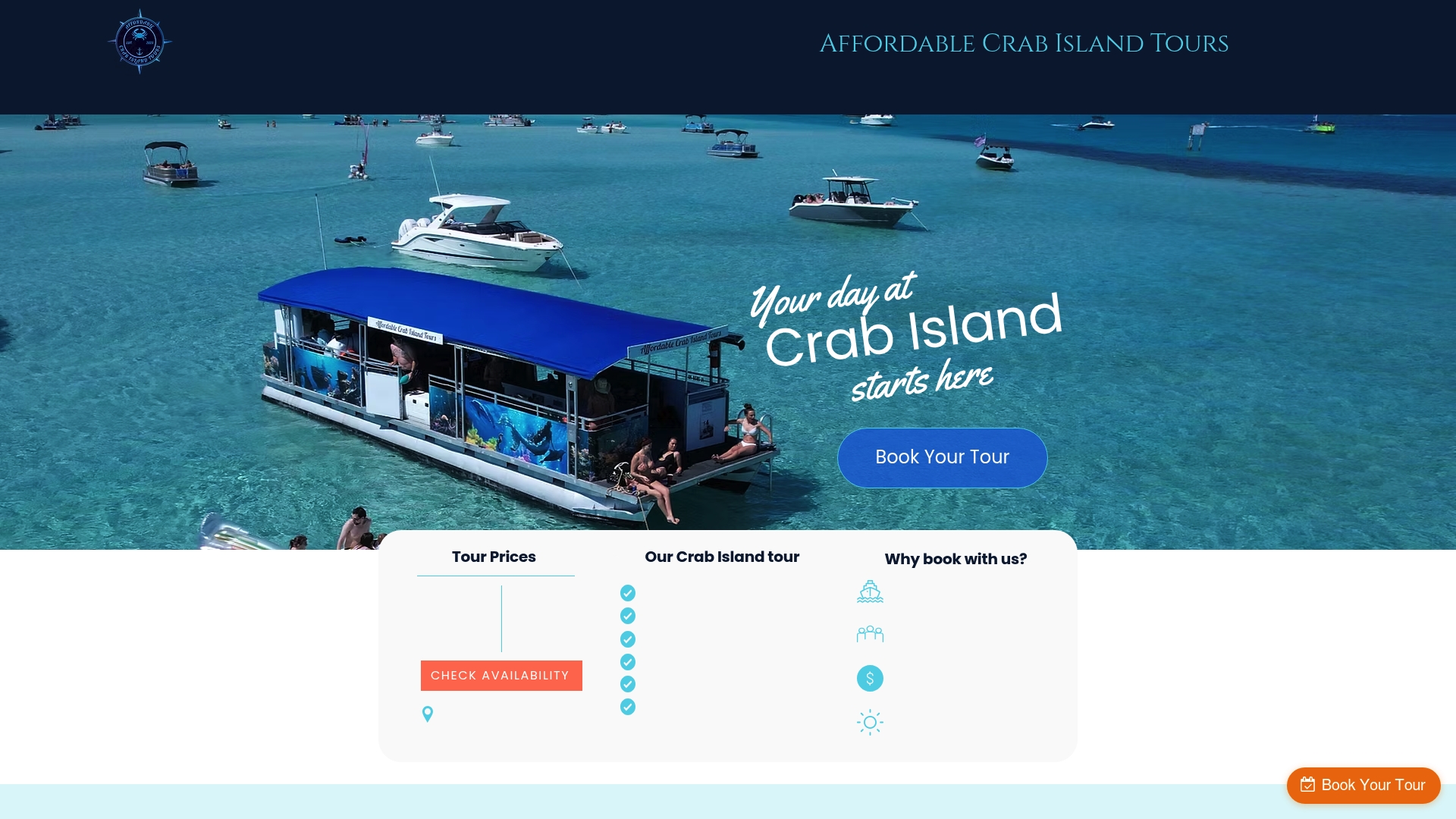
Every Crab-island-tours trip operates with a licensed captain and meets U.S. Coast Guard compliance requirements. Before you book any group charter, confirm the operator’s credentials and vessel certification. Book your Crab Island group tour and see available dates for your trip.
Sources
Recommended
Comments