.png)
Crab Island Floats for U.S. Families: What to Bring and When to Rent

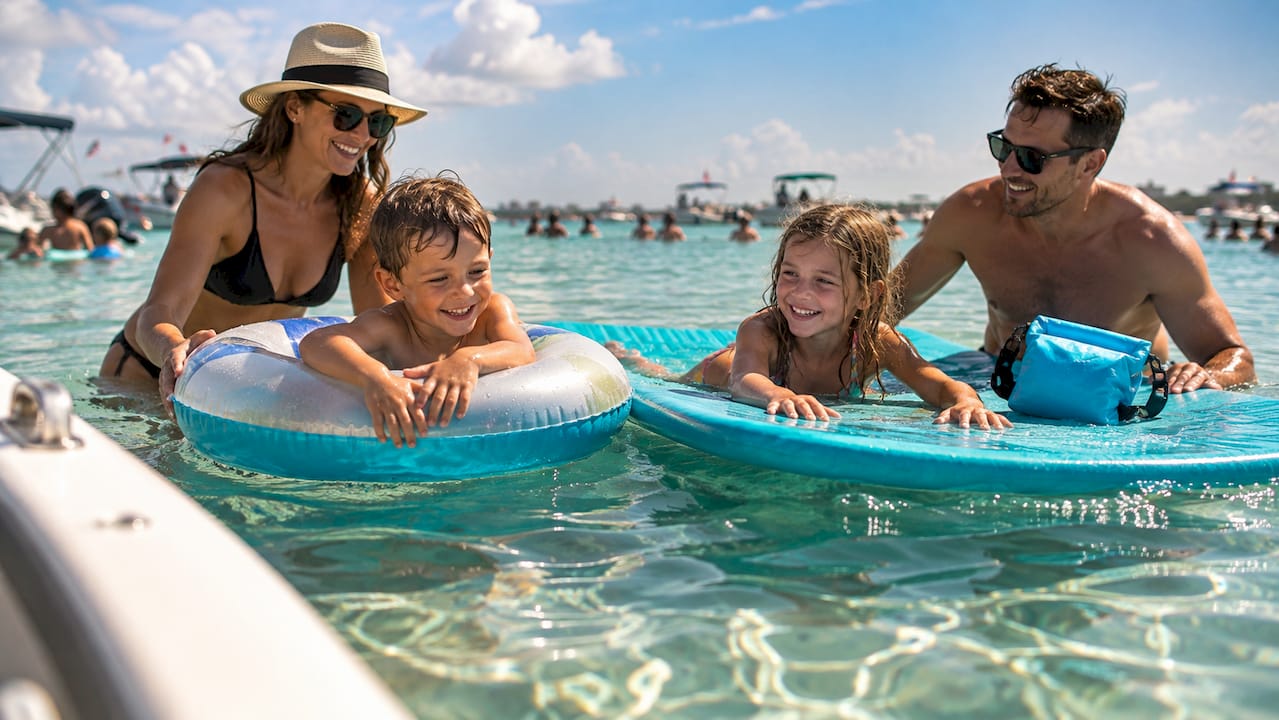
Inflatable loungers, large floating mats (lily pads), and group mats are the most practical floats for Crab Island’s shallow, sandbar-anchored water. Bring your own if you have the space to transport and inflate one, but reserve floats through a pontoon rental or guided tour if you want a sure thing. Either way, tie every float to the boat with rope so nothing drifts off in the current.
TL;DR:
Bringing your own floats is common, but large group mats or inflatable islands require storage space and need to be deflated for transit on smaller boats.
Bright-colored floats are easier to spot from the boat amid the crowded, boat-dense water, especially during peak season.
Securing floats to the boat with a tether prevents drifting, and short tethers minimize the risk of floats encroaching on neighboring groups’ space.
Rental availability at Crab Island is inconsistent outside of peak summer weekends, making pre-booking through your rental or tour operator the most reliable option.
Guided tours often include floats, restroom access, and a captain, offering a hassle-free experience especially suited for families, groups, or visitors uninterested in managing gear.
Table of Contents
What Floats Work Best for Crab Island?
Not every float belongs in Crab Island’s waist-deep, current-prone water. The sandbar sits about a mile offshore in Destin, and boats anchor close together, so the float you bring needs to handle chop, wind, and a crowd without becoming a hassle to manage.
Single tubes and inflatable loungers are the easiest starting point. They pack small, inflate in a couple of minutes with a portable pump, and work well for one or two people who mostly want to bob near the boat. Their downside is exactly their upside: they’re light, which means wind pushes them around more than a heavier float.
Large floating mats and lily pads solve the stability problem. These give a group a shared platform for sunbathing, snacks, or just standing around and talking. They’re heavier to carry and slower to inflate, but once anchored they hold position better than a small tube.
Multi-person “islands” and group mats are built for parties of six or more. They need real storage space on the boat, a stronger tie-off point, and usually two people to fully inflate before the trip. Visitors commonly bring inflatable tubes, floating mats, loungers, and larger group islands to Crab Island, and the mix reflects how differently people use the sandbar, from quiet lounging to full group hangouts.
Material matters more than most people expect. Thin, vinyl pool floats drift fast in even light wind. Heavy-duty PVC or closed-cell foam floats sit tighter to the anchor line and survive the day without a slow leak ruining the last hour.
Solo or couple: a tube or single lounger, easy to inflate and stow
Small family: one or two loungers plus a compact mat for kids to sit on
Larger family or group of friends: a large floating mat sized for four to six people
Party or multi-boat group: a group island mat, tied off with extra rope
Pro Tip: Buy or bring a float in a bright color like orange, yellow, or hot pink. With dozens of boats anchored in one stretch of water, a bright float is far easier to spot from your boat than white or pale blue.
Can You Bring Your Own Floats to Crab Island?
Yes, and most people do. Most pontoon rentals and private charters allow personal floats, though some require deflation during transit to save deck space on the way out. Water taxis and smaller shuttle boats are a different story. Their storage space is limited, so call ahead if you’re using a shuttle service and plan to bring a large mat or group island.
A few packing habits make the transport part painless:
Deflate mats and tubes before loading, then bag them to keep sand and grit off other gear
Pack a dry bag for phones, wallets, and keys before you leave the dock
Bring a portable pump so you’re not blowing up a group mat by mouth in 90-degree heat
Carry a basic patch kit in case a seam pops on a rock or oyster bed near the sandbar
Before you book anything, ask the operator three questions: what size floats they allow, whether they have a tie-off point built into the boat, and how much open deck space you’ll actually have for storage.
Are Float Rentals Available at Crab Island?
Sometimes, but don’t count on it. Seasonal floating vendors occasionally set up near the sandbar, selling or renting floats on the spot, but they’re not guaranteed to show up every day, especially outside peak summer weekends.
The more dependable route is booking through your boat rental or tour operator directly:
Many pontoon rental companies offer float add-on packages you can request when you book
Private charters and guided tours frequently include floats as part of the trip, not as an extra
Reserve ahead whenever floats matter to your day. Peak summer weekends can sell out rental add-ons entirely
If having a float guaranteed is a dealbreaker, pick a provider that confirms inclusion in writing, not just verbally at the dock
Because vendor presence is inconsistent, the safest way to guarantee a float is still to book it as part of your boat rental or tour rather than hoping a floating vendor happens to be working that day.
How Do You Secure a Float Safely at Crab Island?
Crab Island looks calm, but wind and boat traffic can turn a lazy afternoon into a scramble to chase a drifting mat. A few habits keep the day relaxed instead of stressful.
Tie off every float. A 20-foot rope or a rated tether attached to the boat keeps floats from wandering off with the current, and it means you’re not swimming after a lounger while watching your cooler drift the other direction.
Put weak swimmers in life jackets. The sandbar is shallow in most spots, but drop-offs exist, and currents pick up near boat traffic lanes.
Check the forecast before you go. Wind speed changes everything at Crab Island. A calm morning can turn choppy by early afternoon, pushing loose floats fast.
Plan for sun and heat. Bring a shade umbrella or canopy if your boat has a mount for one, drink water even when you don’t feel thirsty, and keep phones and keys in a waterproof case.
A basic understanding of float plan safety applies here too, since letting someone onshore know your general plans and timing is smart even for a short sandbar trip.
Pro Tip: Clip a carabiner to your float’s tie-off loop before you leave the dock. It’s faster to snap onto a boat cleat than tying a fresh knot every time someone wants to swim off and reattach.
What Do Crab Island Boat Tours Typically Include?
A guided tour removes most of the logistics this article has covered so far. Affordable Crab Island Tours states its packages include floats, an onboard restroom, and an experienced captain, which means you skip deciding what float to buy, how to transport it, and where to store it on a rented pontoon.
That combination matters most for a specific type of visitor: families with young kids, groups without their own beach gear, and vacationers who don’t want to manage boat logistics on a trip that’s supposed to be relaxing. A pontoon’s shallow draft and stability make it the most practical craft for Crab Island in the first place, and a four-hour half-day tour is typically enough time to enjoy the sandbar without rushing.
A few things worth checking when you compare tour listings:
Confirm floats are explicitly included, not just “available for purchase” once you’re on the water
Ask about passenger capacity so your group isn’t crammed into a smaller boat than expected
Check whether snorkel gear or other amenities come with the package, since some tours bundle more than just floats
For families weighing the marginal cost of a guided tour against wrangling multiple large mats themselves, the convenience of a crew handling tie-off and storage often tips the scale.
What Should You Pack, and What Extra Costs Should You Expect?
A solid Crab Island packing list keeps you from making a second trip to the marina store. Bring floats or floaties, a 20-foot rope for tying floats to the boat, a pump and small repair kit, a dry bag for electronics, sunscreen, a waterproof phone case, a small cooler, and both cash and cards, since some floating vendors don’t take cards.
Budget for a few extras beyond the boat rental itself:
Float rental add-on fees if you didn’t bring your own
Marina parking, which varies by location and season
Fuel surcharges some rental companies add for longer trips
On-the-water vendor purchases, from cold drinks to last-minute float rentals
Get price confirmation in writing when you book, especially for float add-ons. When floats matter to your day, a tour or rental that includes them upfront avoids any surprise at the dock.
How Do You Store and Secure a Float While Anchored?
Once your boat is anchored at Crab Island, the float question shifts from “what to bring” to “what to do with it while you’re in the water.” Most people either tie the float directly to the boat’s cleat or swim ladder, or clip it to a floating anchor line that trails a few feet off the stern. Both work, but the boat cleat method holds up better in current because it doesn’t rely on the float’s own weight to stay put.
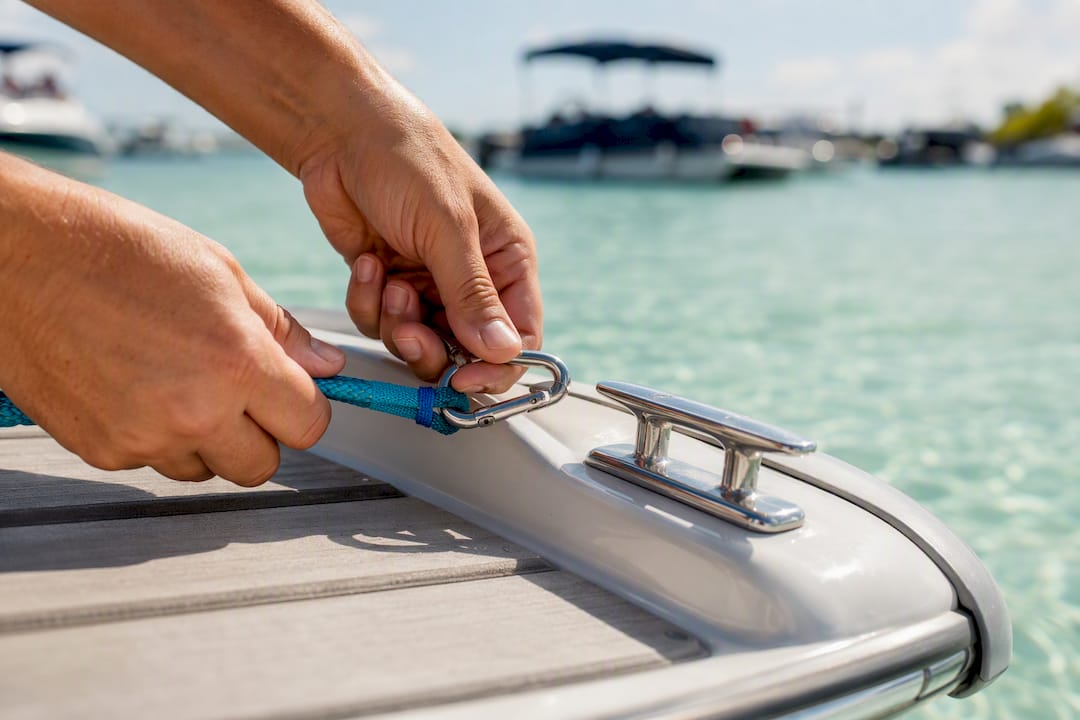
If you’re swimming off the float rather than sitting on the boat, keep the tether short enough that you’re not drifting into neighboring boats’ anchor lines. Crab Island gets crowded on busy days, and a float on a 15 or 20-foot leash can easily drift into someone else’s swim space if the current shifts.
For storage between uses, deflate mats you’re not actively using rather than letting them float loose nearby. A half-deflated mat tied loosely to the boat takes up less swimming room and is less likely to flip over in a wake from a passing boat. If you’re stepping away from the water for lunch or a break, bring floats back on board or tie them snug against the hull rather than leaving them drifting on a long line unattended.
Keep valuables off the float entirely. A cooler or dry bag belongs on the boat, not riding along on a lily pad where a wave or a bump from another swimmer can tip it into the water.
What Are the Rules on Float Size and Use at Crab Island?
Crab Island itself doesn’t have a single posted rulebook the way a public beach might, since it’s a sandbar in open water rather than a managed park. Most of the practical rules come from whichever boat rental company or marina you’re working with, not from a governing body on the sandbar itself.
That means float rules vary by operator rather than by location. Some pontoon companies cap float size or count based on available deck space for transit. Others are more relaxed but still require deflation before you leave the marina. Water taxis and smaller shuttle services tend to have the tightest restrictions simply because they carry less storage capacity per trip.
The one consistent expectation across nearly every operator is anchoring etiquette: floats need to stay tied to your own boat and within a reasonable distance of it, both for your safety and to avoid drifting into another group’s space. Boats anchor close together at Crab Island, especially on weekends, and an untethered float becomes everyone’s problem once it starts moving with the current.
If float size or type is a concern for your trip, the most reliable move is asking your specific operator before you book, not assuming a blanket rule applies. A large group island that’s fine on one pontoon might not fit the storage space on a different boat, and confirming ahead avoids an awkward conversation at the dock.
How Can You Help Protect Crab Island’s Sandbar and Water?
Crab Island’s appeal comes from clear, shallow water and a sand bottom that’s stayed relatively clean despite the crowds it draws. Keeping it that way takes a few small habits from every visitor, not just posted signage.
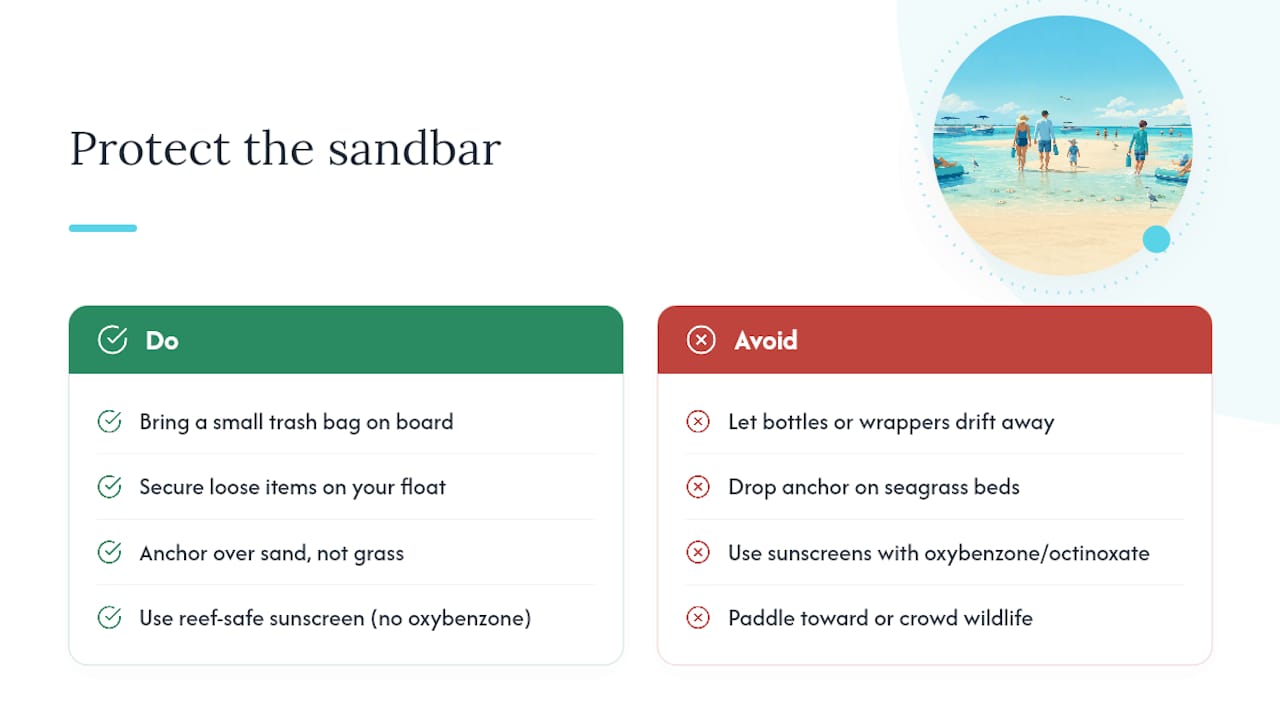
Trash management matters most. Bottles, cans, and food wrappers that blow off a boat or drift loose from a float end up in the water or buried in the sand. Bring a small trash bag on board and make sure loose items on your float are secured rather than sitting where a wave can knock them off.
Anchoring carefully protects the sea grass beds that surround parts of the sandbar. Dropping anchor directly on grass beds instead of open sand damages habitat that takes years to recover. If your boat has a fish finder or depth display, use it to confirm you’re anchoring over sand rather than grass when possible.
Sunscreen choice is a smaller but real factor. Reef-safe formulas without oxybenzone or octinoxate reduce the chemical load entering the water where hundreds of boats anchor daily during peak season. It’s an easy swap that doesn’t cost more at most drugstores.
Finally, keep floats and gear away from wildlife you might encounter, including the occasional dolphin pod that swims through the anchored boats. Give them space rather than paddling toward them, both for their comfort and because a startled dolphin near a crowd of floats and swimmers isn’t a great mix for anyone.
How Do You Avoid Float Congestion on Busy Days?
Crab Island gets tight on holiday weekends, Fourth of July, and most Saturdays from June through August. Boats pack in close, floats overlap between groups, and finding open water to swim in can feel like navigating a parking lot.
Timing your arrival earlier in the day, before late morning, usually gets you a better anchor spot with more open water around your boat. Boats that arrive after noon on a busy Saturday often end up wedged into whatever space is left, which means less room for floats to spread out.
Weekdays are the simplest fix if your schedule allows it. Tuesday through Thursday trips see noticeably fewer boats than weekend trips, which translates directly into more room for a group mat or multiple tubes without bumping into a neighboring boat’s gear.
If you’re stuck visiting on a peak day, consider a smaller float footprint. A couple of loungers are easier to manage in tight quarters than one giant group island that needs open water on all sides to avoid drifting into someone else’s space. Keeping your tether short also helps, since a float on a long line has more room to swing into another boat’s area when anchorage is packed tight.
Booking a guided tour on a busy day also takes some of the congestion planning off your hands, since captains generally know which stretches of the sandbar tend to have more breathing room at a given time of day.
Balancing Convenience, Cost, and Safety When Choosing Floats
The real trade-off isn’t float type, it’s how much hassle you want to take on. A tube is easy to carry but works for one person. A group mat comfortably fits a party but needs storage space and a strong tether. Pre-booking floats through a pontoon add-on or a tour removes the guesswork on busy weekends when vendor availability is thin.
For families and larger groups especially, a tour that already includes floats, restroom access, and an experienced captain tends to be the least stressful way to get the sandbar experience without managing gear yourself.
— Troy
Want Floats Handled for You? Book a Crab Island Tour
If tying off a group mat and hoping a floating vendor shows up sounds like more logistics than you signed up for, there’s a simpler route. Crab-island-tours builds floats, snorkel gear, and an onboard restroom into every trip, so you show up at the dock and everything else is already handled by an experienced captain.
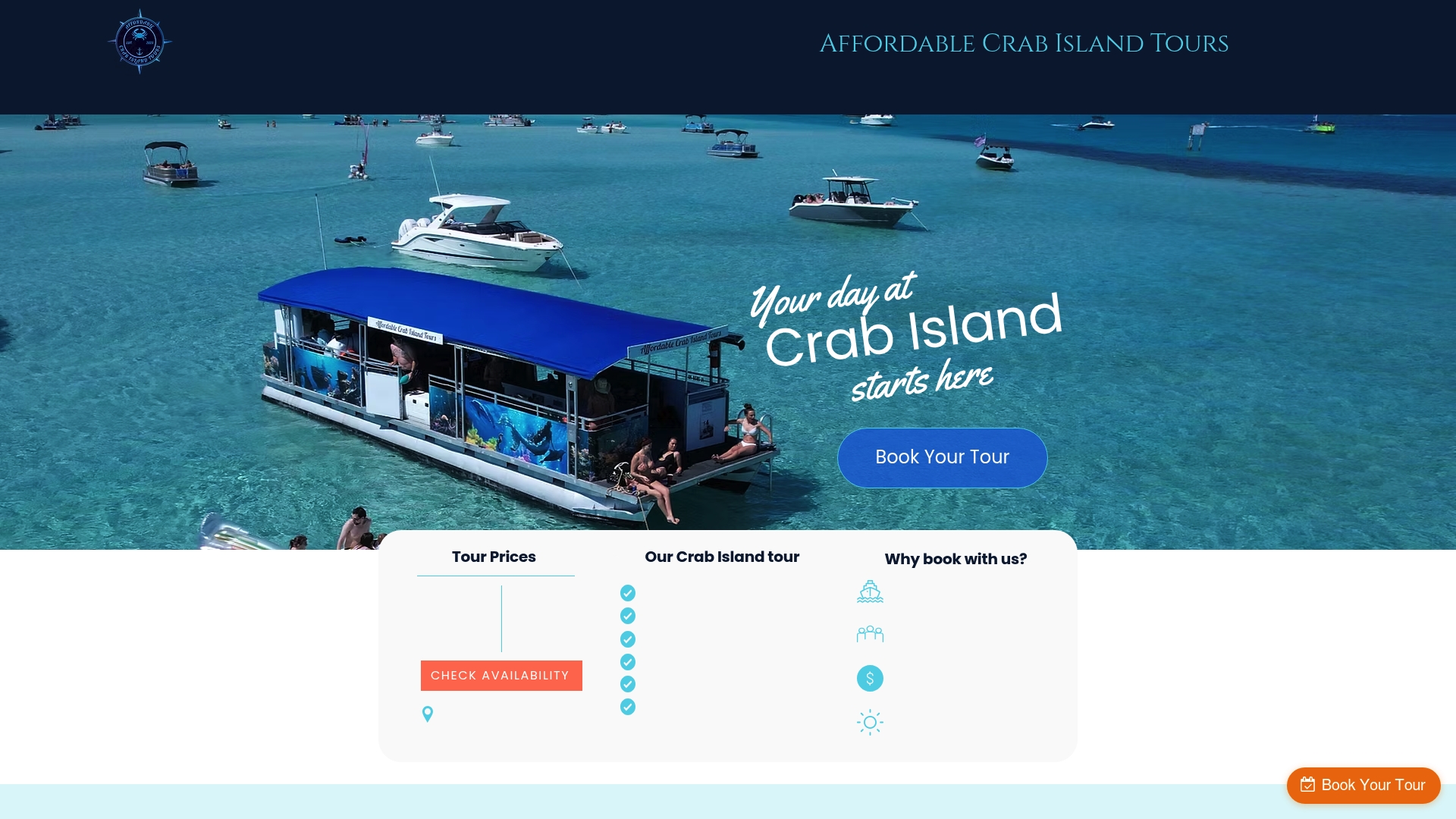
That setup works especially well for families with kids, couples who don’t own beach gear, and groups who’d rather not figure out pontoon rental add-ons or water taxi size limits. The tour runs four hours, seats up to 31 passengers, and is BYOB, so you bring the drinks and Crab-island-tours handles the boat, the floats, and the anchoring. Tickets run $50 to $60 per person. Check current availability and see exactly what’s included before your trip on the Crab Island tour booking page.
Sources
FAQ
Can I Bring My Own Float to Crab Island?
Yes, most pontoons and private charters allow personal floats, though some ask you to deflate them for transit, and water taxis often have tighter size restrictions.
Can I Rent a Float at Crab Island?
Sometimes, through seasonal floating vendors, but availability isn’t guaranteed daily. Booking a pontoon rental’s float add-on or a guided tour that includes floats is more reliable.
What Is the Best Float for a Family or Group?
A large floating mat or group island works best for families and parties, while a single tube or lounger suits solo swimmers or couples who want something lighter to manage.
Are Floats Safe for Kids at Crab Island?
Floats are generally safe in the shallow sandbar water, but weak swimmers should wear life jackets and adults should keep close supervision even in calm conditions.
Does Crab-island-tours Include Floats?
Yes, Crab-island-tours includes floats along with snorkel gear, an onboard restroom, and an experienced captain as part of its four-hour Crab Island tour.
Recommended
Comments