.png)
$10–$25 Shared, 10–20% Charters: Tipping on Boat Tours for U.S. Tourists

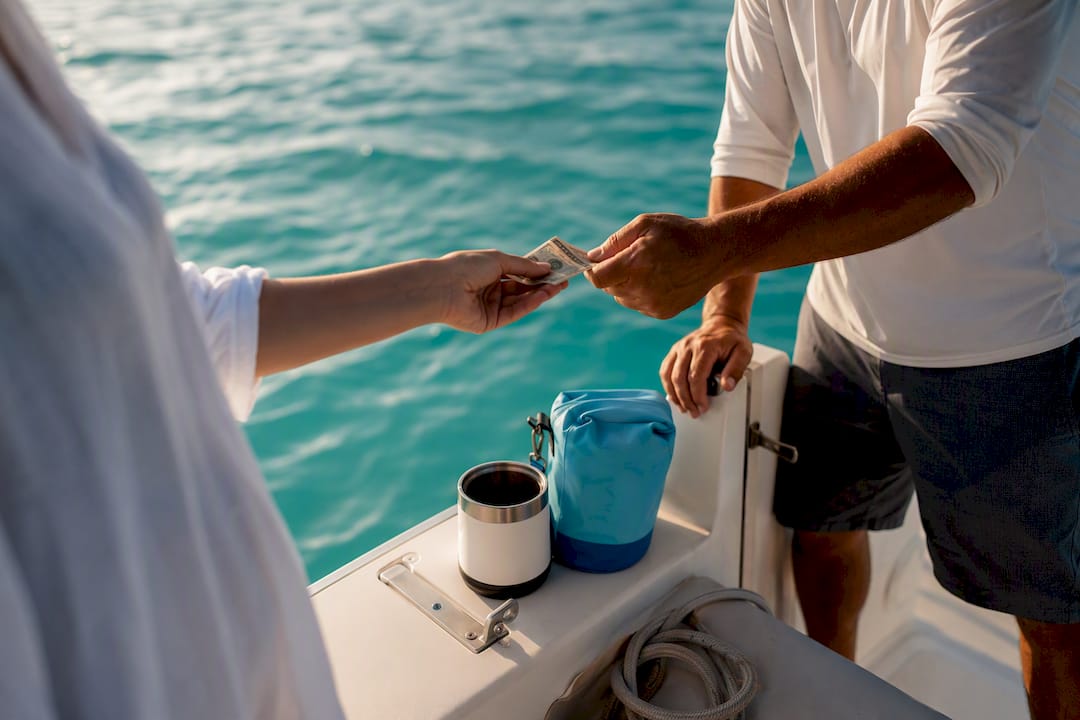
Tipping is customary on nearly every boat tour in U.S. waters, and you don’t need a complicated formula to get it right. For shared trips like snorkel tours or sunset cruises, plan on $10 to $25 per person. For a private charter, tip 10% to 20% of the total charter fee, with 15% as the standard for solid service. Always double check your booking confirmation first. Some operators bake a service charge into the price, and tipping on top of that is generous but not required.
TL;DR:
Tipping on U.S. boat tours generally ranges from $10 to $25 per person for shared trips and from 10% to 20% of the total fee for private charters.
Tips are usually split among crew members, with larger groups pooling tips, and are most appropriately given at the end of the trip once the boat is docked.
Cash remains the preferred payment method for tipping, with small denominations and waterproof pouches recommended, while digital options are acceptable but may be delayed.
On private charters, tipping should be 10% to 20% of the total fee, often reflecting the physical effort and service quality provided by the crew.
Outside the U.S., tipping norms vary by region, and it is advisable to confirm local customs to avoid under- or over-tipping.
Table of Contents
Is Tipping Customary on Boat Tours? A Quick-Reference Cheat Sheet
Yes, tipping is expected on the overwhelming majority of boat tours booked in the United States, whether that’s a two-hour dolphin cruise in Destin or a full-day sportfishing charter out of Key West. The crew running your trip usually earns a base wage that assumes gratuities will make up a real chunk of their take-home pay, similar to restaurant service in most American cities. Skipping the tip entirely isn’t illegal or scandalous, but it’s not the local norm either.
The amount depends heavily on the type of trip. A quick shared excursion calls for a flat per-person amount, while a private charter runs on percentages. Here’s how that breaks down in practice.
Tour Type | Typical Tip | Notes |
Short snorkel or shared reef trip | $10–$25 per person | Higher end for hands-on gear help |
Half-day wildlife or whale-watch cruise | $15–$25 per person | Reflects longer trip and narration |
Sunset or fireworks cruise | $10–$20 per person | Lower hands-on service, still tip-worthy |
Private day charter | 10–20% of charter fee | 15% is the common norm |
For shared tours, per-person guidance around $10 to $25 holds up across most tourist markets, adjusted for how much physical work the crew does. A snorkel trip where deckhands are fitting masks, checking fins, and pulling kids back onto the boat justifies the higher end of that range. A sunset cruise where you’re mostly just sitting and watching the sky can land closer to $10.
A few quick guidelines to keep in your back pocket:
Round up rather than down. A $22 tip feels awkward to calculate on the dock; $25 doesn’t.
Add more per person if the trip runs longer than the standard window (a 4 hour outing versus a quick 90 minute ride).
Kids typically don’t require a separate tip, but families should budget the adult range per paying ticket.
If snorkel gear, drinks, or photos are included and the crew handles all of it personally, tip toward the top of the range.
Private charters work differently, and that math gets its own section below.
Who Actually Gets Your Tip on a Boat Tour?
On most boats, you hand your tip to the captain, who then splits it among the crew. This is the simplest and most reliable method, especially on smaller boats with two or three staff. On larger group tours with five or six crew members handling different jobs, look for a designated tip jar or container near the exit ramp instead of hunting down each person individually.
The math behind that split isn’t random. On a typical captain-and-one-mate charter, the customary breakdown runs roughly 60% to 70% to the captain and 30% to 40% to the mate. On bigger crews, the split flattens out and pooled distribution becomes standard, since no single person did all the work.
There’s one common exception worth knowing. If a private chef, a marine biologist guide, or a photographer joined the trip and did something clearly above the baseline job, it’s fine to hand that person a separate, smaller tip directly. Just don’t make it awkward by broadcasting the amount.
If you’re not sure how to physically hand over cash without it feeling stiff, keep it simple:
Say something direct like, “This is for the crew, thank you for a great trip.”
Hand it to the captain if there’s no visible jar.
If there’s a tip jar, drop it in on your way off the boat rather than making a production of it.
Pro Tip: If you genuinely can’t tell who’s in charge of splitting tips, just ask one crew member directly: “How do you all usually handle tips?” Nobody finds that question rude, and it removes all the guesswork.
When and How Should You Actually Hand Over the Tip?
Timing matters more than most tourists realize. The right moment is at the very end of the trip, once the boat is docked and the initial rush of gathering bags and helping people off has died down. Tipping during boarding makes no sense since the crew hasn’t done anything yet, and tipping mid-disembarkation just adds chaos to an already busy moment.
Here’s a simple sequence that works on almost any boat tour:
Wait until the boat is secured at the dock.
Gather your cash before people start standing up to leave.
Hand it to the captain or drop it in the tip jar as you exit, not before.
Say a quick thank-you if you have a second, but don’t feel obligated to make conversation.
Cash remains the preferred method, and there’s a practical reason for that. Crews often want same-day distribution, and platform-processed tips sometimes arrive on a delayed payout cycle rather than landing in someone’s pocket that afternoon. If your booking platform offers a digital tip option at checkout, that’s an acceptable method, though it may not guarantee immediate receipt by the crew. Carrying cash as a backup remains advisable for timely tipping.
A little prep goes a long way here:
Break a $100 bill into smaller denominations before your trip. Nobody wants to hand a captain a single large bill and awkwardly ask for change.
Use a dry pouch or waterproof phone case to hold your cash. Boats get wet, bills get soggy, and a $20 that’s stuck together is a hassle for everyone.
Check your booking confirmation the night before so you’re not scrambling for an ATM at the marina.
Pro Tip: Stuff a handful of $5 and $10 bills into a small dry bag the night before your trip. It takes thirty seconds and saves you from digging through a soaked backpack while everyone else is filing off the boat.
Private Charters vs. Shared Tours: How the Percentages Work
Private charters run on percentages, not flat per-person amounts, because the whole pricing structure is different. You’re not buying a ticket alongside twenty strangers. You’re renting the boat and crew for the day, and tipping 10% to 20% of that total fee is the standard, with 15% covering typical good service in U.S. waters.
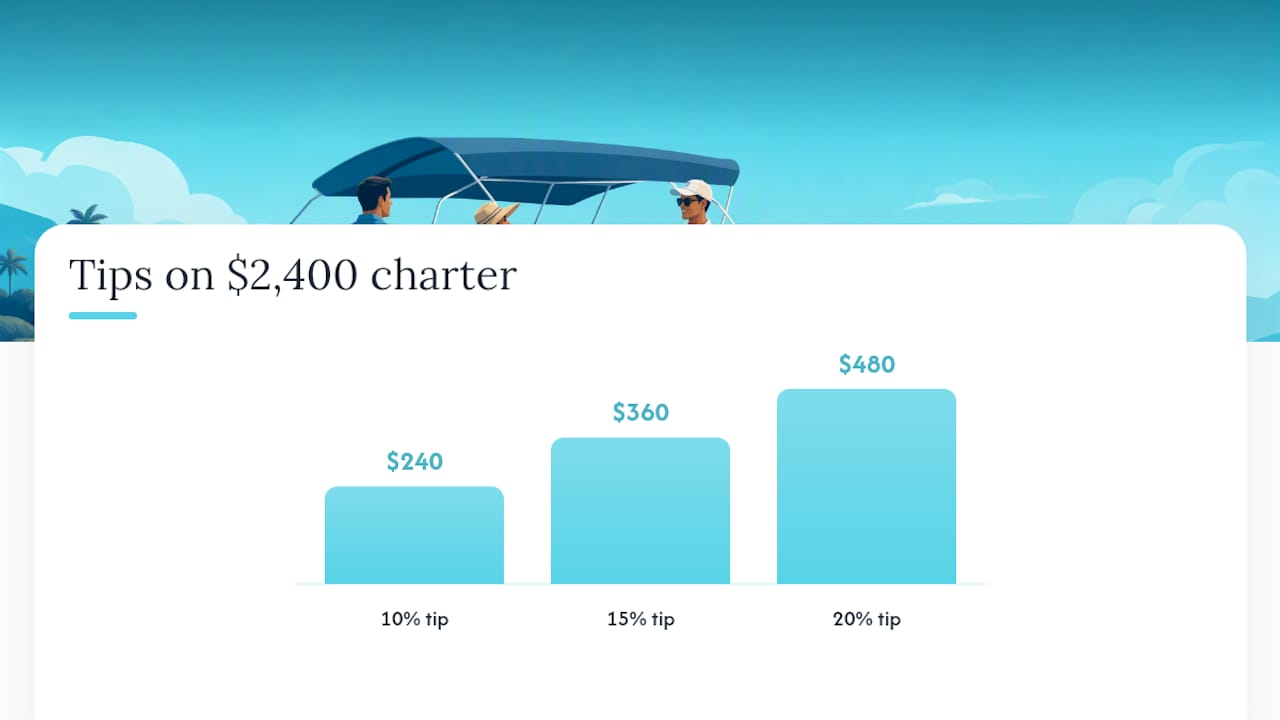
The percentage applies to the charter fee itself, not to any add ons like fuel surcharges or dockage fees that sometimes get billed separately. If your invoice separates those line items, tip based on the base charter cost.
Here’s what that actually looks like in dollars:
Charter Fee | 10% Tip | 15% Tip | 20% Tip |
$1,200 | $120 | $180 | $240 |
$2,400 | $240 | $360 | $480 |
$3,600 | $360 | $540 | $720 |
A few things to keep in mind when you’re doing this math:
Exceptional service (a captain who found fish all day, or crew who went out of their way for seasick passengers) justifies pushing toward 20%.
Mediocre but professional service still generally warrants the 10% to 15% range rather than nothing.
If a mate did the bulk of the physical work while the captain mostly ran the wheel, it’s fine to ask the captain to weight the split accordingly.
Why does the percentage model even exist? Crew pay on charters is often structured with the expectation that gratuities make up a real share of daily income, which is why the norm sits meaningfully higher than the flat per-person tipping you’d do on a shared tour.
Cruise Excursions and Booking Platforms: What Changes
If you’re tipping crew as part of a larger cruise vacation, the rules shift slightly. Most mainstream cruise lines already add an automatic service charge per passenger, per night, which covers your cabin steward and dining staff. That automatic charge does not cover everyone you’ll interact with on a shore excursion.
Keep this distinction in mind before you assume you’re covered:
Automatic gratuities on your cruise bill typically apply to onboard staff, not third-party excursion operators at the port.
Local boat tour guides and drivers working a shore excursion almost always expect a separate, out-of-pocket cash tip.
Porters handling your luggage at the dock are a separate tip entirely, usually a couple dollars per bag.
Booking platforms for tours (whether through the cruise line or a third-party site) sometimes let you add a tip at checkout, but that doesn’t replace handing cash to the crew on the day.
If your booking confirmation doesn’t spell out whether gratuity is included, don’t guess. Contact guest services or the excursion operator directly before your trip. It takes one email and saves you from either double tipping or accidentally standing there with empty hands.
The Tipping Mistakes That Trip Up Almost Every Tourist
Most tipping mishaps on boat tours come down to poor planning, not bad intentions. The most common one: showing up with nothing smaller than a $50 bill and realizing there’s no way to make that work gracefully. Others include tipping before the trip even starts, assuming a gratuity is automatically included when it isn’t, or simply forgetting to budget for tips at all until they’re standing on the dock.
Before you board, glance at your booking confirmation for language like “gratuity included” or “service charge.” If you see it, a smaller optional tip on top is a nice gesture but not expected. If you don’t see it, budget as if tipping is fully on you, because it is.
Do:
Bring small bills in a dry pouch.
Tip at the end, once you’re docked.
Ask if you’re unsure how the crew splits tips.
Don’t:
Assume a service charge exists without checking your confirmation.
Tip during boarding or the disembarkation scramble.
Skip tipping just because you didn’t plan ahead.
Public conversation around tipping norms has shifted quite a bit in recent years, and boat tours are no exception. When you’re unsure, published per-person ranges and charter percentages are a reliable starting point, adjusted up or down based on how the crew actually performed that day.
What Operators See From the Deck
Running group boat tours day after day gives you a pretty clear read on how tipping actually plays out, and it rarely matches the anxious guesswork tourists do beforehand. Most groups tip fine once they know the range. The confusion almost always comes from not knowing whether it’s expected at all, not from resistance to the idea itself.
Crews collecting tips at the end of a group tour typically pool everything and split it based on who worked the trip that day, whether that’s the captain alone or a captain plus one or two deckhands helping with floats, coolers, and safety checks. That pooled approach matters for more than fairness. Crew who feel appreciated tend to be more attentive, and attentiveness on the water is a safety issue as much as a service one.
Crews who feel genuinely thanked for a long, hot day on the water tend to bring more energy to the next group, and that shows up in small ways: quicker help with a float, a sharper eye on kids near the swim ladder, an extra few minutes making sure everyone got their photo.
None of this requires guests to overtip or feel pressured. A fair tip in the standard range, handed over calmly at the end of the trip, does the job every time.
Do Tipping Norms Change by Region or Culture?
Tipping expectations on boat tours vary more by destination than most travelers assume, and that matters if you’re island-hopping through multiple countries on the same trip. In the continental U.S., the per-person and percentage ranges above are the widely accepted norm, and crews generally expect them.
Caribbean destinations often follow a similar structure to U.S. norms, though some islands see slightly different customary amounts depending on how tourism-dependent the local economy is and whether service charges are already folded into tour pricing. In parts of Europe and much of Asia, tipping on boat tours is far less baked into the culture, and a smaller gesture (or none at all) doesn’t carry the same social weight it does stateside.
The safest approach when you’re traveling somewhere unfamiliar: ask your hotel concierge or the tour operator directly what’s customary before you book. It takes one quick question and spares you from either underpaying by local standards or overtipping in a place where it isn’t expected.
For trips within the U.S., you’re on solid ground following the ranges already outlined here. The bigger variable domestically isn’t geography, it’s trip type, since a rowdy party boat and a quiet birdwatching cruise call for different tipping instincts even in the same city.
Fishing Charters, Sightseeing Cruises, and Luxury Yachts: Does Etiquette Change?
The type of boat tour changes the tipping conversation more than most people expect. A fishing charter crew is often doing physically demanding, specialized work all day, baiting hooks, netting catches, cleaning fish at the end. That labor intensity is part of why fishing charters tend to sit at the higher end of the private charter percentage range, closer to 15% to 20%.
Sightseeing cruises are more passive by nature. The crew is steering, narrating, and keeping things safe, but there’s less hands-on physical labor involved. The standard $10 to $25 per person range fits comfortably here, without needing to stretch toward the top of it unless the trip ran long or the guide’s narration genuinely elevated the experience.
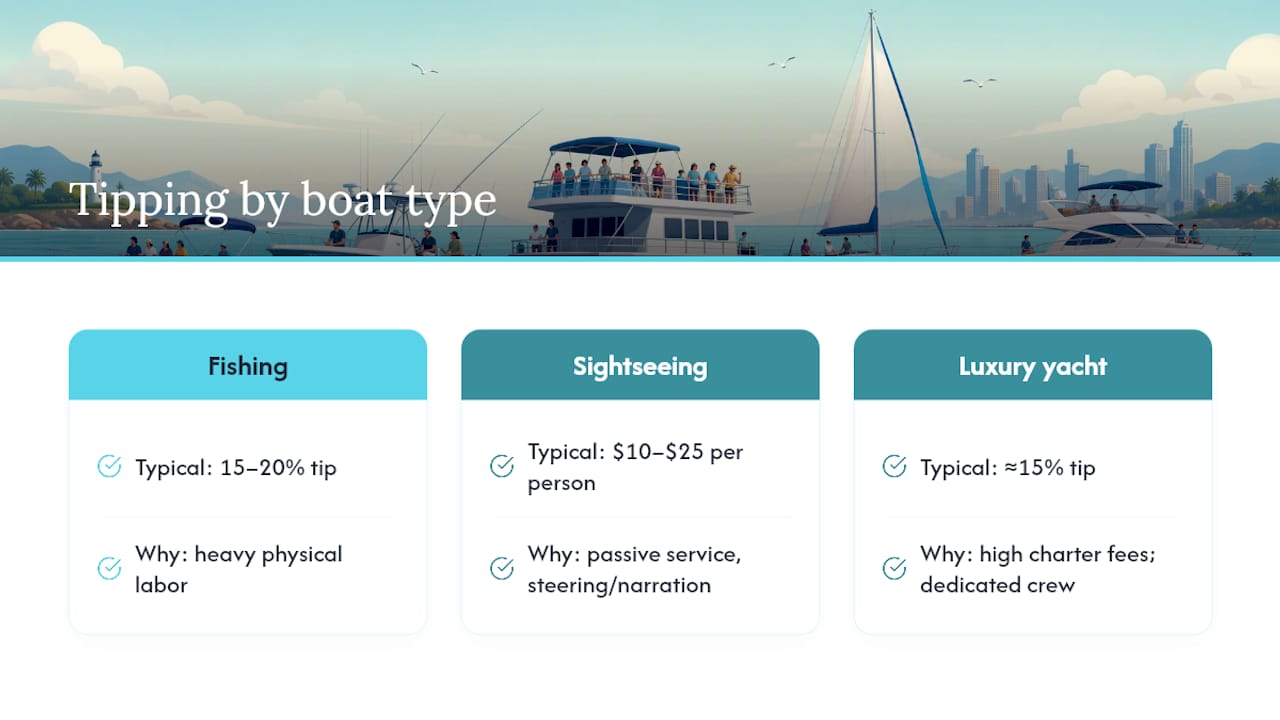
Luxury yacht tours sit in their own category. Because the total charter fee is often significantly higher, a straight 15% tip can amount to a large sum, and that’s expected given the level of service, usually a dedicated captain, a mate, sometimes a steward handling food and drinks. On multi-day or extended luxury charters, some guests choose to tip incrementally throughout the trip rather than all at once at the end, particularly if different crew members are clearly assigned to different tasks.
Across all three categories, the underlying principle stays the same: match your tip to the visible effort and skill the crew brought to your specific day on the water.
What If the Service Wasn’t Good?
A disappointing trip doesn’t automatically mean zero tip, but it does justify adjusting downward. Separate the boat tour’s circumstances (weather, wildlife not showing up, a bumpy ride) from actual crew performance (rudeness, poor safety practices, ignoring basic requests). Tourists often blame the crew for things nobody could control, which isn’t fair to good staff having a rough-luck day.
If the crew was genuinely negligent, unsafe, or dismissive, it’s reasonable to tip toward the very low end of the range, or skip it if the experience was seriously mishandled. That said, a quiet conversation with the captain or a note to the booking company afterward does more good than silently underpaying and walking away frustrated. Feedback actually reaches decision-makers; a smaller tip on its own often doesn’t communicate why.
If the issue was a booking or pricing problem rather than crew behavior, direct that complaint to whoever you booked through, not the tip amount. Punishing a deckhand financially for a scheduling mix-up they didn’t create isn’t fair, and it doesn’t fix the underlying issue anyway.
When in doubt, err toward a modest tip rather than nothing at all, unless the service was genuinely and clearly unacceptable.
If You Can’t Tip, There Are Still Ways to Show Appreciation
Money isn’t the only way to make a crew’s day better, and it’s worth knowing the alternatives if your budget is tight or you simply forgot to grab cash. A detailed, honest online review naming the captain or crew by name carries real weight for small tour operators, since word of mouth and star ratings often drive their next season of bookings more than any single tip does.
A few low-cost or no-cost ways to show genuine appreciation:
Leave a specific, named review mentioning the crew member who stood out.
Tag the operator in a social media post if you took good photos of the trip.
Tell the front desk or booking staff directly that the crew did a great job.
A simple, sincere thank-you at the end of the trip goes further than people assume.
None of these substitute for a fair cash tip when you can afford one. But if you’re genuinely tapped out after a vacation full of expenses, a strong review or a direct compliment to management isn’t a hollow gesture. Small operators live and die by their reputation, and a specific, positive mention helps far more than a generic five-star rating with no comment attached.
What I’d Tell a Friend Before Their First Boat Tour
If there’s one habit worth adopting, it’s this: sort out your cash the night before, not the morning of. Break a couple of larger bills into smaller ones, tuck them into a dry pouch, and check your booking confirmation for any mention of included gratuity while you’re at it. That five minutes of prep eliminates almost every awkward tipping moment I’ve seen described by tourists after the fact.
The other habit worth building is simple generosity when it’s earned. If a deckhand spent twenty extra minutes helping your kid get comfortable with a float, or a captain found you the calm water you needed after someone got seasick, push toward the top of the range or beyond it. The published ranges are a floor, not a ceiling.
What I’d push back on is the idea that tipping etiquette on boats needs to be complicated. It doesn’t. Match the tip to the trip type, hand it over calmly at the end, and don’t let the fear of doing it wrong keep you from doing it at all. Most crews would rather get a fair tip handed over a little clumsily than none at all because a guest overthought it.
— Troy
How Tipping Works on a Guided Crab Island Tour
Here’s the good news if you’re heading out on a guided Crab Island tour: the tipping routine is refreshingly simple. Guided tours typically run with experienced captains and crew who handle everything, from floats and snorkel gear to the onboard restroom, so you can focus on the trip instead of logistics.
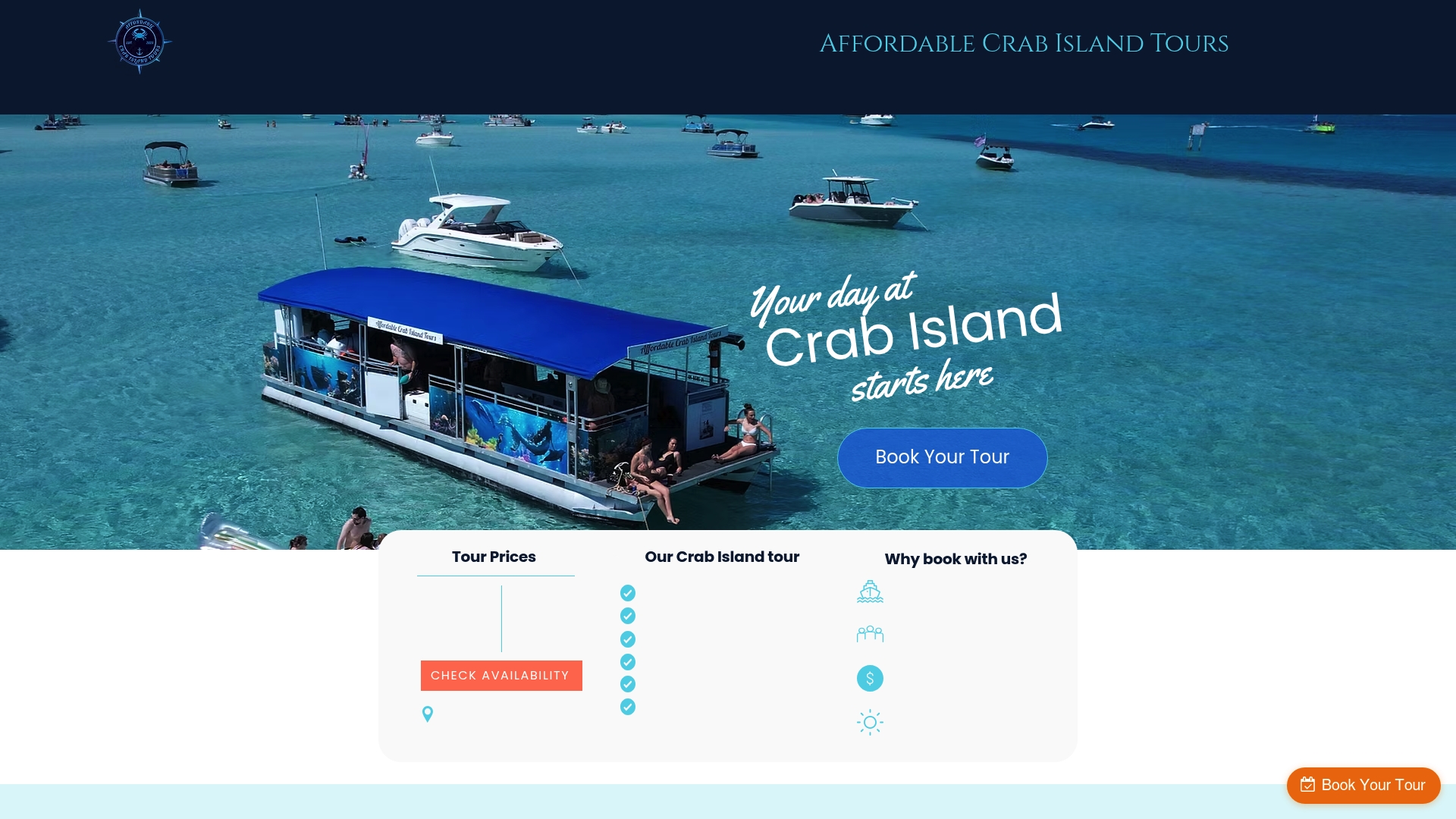
Tipping works the same way it does on any shared group tour. Cash to the captain at the end of the trip, pooled and split among the crew who worked that day, is the standard and appreciated approach. There’s no need to overthink the amount. The per-person ranges covered earlier in this guide apply here just as they would on any comparable outing in Destin, so bring small bills and hand them over once you’re back at the dock. If your group had a great time thanks to attentive crew help with floats, snorkel gear, or keeping the kids safe in the water, that’s exactly the kind of service worth tipping toward the higher end for. Ready to book your own outing? Check available dates for a Crab Island tour.
Sources
The ranges, percentages, and etiquette advice in this guide draw from operator-facing tipping resources, cruise industry reporting, and mainstream coverage of shifting tipping norms.
Recommended
Comments