.png)
Life Jackets for Kids on Boat Tours: What Parents Need to Know

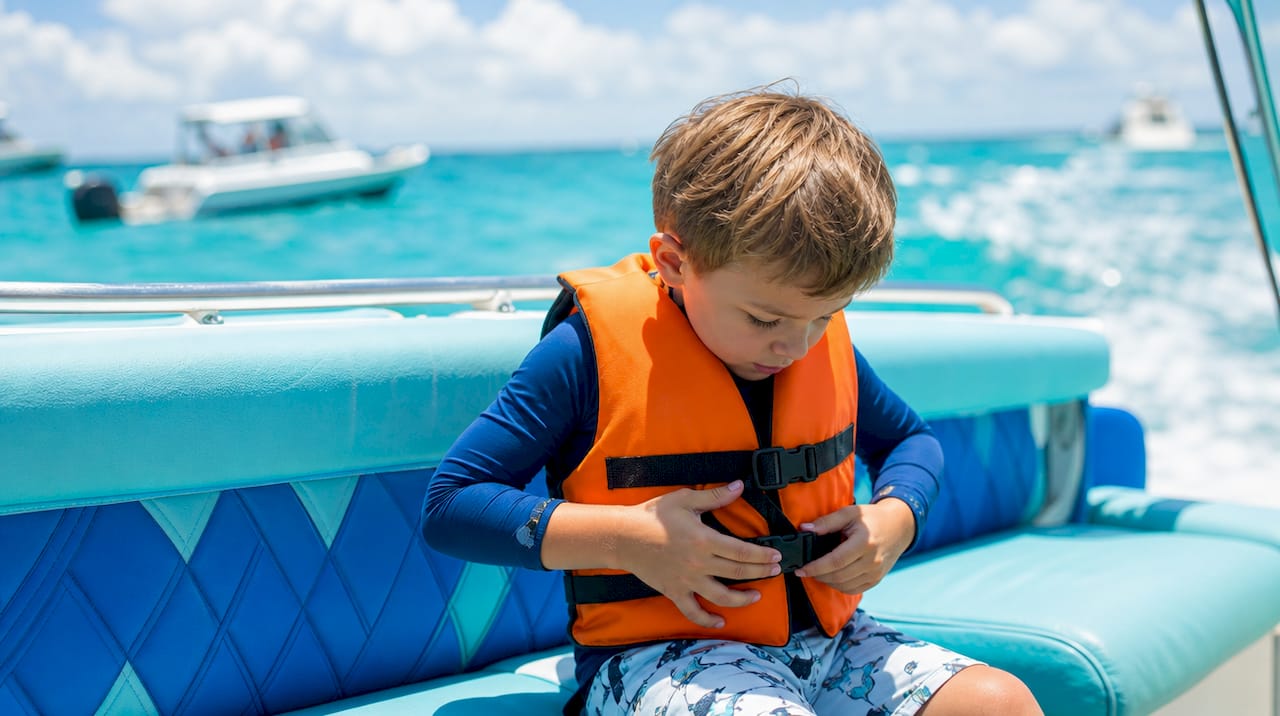
Under federal law, children under 13 must wear a U.S. Coast Guard-approved life jacket whenever a recreational vessel is underway. That rule applies on commercial boat tours just as it does on private boats. The role of life jackets for children on boat tours goes beyond legal compliance: the CDC notes that simply carrying a life jacket aboard is not enough. It has to be worn to do anything. Safe Kids Worldwide and NASBLA (National Association of State Boating Law Administrators) both reinforce that message, and USCG boating guidance makes the baseline unmistakable.
Before you board, run through these four steps:
Confirm the tour operator carries USCG-approved PFDs in your child’s size (infant, child, or youth).
Pack your own child-sized jacket if your child has a preferred fit or a medical need.
Put the jacket on your child at the dock, before boarding, not after the boat leaves.
Model the behavior: wear your own life jacket so your child sees it as normal.
Pro Tip: At check-in, ask the crew directly: “Do you have a crotch-strap vest in my child’s weight range?” That one question tells you whether the operator is prepared for toddlers.
Key Takeaways
Children under 13 must wear a USCG-approved life jacket while any recreational vessel is underway, and a large share of recreational boating drowning victims were not wearing one when the incident occurred.
Point | Details |
Federal rule for children | Children under 13 must wear a USCG-approved life jacket on any recreational vessel underway. |
State rules can be stricter | Check your state’s boating agency and any park-specific rules before you book or board. |
Type III for family boating | Type III jackets balance comfort and flotation; infants need crotch straps and head support. |
Fit check before boarding | Run the lift test: jacket should not rise above the chin or ears when lifted by the shoulders. |
Crab-island-tours preparation | Carries USCG-approved child and infant PFDs, provides a safety briefing, and assists with fitting at boarding. |
Table of Contents
When do children need to wear a life jacket on a boat?
The short answer: whenever the boat is moving, and in several situations when it is not. Here is where wear is required or strongly recommended:
Vessel underway (including drifting): Federal law triggers the moment the boat is in motion. Drifting counts as underway in most interpretations.
Boarding and exiting: Docks and gangways are where falls happen most. Put the jacket on before your child steps onto the boat, and keep it on until they are back on solid ground.
Near open water or on floats: If your tour anchors at a sandbar or floating platform, children should keep their PFDs on while moving between the boat and the float. Water depth and currents at popular anchoring spots can be unpredictable.
Transfers between boat and shore: Even a short step across a dock can go wrong for a small child. Keep the jacket on.
Enclosed-cabin exception: Federal rules allow an exception for children in an enclosed cabin, but most family boat tours in open coastal waters do not have enclosed cabins. Unless the crew specifically confirms your child qualifies for that exception, treat the jacket as required.
One distinction parents often miss: “on board” and “in the water” are different situations on tours that include floating stops. When the boat is anchored and children are swimming off the side, the federal underway rule technically does not apply. But strong swim skills cannot be assumed, currents exist, and rescue time increases when a boat is anchored away from shore. Keeping the jacket on during water play is the safer call for young or less confident swimmers.
Pre-boarding checklist:
Child’s current weight (to match the jacket’s weight range)
Child’s mobility needs (can they move freely with the jacket on?)
Comfort level in water (strong swimmer vs. non-swimmer)
Activity planned (anchored float stop, open-water swimming, or deck-only)
What are the U.S. legal requirements for child life jackets?
The federal baseline is clear. USCG regulations require that on any recreational vessel underway, every child under 13 must wear a USCG-approved life jacket. The jacket must be the right size for the child and in serviceable condition. That rule covers commercial boat tours operating as recreational vessels.
States can go further, and many do. California’s boating rules, for example, require children under 13 to wear a life jacket on all vessels under 26 feet. Some state parks and Army Corps of Engineers recreation areas impose seasonal or water-level-triggered wear requirements that apply regardless of the child’s age. The NPS notes that park or Army Corps rules can add requirements under specific conditions, and some parks run life jacket loaner programs to remove the cost barrier for families.
The numbers behind the rule: According to 2024 USCG data reported by Texas Parks and Wildlife, recreational boating drowning victims are often not wearing a life jacket, and drowning is a leading cause of death in recreational boating fatalities. Wearing one is not a formality.
How to check the rules that apply to your specific trip:
State boating agency website: Search “[your state] boating regulations children life jacket” for the current age cutoff and any size or vessel-type requirements.
Park or waterway authority: If your tour departs from a national or state park, check that park’s specific rules.
Ask the operator: A reputable tour company knows the local rules and should be able to tell you exactly what is required for your child’s age and weight.
California DBW is a useful model for understanding how state rules layer on top of federal ones, even if you are not boating in California.
Why wearing a life jacket actually saves lives
Drowning does not look like it does in movies. A child who falls overboard is typically silent, face-down, and unable to call for help within seconds. Research on drowning prevention shows that immediate flotation after entering the water reduces the risk of rapid submersion and helps maintain an airway until rescue arrives. A life jacket provides that flotation automatically, even if the child is unconscious or panicked.
The gap between “jacket on board” and “jacket being worn” is where most tragedies happen. A PFD stored under a seat cannot turn a child face-up. It cannot keep a small head above the waterline. It cannot buy the two or three minutes a crew needs to reach a child who went over the side.
“Wearing a life jacket can save your life.” U.S. National Park Service, Stay Afloat: Always Wear a Life Jacket
Cold water adds another layer of risk. Even in warm-weather destinations, water temperatures can cause cold shock, which triggers involuntary gasping and can lead to water inhalation within the first 30 seconds of immersion. A properly fitted PFD keeps the airway clear during that critical window. For children, whose body mass is smaller and heat loss faster, that window is even shorter than for adults.
Florida Fish and Wildlife data reinforces the same point: a large share of Florida boating fatalities involve falls overboard, and many victims were not wearing PFDs. The pattern is consistent across every state that tracks this data.
Which type of life jacket is right for your child on a boat tour?
Not all life jackets are built for the same situation. Here is a practical breakdown for family boating:
Type I (Offshore Life Jacket): Highest buoyancy, designed to turn an unconscious wearer face-up. Best for offshore or rough water where rescue could take a long time. Bulkier and less comfortable for kids on a calm coastal tour.
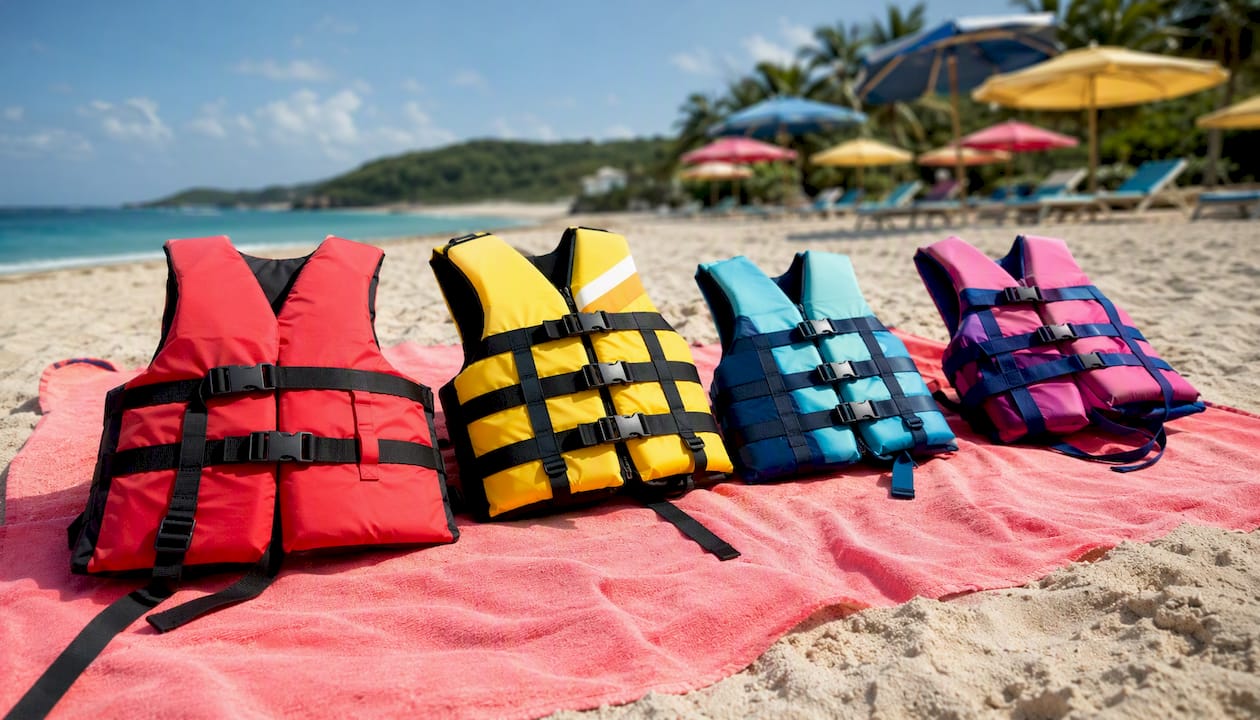
Type II (Near-Shore Buoyant Vest): Turns most unconscious wearers face-up in calm water. Less bulky than Type I, but still not the most comfortable for active kids.
Type III (Flotation Aid): Recommended for family boating because it balances comfort with flotation and comes in small sizes. It does not guarantee face-up positioning for an unconscious wearer, so it is best suited for calm, supervised water where rescue is quick. Most child-sized vests sold for recreational boating are Type III.
Inflatables: Not approved for children under 16 in most contexts. Do not use an inflatable PFD for a child on a boat tour.
What to look for on the label: Every USCG-approved jacket carries a label with the approval number and the weight range it covers. New FWC-highlighted labeling also includes performance-level icons that match the jacket to activity and swim skill. A low-level performance jacket favors mobility near shore; a higher-level jacket prioritizes flotation and face-up positioning for offshore use.
Sizing categories and key design features:
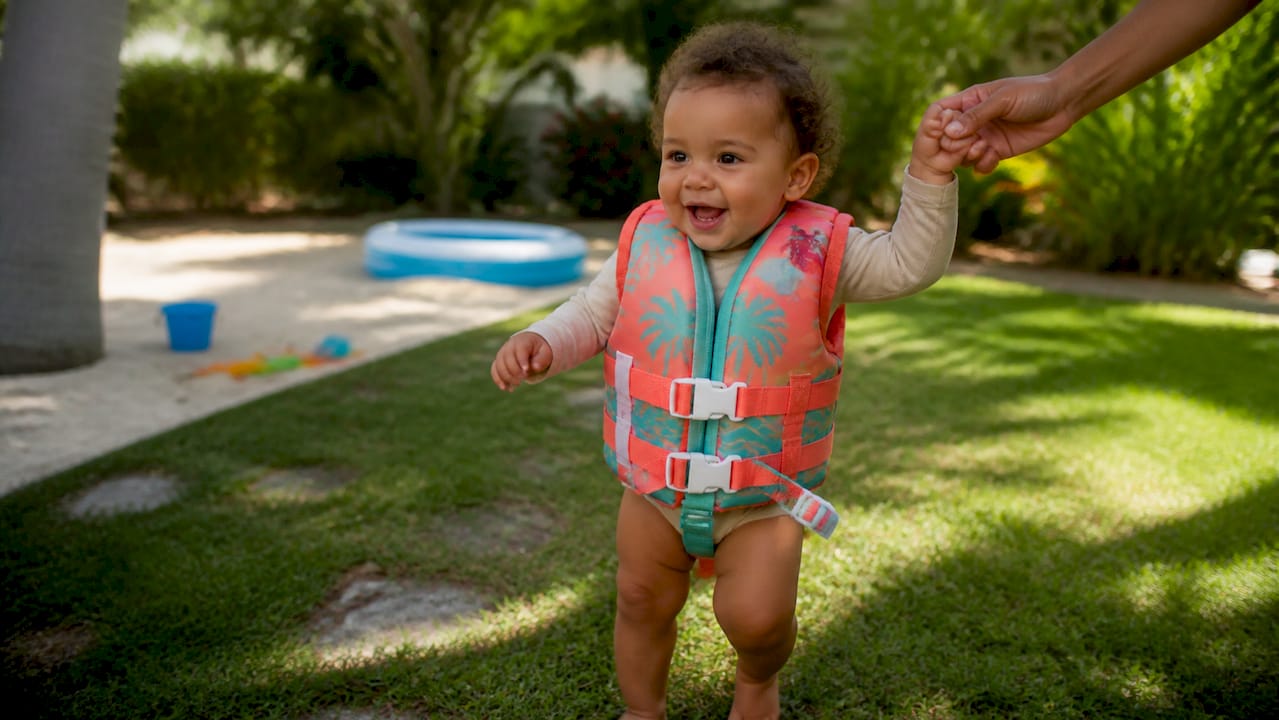
Infant (under 30 lbs): Must have a crotch strap and head support. These two features prevent the jacket from riding up over a small child’s face.
Child (30–50 lbs): Crotch strap still recommended; check that the jacket fits snugly without restricting breathing.
Youth (50–90 lbs): Standard vest design; confirm the weight range matches the child’s current weight.
Adult jackets do not work for children. The buoyancy is distributed for a larger body mass and will not keep a child’s head above water correctly.
Pro tip from Safe Kids Worldwide: Inflatable pool toys and water wings are not lifesaving devices. Never use them as a substitute for a USCG-approved PFD on open water.
Buying checklist:
USCG approval label present
Weight range matches child’s current weight (not a future weight)
Crotch strap included for children under 50 lbs
Head support for infants
All zippers, snaps, and buckles functional
How to fit a child’s life jacket correctly
A jacket that fits wrong can be as dangerous as no jacket at all. Run through this sequence at the dock, before boarding:
Lift test: With the jacket buckled and straps snug, lift the child by the jacket’s shoulders. The jacket should not rise above the child’s chin or ears. If it does, it is too big.
Snug straps: All straps should be tight enough that you cannot pinch more than an inch of material. Loose straps allow the jacket to shift during a fall.
Crotch strap: For children under 50 lbs, the crotch strap must be fastened. Without it, the jacket can ride up over the face on impact with water.
Zipper and snaps: Every closure must be fully engaged. A half-zipped jacket can open on impact.
Head support check: For infants, confirm the head support pillow is positioned behind the neck, not bunched under the chin.
Common mistakes to avoid:
Buying a jacket for the child to “grow into.” An oversized jacket will not keep a child face-up. Buy the right size now and replace it as the child grows.
Leaving straps loose because the child complained. Snug is correct; uncomfortable means the wrong size.
Skipping the lift test because you are in a hurry. It takes 10 seconds and catches the most dangerous fit errors.
Replace a jacket when you see cracked or waterlogged foam, broken hardware, faded or missing approval labels, or any visible damage to the outer shell. Manufacturer recommendations on service life vary, but visible damage is always a disqualifier.
Pro Tip: The night before the trip, have your child put on the jacket at home and walk around in it for 10 minutes. Familiarity with the feel makes them far less likely to resist wearing it on the boat.
What to expect from a boat tour operator regarding life jackets
Reputable commercial tour operators carry USCG-approved PFDs in infant, child, and youth sizes and conduct a safety briefing before departure. That briefing should cover where life jackets are stored, the wear rules for children, and how to put one on correctly. If a tour skips the briefing entirely, that is a red flag.
Operator transparency about available child sizes during booking and at check-in significantly reduces confusion and improves compliance on family tours. Ask before you arrive, not after you board.
Questions to ask when booking:
Do you carry USCG-approved life jackets in infant and toddler sizes?
Are crotch-strap vests available for children under 30 lbs?
Are children required to wear life jackets while the boat is underway?
Will the crew assist with fitting at boarding?
Check-in checklist for parents:
Confirm the operator has your child’s size before you get on the boat.
Request a fitting from the crew if your child is between sizes.
Watch the safety demonstration and make sure your child watches it too.
Ask where the extra jackets are stored in case you need a swap mid-tour.
What to bring and what not to rely on:
Bring your own child-sized PFD if your child has a specific fit need or if you are unsure the operator carries the right size.
Bring quick-dry clothing layers; wet, heavy clothing makes it harder to swim.
Do not rely on inflatable pool floats or water wings as safety devices at anchored stops. Safe Kids Worldwide is explicit that these are not lifesaving equipment.
Some national and state parks offer life jacket loaner programs at no cost, which is worth checking if your tour departs from a park-managed waterway.
How to keep kids wearing their life jackets the whole trip
Getting a child into a life jacket is one thing. Keeping it on for four hours is another. These tactics work:
Model it yourself. Safe Kids Worldwide research shows that adult and crew behavior is the single strongest predictor of child compliance. If every adult on the boat is wearing a jacket, children accept it as the norm.
Practice at home. Let your child wear the jacket around the house before the trip. Familiarity removes the novelty and the resistance.
Positive reinforcement. Small rewards for keeping the jacket on (a sticker, a snack, first pick of the float) work better than repeated reminders.
Choose a comfortable design. A jacket that pinches or overheats will generate constant complaints. Mesh panels and softer foam make a real difference on a warm day.
Distraction during boarding. The moment of putting on the jacket is when resistance peaks. Have a snack or a game ready for that transition.
Ask the crew to model jacket wear throughout the trip, not just during the briefing. A captain who keeps their PFD on sends a message no parent speech can match.
When a child insists on removing the jacket, pick your battles carefully. At anchor in calm, shallow water with a strong swimmer, a brief removal may be reasonable. While the boat is moving, it is not negotiable. Have a replacement jacket accessible on deck so a swap takes under a minute if the fit becomes uncomfortable.
Pro Tip: Pack a bright-colored, quick-dry shirt for your child to wear under the jacket. If the jacket comes off briefly at a float stop, the high-visibility color helps the crew spot your child instantly.
What operators who take this seriously actually do
Every family that books a boat tour deserves a crew that treats child safety as a non-negotiable, not a checkbox. The gap between operators who do this well and those who do it poorly comes down to three things: the right sizes on board, crew who know how to fit them, and a briefing that actually reaches the kids.
Toddler fittings are where most operators fall short. An infant vest with a crotch strap takes about 90 seconds to fit correctly, but only if the crew has done it before and the jacket is accessible on deck rather than buried in a storage compartment. Families with children under three should ask specifically about this before booking, not at the dock.
The operators worth trusting are the ones who answer those questions without hesitation, who store extra jackets where parents can see them, and who treat the safety briefing as something the children need to hear, not just the adults. That combination of preparation and transparency is what actually keeps kids safe on the water.
Crab-island-tours keeps your family safe from the moment you board
Every family that steps onto a Crab-island-tours vessel in Destin gets USCG-approved life jackets in infant, child, and youth sizes, a crew-led safety briefing before departure, and hands-on fitting assistance at boarding. You do not need to bring your own gear or guess whether the right size will be available.
When you book, mention your youngest child’s weight so the crew can pull the correct jacket before you arrive. Arriving 10–15 minutes early gives the crew time to fit every child properly before the boat leaves the dock. The 4-hour tour includes floats, an onboard restroom, and experienced captains who handle all the logistics so you can focus on your family, not the boat.
Reserve your family’s spot on a Crab Island tour and come ready to relax. The safety side is handled.
Sources
These are the primary sources used in this article. Each covers a different piece of the safety and legal picture:
Recommended
Comments