.png)
5–10 Minutes from Destin Harbor to Crab Island, Take a Captained Tour

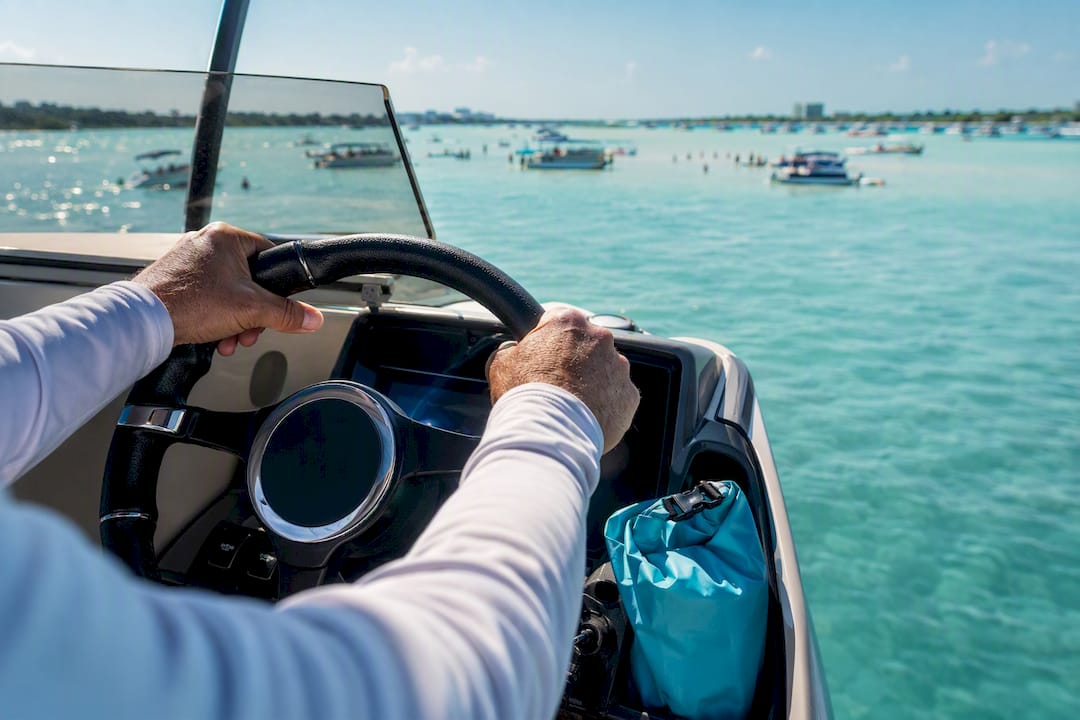
Crab Island can only be reached by water. There’s no road, no bridge, no walking path, and swimming to it is dangerous. Your realistic options are a shuttle or water taxi, a captained charter, a pontoon rental you drive yourself, or a personal watercraft or paddlecraft if you’re experienced. For most families and first-timers, a captained shuttle or charter is the lowest-stress, safest way to get to Crab Island.
TL;DR:
Water taxis and shuttles cost between $39 and $59 per adult for a 2.5 to 3-hour round trip, with departures from Destin Harbor on a fixed schedule.
Private captained boats and rental pontoons often involve similar costs, but include extras like a licensed captain, restroom, and shade, with rental policies varying by provider.
Personal watercraft and kayaks are faster but less practical for lounging and require advanced paddling skills and knowledge of local regulations, especially safety and anchor etiquette.
Weather conditions such as storms and wind can change rapidly, making early morning trips preferable and rescheduling common during summer afternoons.
Always verify tide predictions and follow safety rules: do not swim to Crab Island, wear life jackets, and avoid glass containers for environmental safety.
Table of Contents
Which way to get to Crab Island fits your group?
Five ways get you there, and they don’t cost or feel the same. Match the option to your group size, patience for logistics, and budget before you book anything.
Shuttle or water taxi: Cheapest per-person option, fixed schedule, best for solo travelers, couples, or small families who don’t want to think about navigation.
Captained charter: You book the whole boat, a licensed captain handles everything, and it’s ideal for groups who want zero logistics and more time on the water.
Pontoon rental (DIY): You drive it yourself. Cheaper per boat for a group, but you’re responsible for docking, anchoring, and reading the crowd out there.
Personal watercraft (jet ski): Fast and fun, but tricky to anchor safely and not built for lounging at the sandbar for hours.
Kayak or paddleboard: Only for strong, experienced paddlers comfortable in open, boat-heavy water.
Quick decision rule: pick the shuttle for budget, a charter for low effort, and a pontoon rental if your group actually wants to drive. Whatever you choose, don’t swim to Crab Island. Currents and heavy boat traffic in the channel make it genuinely unsafe.
What do Crab Island shuttle boats cost and include?
Shuttle boats and water taxis are the simplest way to skip boat ownership entirely. Most operators charge $39 to $59 per adult for a round trip, with the full outing running about 2.5 to 3 hours, roughly two of which you spend anchored at the sandbar. That price point makes shuttles the cheapest simple option for solo travelers, couples, and small families who don’t want to negotiate a private charter rate.
Departures are usually staged from the Destin Harbor area, since it sits closest to the sandbar. Arrive at least 15 to 20 minutes before your scheduled time. Boarding runs on a schedule, and late arrivals sometimes lose their seat to standby passengers.
What you can typically bring onboard:
Small soft-sided coolers (check size limits when you book)
Plastic cups and cans, but no glass bottles or containers
Sunscreen, towels, and a waterproof phone pouch
The tradeoff: shuttles run on their operator’s schedule, not yours, and you’ll be sharing the ride with other groups. If you want the sandbar at your own pace, a charter or rental gives you that flexibility.
Should you rent a pontoon or book a private charter?
This is really a question of how much you want to drive versus relax. A pontoon rental typically runs cheaper as a flat day rate, but split that cost per person and a private charter often lands in a similar range, especially for groups of six or more. Charters also throw in things a bare rental doesn’t: a licensed captain, often a restroom onboard, shade, and someone who already knows where the sandbar gets shallow.
Before you book either one, check these:
Insurance and liability coverage — confirm what’s covered if something goes wrong with a rented vessel.
Cancellation policy — weather changes fast in the Gulf, so know if you’ll get a refund or a reschedule.
Fuel fees — some rentals quote a base price and bill fuel separately.
Boater education requirement — Florida requires anyone born on or after January 1, 1988, to pass an approved boater safety course to operate a boat with 10 horsepower or more, and rental companies enforce this at pickup.
A DIY pontoon makes sense if someone in your group has real experience navigating a busy harbor and anchoring in a crowd. If nobody fits that description, a captain earns their fee fast.
Pro Tip: Ask any rental company for their exact fuel policy in writing before you sign. “Full tank returned” sounds simple until you’re stuck at a marina looking for diesel at 4:45 PM.
Are jet skis and kayaks a safe way to reach Crab Island?
Personal watercraft get you there fast, but speed isn’t the problem. Anchoring and holding position near the sandbar in a busy channel is. PWCs also aren’t practical for a full day of lounging, since there’s nowhere to sit comfortably once you’re anchored.
Kayaks and paddleboards can work, but only for strong, experienced paddlers. From nearby launch points, figure on 20 to 40 minutes of paddling each way through open, boat-heavy water, which is a very different experience than a calm lake crossing.
PWC riders need to know local no-wake zones and typical anchoring etiquette before heading out.
Florida’s boater safety education rule applies to PWC operators the same way it applies to boats over 10 horsepower.
Life jackets are required on all small craft, no exceptions, regardless of swimming ability.
Only attempt kayaking or paddleboarding to Crab Island in calm, low-wind conditions and with prior open-water experience.
If you’re not confident in rough water or reading boat traffic, this isn’t the category for you.
Where do you launch from, and how long does it take?
Your departure point changes both your travel time and your navigation. Destin Harbor sits closest to Crab Island, putting most trips at just 5 to 10 minutes on the water.
Destin Harbor: roughly 5 to 10 minutes, the shortest and most direct route.
Okaloosa Island: roughly 10 to 15 minutes, still a quick run.
Fort Walton Beach: roughly 20 to 30 minutes, with more open water to cross.
Once you’re moving, stay inside marked channels and expect heavy traffic near the Destin Bridge, where bridge clearance runs around 50 feet at mean high water, fine for nearly all recreational boats but worth confirming if you’re on anything with a tall rig.
Before you leave the dock, pull up NOAA’s tide predictions for the Destin station. Tide height directly affects how much sandbar is actually exposed and walkable.
What safety rules matter most on the water?
Do not swim to Crab Island. Currents in the channel and constant boat traffic make it a real hazard, and operator guides across Destin repeat this warning for good reason.
Check NOAA tide predictions and local weather before you leave. Tides determine sandbar depth; storms can turn a calm bay rough within an hour.
Confirm your boater education requirement. Anyone born on or after January 1, 1988, operating a boat over 10 horsepower needs an approved safety course.
Wear a life jacket, especially on smaller craft. This applies to strong swimmers too.
Skip glass containers and stick with soft coolers or cans.
Use a buddy system if you’re on a kayak, paddleboard, or PWC, and watch for marine patrols enforcing no-wake zones near the sandbar.
Pro Tip: Check the marine forecast the morning of your trip, not the night before. Gulf weather can shift enough overnight to change whether it’s a good day to be out there at all.
When should you book, and how do you save money?
Peak season runs Memorial Day through Labor Day, and weekends inside that window book up fastest and cost the most. Shoulder months, think May and September, bring lighter crowds and often better rates on both shuttles and charters.
During summer, book your slot at least a week or two ahead, since midday weekend departures fill first. If your schedule is flexible, a weekday morning slot usually has the most availability.
Time your arrival for 1 to 3 hours after high tide, based on NOAA’s tide tables, for the most exposed sandbar.
Splitting a private charter across a larger group often brings the per-person cost close to shuttle pricing while giving you more flexibility.
Booking early and traveling on a weekday are still the two most reliable ways to cut costs.
What should you pack, and how should you act on the sandbar?
Pack light, pack smart, and leave glass at home. A life jacket for every passenger and a dry bag for phones and keys aren’t optional extras, they’re the baseline.
SPF 30 or higher sunscreen, reapplied every couple of hours
About one gallon of water per person for a full day out
Water shoes (the sandbar bottom isn’t always smooth)
Towels, a small first-aid kit, and a shade canopy if your boat allows one
Soft coolers only, no glass bottles or containers
Secure cash and electronics in a waterproof pouch before you ever leave the dock. If you’re bringing inflatables or floats, tie them off so they don’t drift away in the current.
Pro Tip: Bring a mesh bag for wet gear on the ride back. It keeps your dry stuff dry and makes cleanup faster once you’re home.
Whatever you bring, pack it out. Vendors selling food and drinks from boats at the sandbar are part of the scene, but trash left behind isn’t tolerated by regulars or by the operators running tours out there daily.
Why do most first-time visitors do better with a captained tour?
Most visitors are genuinely better served by a captained tour, because it removes the two hardest parts of the day: navigation and anchoring in a crowd. That’s not a knock on DIY pontoon rentals. It’s just a fact about how much easier the day gets when someone else handles the boat.
Some captained tours include a licensed captain, floats and snorkel gear and an onboard restroom, which matters more than people expect on a four-hour trip. Families and larger groups benefit most, since nobody has to sit out the fun to watch the anchor line.
If you already own a boat, or someone in your group has real experience navigating Destin’s harbor traffic, a rental or your own vessel is still a reasonable call. For everyone else, showing up and letting a captain handle it is the easier day.
Can travelers with disabilities or mobility issues visit Crab Island?
Crab Island itself is a submerged sandbar with no fixed dock, ramp, or paved surface, which makes independent mobility genuinely difficult once you’re off the boat. The sandbar’s depth shifts with the tide, ranging roughly one to four feet, so footing changes throughout the day and there’s no stable, wheelchair-friendly path across it.
That said, the boat you choose matters more than the sandbar itself for accessibility. A captained charter or pontoon with a boarding ramp or step assist at the dock is far easier to manage than a personal watercraft or paddlecraft, which require getting low and stable quickly. Ask any operator directly about boarding height, deck space for a wheelchair or walker, and whether crew members assist with transfers. Restroom access onboard also matters here; boats with an enclosed restroom remove one of the biggest daily friction points for travelers managing mobility limitations or medical needs.
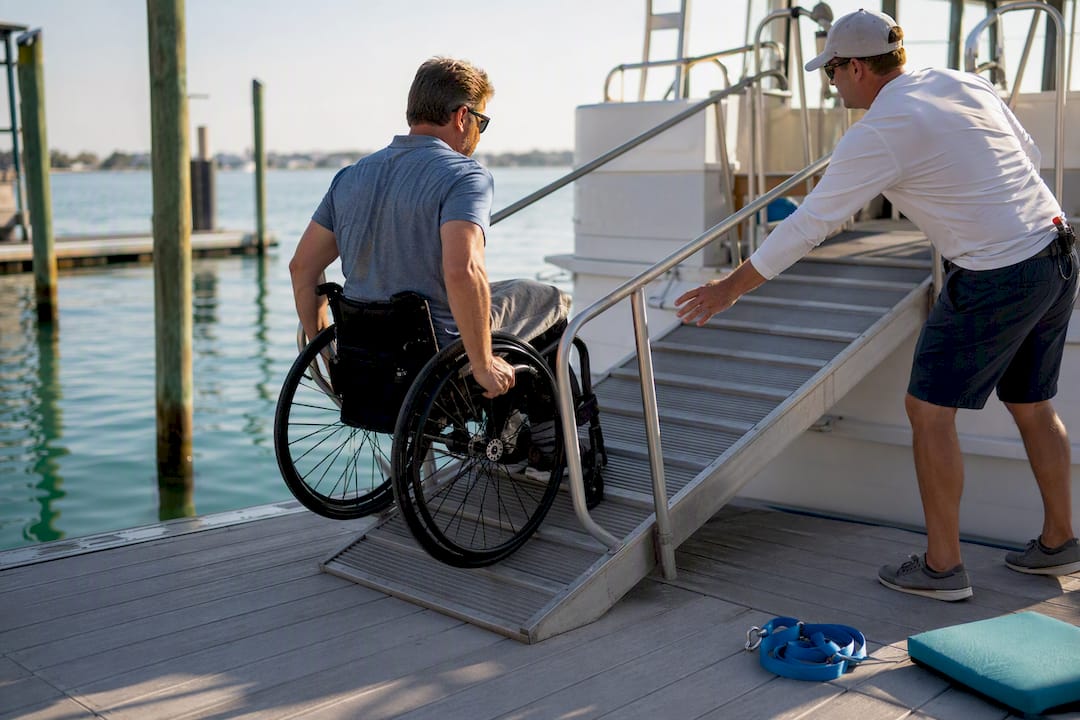
If getting into the water itself is part of the plan, floats and calm, shallow water near the boat can make wading manageable even for someone who can’t stand comfortably on shifting sand for long stretches. Life jackets designed for different body types and support needs are worth requesting ahead of time rather than hoping the standard gear fits. Calling ahead, describing specific needs, and asking how the crew has handled similar requests before booking removes most surprises on the day itself.
What environmental rules protect Crab Island’s waters?
Crab Island sits inside Choctawhatchee Bay, a body of water shaped by tidal exchange with the Gulf through the Destin Pass. That constant flushing keeps the water relatively clean, but it also means anything dumped overboard doesn’t just disappear, it moves with the current.
The basic rule every visitor should follow is simple: nothing goes into the water that didn’t come from the water. That means no trash, no cigarette butts, no food scraps tossed to attract fish, and definitely no glass, which is already restricted on most boats for safety reasons anyway. Vendors selling food and drinks from anchored boats generate a lot of the day’s waste, so bring a bag specifically for your own trash and pack it back to shore rather than assuming it’ll get collected.
Marine life in the bay, including seagrass beds near the shallower edges, is sensitive to boat anchors and prop damage. Anchoring only in sandy, open areas away from visible grass beds protects the habitat that supports the bay’s fish population. Sunscreen matters here too. Reef-safe, mineral-based formulas break down less harmfully in the water than some chemical sunscreens, and with hundreds of boats anchored in the same stretch of water on a summer weekend, that adds up fast. None of this requires much effort. It just requires treating the sandbar like the shared, living waterway it actually is, not a disposable party spot.
Where can you park near Destin Harbor and other launch points?
Parking near Destin Harbor fills up fast during peak season, especially on summer weekends when shuttle and charter departures cluster in the same morning window. Most marinas and charter docks in the harbor area offer their own paid lots, and pricing typically runs by the day rather than the hour, since most Crab Island trips last several hours. If you’re booking a shuttle or charter through an operator based at the harbor, ask when you reserve whether parking is included or billed separately. Some operators bundle a parking pass into the ticket price; others simply point you to a nearby public lot.
Okaloosa Island and Fort Walton Beach launch points tend to have more available parking simply because fewer operators cluster there, though you’ll trade that convenience for a longer ride out to the sandbar. Public boat ramps in both areas typically charge a modest daily launch fee if you’re trailering your own pontoon or bringing a rental.
Arrive earlier than you think you need to, particularly in July and August. Lots near the busiest harbor docks can fill by mid-morning on weekends, and circling for a spot eats into time you’d rather spend on the water. If you’re driving a rental company’s vehicle or a rideshare to the dock, confirm the exact drop-off point ahead of time. Some harbor-area docks are tucked behind marina buildings that aren’t obvious from the main road, and losing fifteen minutes looking for the right dock is a common, avoidable frustration.
How do you actually book each type of trip?
Booking a shuttle or water taxi starts online through the operator’s own booking page, where you pick a departure time slot and pay per seat, per adult, in advance. Most shuttle operators require full payment at booking and send a confirmation with the exact dock location and arrival instructions.
Booking a captained charter works similarly but you’re reserving the whole boat rather than individual seats, so operators usually ask for your group size upfront to confirm capacity. Expect a deposit at booking with the balance due closer to your trip date, along with a clear cancellation window tied to weather.
Booking a pontoon rental requires more paperwork. You’ll typically need a valid photo ID, proof of boater education if you were born on or after January 1, 1988, and a credit card on file for a security deposit. Rental companies usually require you to arrive 20 to 30 minutes early for a walkthrough of the boat’s controls and safety equipment before they hand over the keys.
Jet ski and PWC rentals follow a similar ID and deposit process but add a short safety briefing on-site, since most companies won’t let you leave the dock without it.
Kayaks and paddleboards are the simplest to arrange, often available as walk-up rentals from beachside stands near common launch points, with no advance booking required in most cases, though summer weekends can still mean a short wait.
How does weather affect your Crab Island trip?
Gulf Coast weather changes fast, and it’s the single biggest variable in whether your Crab Island trip goes smoothly. Checking the Weather the morning of your trip, not the night before, gives you the clearest picture of what’s actually coming.
Summer afternoons bring the highest risk of sudden thunderstorms, often building over the Gulf in early afternoon even when the morning looked perfectly clear. That’s part of why many operators schedule morning departures during peak season, aiming to get guests out and back before storm cells typically form. Wind matters almost as much as rain. Choctawhatchee Bay is relatively protected compared to open Gulf water, but sustained winds above 15 to 20 knots can make anchoring uncomfortable and turn a calm sandbar into choppy water fast.
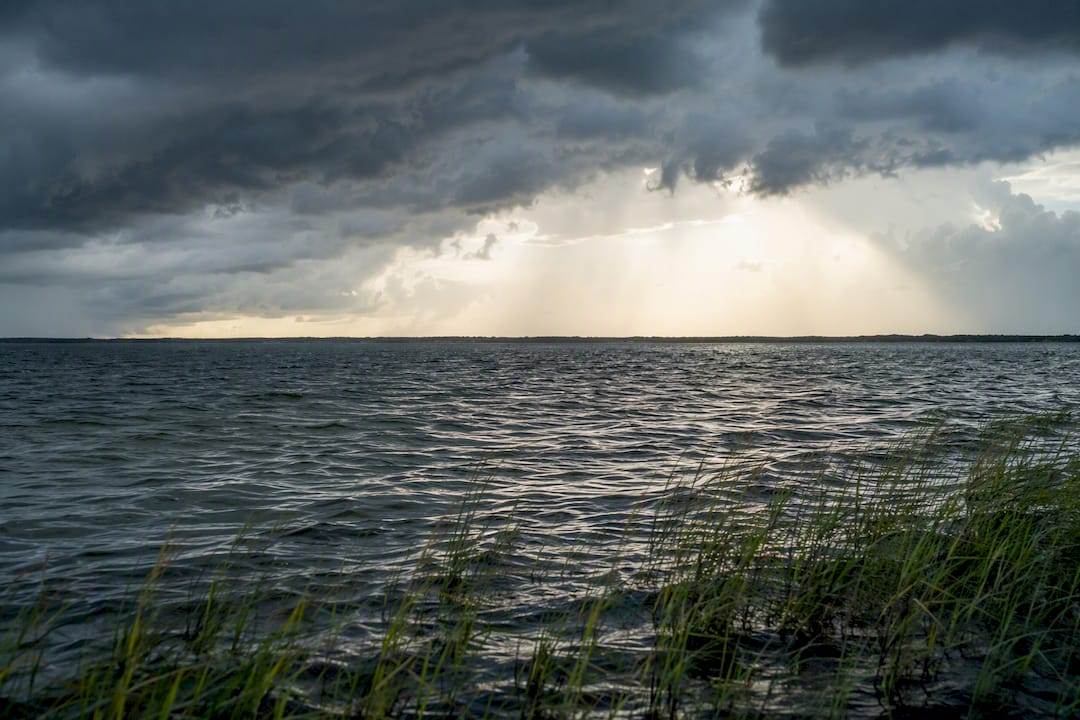
Rescheduling is normal and expected when weather turns. Reputable shuttle and charter operators build flexible cancellation policies around exactly this, since nobody wants guests out on the water during a lightning warning. If you’re renting a pontoon or PWC yourself, that judgment call falls entirely on you, which is one more reason a captained option takes pressure off a first-time visitor. Cold fronts in shoulder months, spring and fall, can also drop temperatures and stir up wind more than visitors expect from a Florida trip, so check conditions even outside peak summer months.
A straightforward take on getting there
Families do best with a captained tour. Groups can often split a charter and land near shuttle pricing anyway. Whatever you pick, check the tide, wear a life jacket, and never swim to the sandbar. Book your ride in the next section.
— Troy
Book an Affordable Crab Island Tour With Crab-island-tours
Crab-island-tours cuts out the part of this trip nobody actually enjoys: figuring out boat logistics. You show up at the dock, and everything else is handled by an experienced captain who already knows the tides, the channels, and where the sandbar gets shallow.
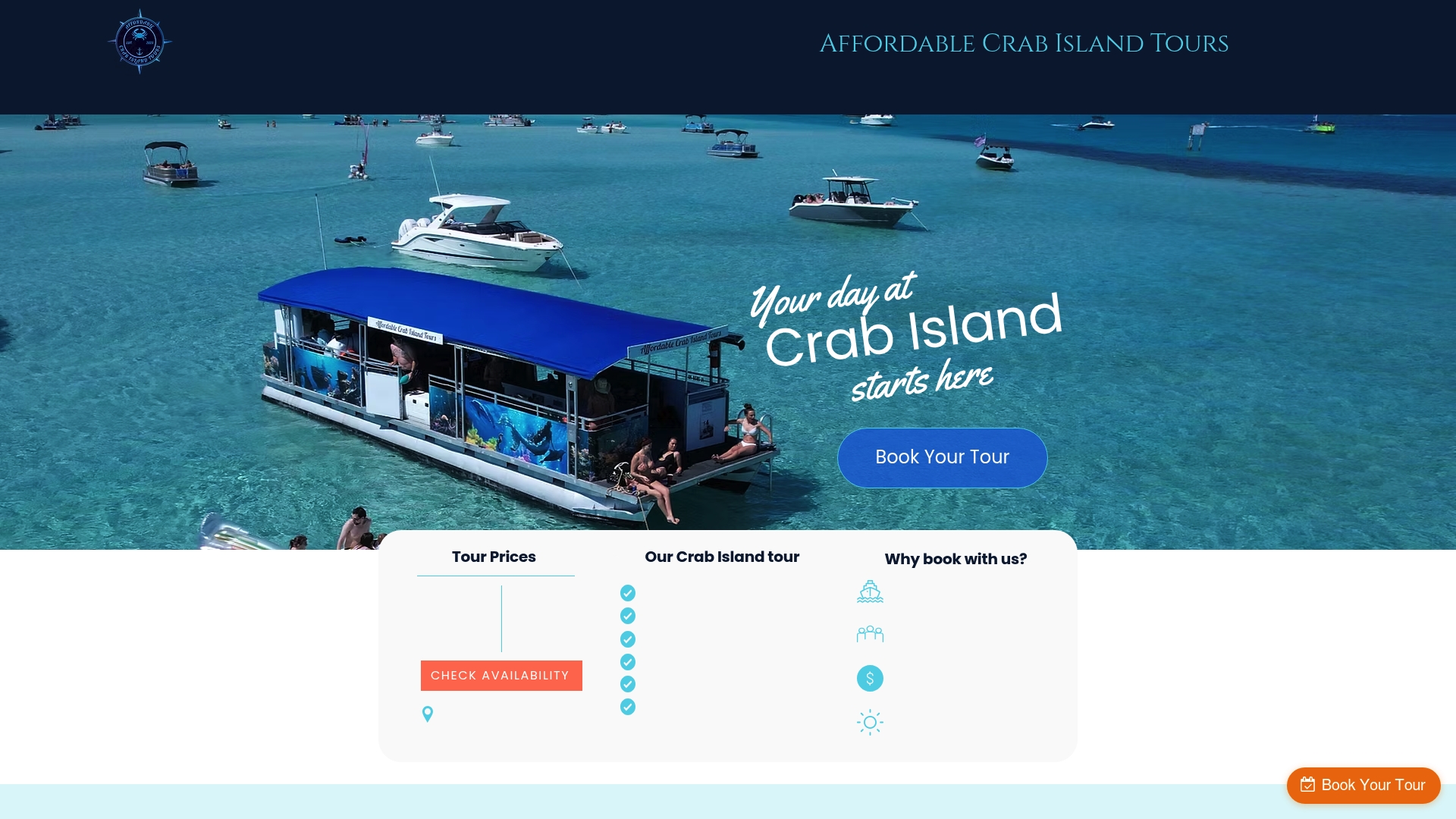
Some tours include a licensed captain, floats, an onboard restroom, and BYOB, with comfortable seating for groups, making them suitable for couples or larger celebrations. There’s no rental paperwork, no fuel fees to calculate, and no anchoring stress. Some tours offer several hours at Crab Island with boat handling taken care of by the captain. Check available dates and book your Crab Island tour to lock in a spot before peak season fills up.
Check tides and conditions before you go
Pull up NOAA’s tide predictions for Destin and the Weather.com forecast for Destin before any trip. If you’re driving your own boat, confirm Florida’s boater safety course requirements ahead of time, and review our Crab Island sandbar visit guide for more planning details.
Sources
Recommended
Comments