.png)
Swim Ready at 73°F? Crab Island Water Temperature, Tides, and Safety

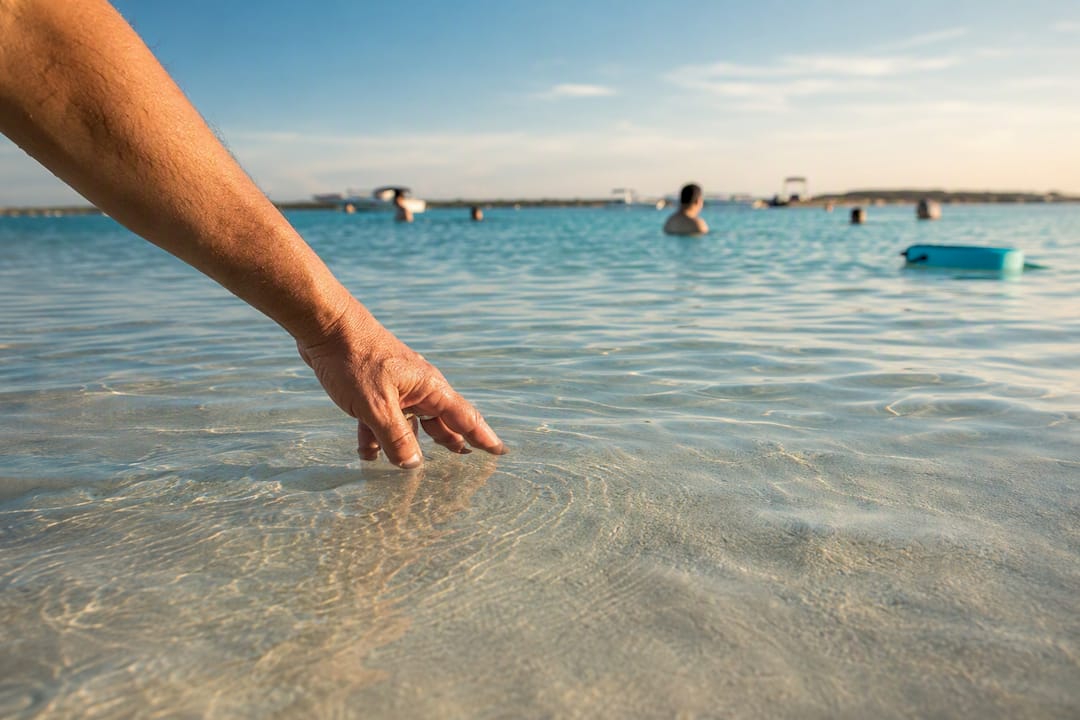
Crab Island’s water temperature runs about 73°F in mid-May and typically rises into the 70s to low 80s by midsummer, generally comfortable for wading and swimming without a wetsuit. Confirm today’s exact reading on Tidesandcurrents, Watertemp.org, or Crab Island Today before you head out, and check the posted beach flags for wind and current warnings first.
TL;DR:
Reliable water temperature readings vary depending on the source, with NOAA station data being the most accurate for same-day decisions.
Water in Crab Island typically reaches the comfortable range of 73°F to low 80s°F from late spring to early fall, suitable for most swimmers without wetsuits.
Wind, tide stage, and flag warnings can significantly impact water safety and comfort, regardless of the temperature reading.
Visitors should plan to swim best one to three hours after high tide, especially when accompanied by children or inexperienced swimmers.
Guided tours handle all condition checks, offering a hassle-free experience by verifying tide, wind, and water temperature on the day of the trip.
Table of Contents
Where to Check the Current Crab Island Water Temperature
Five tools cover almost every situation you’ll run into while planning a trip.
NOAA Tides and Currents (Tidesandcurrents): pulls readings from physical buoy and station sensors near Destin Harbor, updated multiple times per hour. This is the closest thing to ground truth.
Watertemp.org: aggregates satellite sea surface temperature (SST) data, updated daily rather than hourly.
Crab Island Today (Crabislandtoday): a local daily condition page that translates raw numbers into swim comfort bands, jellyfish risk notes, and best-time-to-go calls.
Windy.app: layers water temperature with wind speed and an overheating risk flag, useful for pairing heat and humidity with water conditions.
Local webcams like the La Dolce Vita Crab Island webcam: show water color and crowd levels in real time, which numbers alone can’t tell you.
Buoy readings and satellite SST don’t always match. A NOAA station might show a slightly different number than Watertemp.org on the same afternoon, because one measures actual water contact temperature and the other estimates surface heat from orbit. When a NOAA station ID near Destin Harbor shows a fresh reading, trust it over an aggregator for same-day decisions. Tide times live on the same NOAA station page, one tab over from the temperature data. Before you commit to a swim window, cross-check that number against wind speed and the flag color posted at the sandbar, since a warm reading doesn’t mean calm water.
What the Temperature Actually Means for Swimming
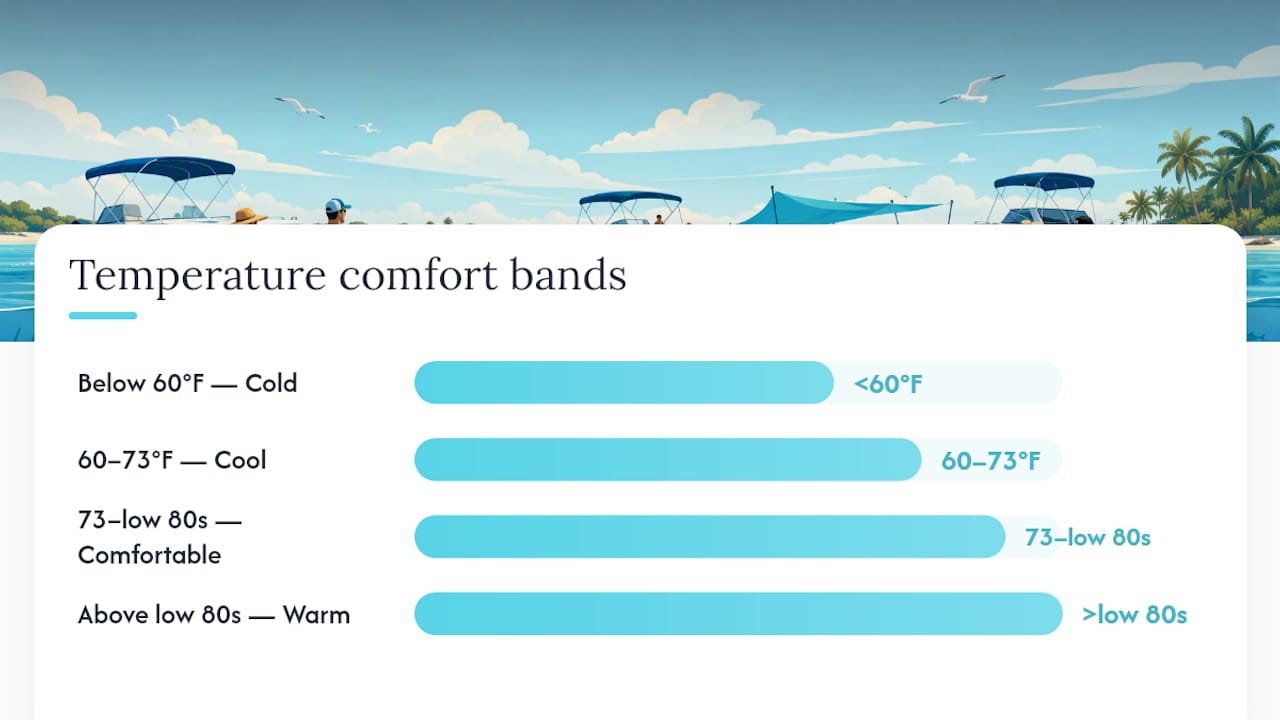
Raw degrees don’t tell you much until you sort them into comfort bands. Here’s how most visitors experience the ranges:
Temperature | Comfort level | Wetsuit guidance |
Below 60°F | Cold | Full wetsuit recommended for extended time |
60°F to 73°F | Cool | Shorty wetsuit helpful for kids or longer swims |
73°F to low 80s | Comfortable | No wetsuit needed for most swimmers |
Above low 80s | Warm | No wetsuit; watch for overheating instead |
Standing on the sandbar in waist-deep water feels warmer than actually swimming laps around the boats, since your body loses heat faster once you’re fully submerged and moving. A parent watching toddlers splash at 74°F will feel fine; a paddleboarder circling the anchorage for 30 minutes at that same temperature might want a shorty.
Pro Tip: Don’t judge wetsuit need from water temperature alone. Factor in air temperature, wind, and how long you’ll actually be in the water. A 78°F reading on a windy, 70°F-air day feels colder than the number suggests.
Crab Island’s Water Temperature by Season
Destin’s Gulf water follows a predictable arc, though regional monthly guides show real swings between cold and warm years.
Winter (December to February): the coldest stretch, with temperatures frequently in the 60s °F range in January. Swimming is rare outside of specialty cold-water activities.
Spring (March to May): water climbs steadily, passing through the cool 60s and reaching the comfortable low 70s by mid-May.
Summer (June to August): the warmest window, often reaching temperatures in the low to mid 80s °F by August., which is why the sandbar crowd peaks around Memorial Day through Labor Day.
Fall (September to November): temperatures ease back down through the 70s, still swimmable well into October most years.
Treat that Memorial Day to Labor Day window as a strong trend, not a guarantee. An early cold front or an unusually warm October can shift the comfortable stretch by two or three weeks in either direction.
How Tides Change What You’ll Actually Experience
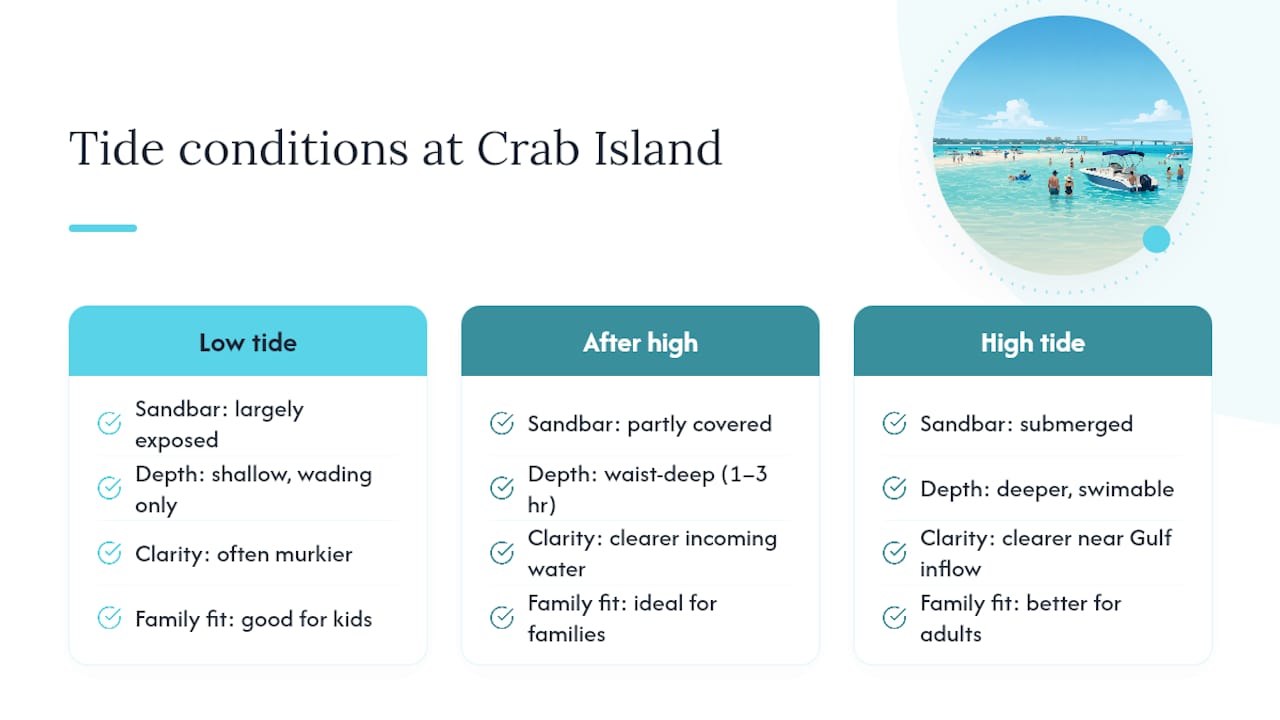
Tide stage matters as much as the thermometer once you’re standing in the water. Low tide exposes more of the sandbar, creating shallower, calmer conditions that tend to suit families with young kids. High tide brings deeper water, better for boats to anchor close and for adults who want an actual swim rather than a wade.
Clarity shifts with the tide, too. Incoming water from the Gulf on a rising tide often runs clearer than the water sitting over the sandbar at dead low, which can look murkier after boat traffic stirs up the bottom. A commonly cited local timing tip: arrive one to three hours after high tide for waist-deep, family-friendly water that hasn’t fully drained out yet. Check the tide chart on the NOAA station page the morning of your trip, since tide timing shifts by roughly 20 to 40 minutes each day.
Safety Risks That Matter More Than the Thermometer
A warm reading doesn’t mean it’s automatically a good day to swim.
Wind and chop: strong wind can turn the sandbar into rough, uncomfortable water even at 80°F, and it’s often the reason a trip gets rescheduled, not the temperature.
Jellyfish: risk rises seasonally, and local condition pages like Crab Island Today flag this alongside the daily temperature reading.
Beach flags and NWS hazard statements: these override a good water temperature reading every time.
Water clarity: murky water after storms or heavy boat traffic hides hazards you’d otherwise see.
Kids, older adults, and anyone with heat sensitivity should skip the water regardless of temperature if wind or flag warnings are active that day.
A Simple Checklist for Planning Your Visit
Check the live water temperature and wind speed on NOAA or Windy.app the morning of your trip.
Pull up the tide chart and target a window one to three hours after high tide if you’re bringing kids.
Scan the local hazard statement and flag status before you commit.
Pack and book based on what you find, adjusting gear for the temperature band you’re expecting.
At 70°F, pack a light rash guard or shorty. At 80°F and above, skip the wetsuit and focus on sun protection and water instead. If wind or flags look marginal, consider the sandbar visit guide for a protected-area alternative or push your trip a day.
How a Guided Tour Handles the Temperature Question for You
A local operator checks conditions right up until departure, not just the night before. That means confirming wind, tide windows, and water temperature the morning of the trip, then adjusting anchoring plans if the sandbar looks rough. Guests get shade, an onboard restroom, and a captain making the tide-timing calls, so nobody has to cross-reference three websites before deciding whether it’s a good day to get in the water.
Three Rules of Thumb for Your Trip
Check tide, temperature, and wind together, never just one. Aim for one to three hours after high tide if you’ve got kids in tow. Bring a quick-dry layer even on warm days, because Gulf breeze cools you off faster than you’d expect once you’re wet.
— Troy
Skip the Planning, Just Show Up
A guided tour service can simplify planning by handling tide charts, wind forecasts, and water temperature checks for Crab Island visitors. Instead of cross-checking NOAA readings, tide charts, and wind forecasts yourself, you show up and let an experienced captain handle the timing, anchoring, and safety calls.
Outings typically last around four hours and include amenities such as floats, onboard restroom facilities, and comfortable seating, with BYOB permitted for adults. An experienced captain usually adjusts arrival timing based on tide windows and checks conditions before departure to ensure a safe and enjoyable trip. If you’d rather spend your day floating instead of refreshing a webcam, book your Crab Island tour and pick a date.
Sources
Recommended
Comments