.png)
1–4 ft to 30+ ft: Crab Island Depths and Safety for Day Trip Visitors

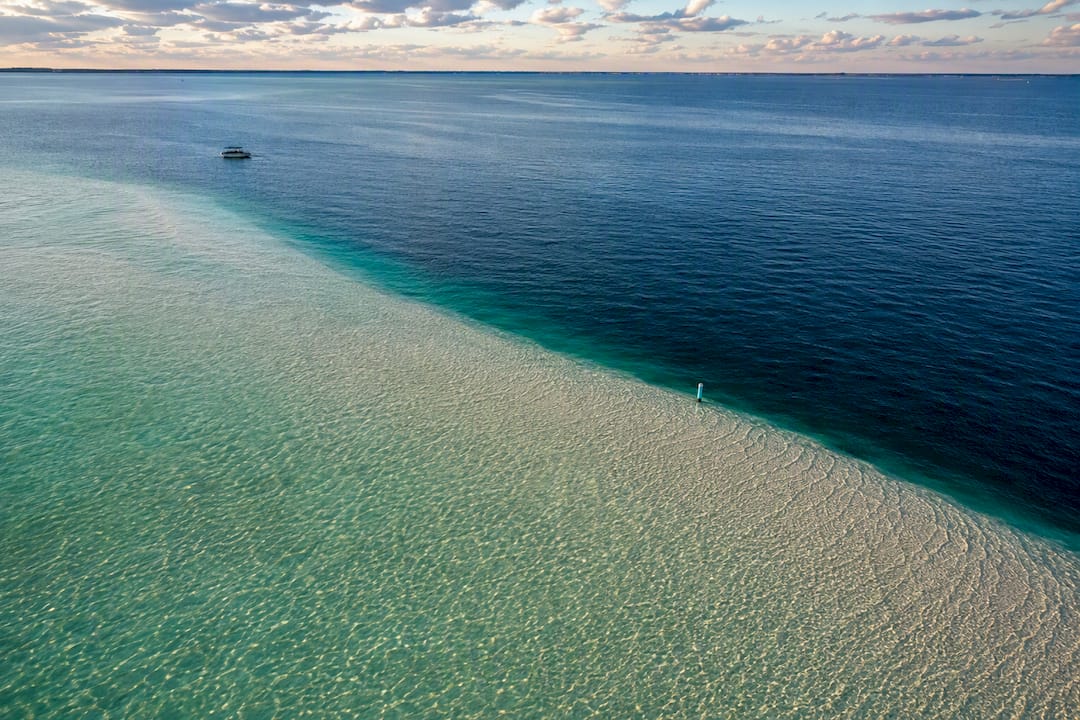
Most of the Crab Island sandbar sits about 1 to 4 feet deep, shallow enough to stand in comfortably, but that number swings fast with the tide. Edges and nearby channels drop to 20 feet or more within a few boat lengths. Check a tide chart before you go, and if you’re not confident reading water on your own, a guided tour or a depth finder takes the guesswork out of it.
TL;DR:
Water depth at Crab Island varies from 1 to 4 feet at the center, but nearby channels can drop to over 20 feet within a few boat lengths.
Tides and wind strongly influence water levels, with high tide and calm weather offering the safest and clearest conditions for swimming and wading.
Anchoring safely requires monitoring tide changes and avoiding the edges marked by color shifts, strong currents, or heavy boat traffic near channels.
Depths can shift rapidly within a few feet, so hand-sounding or a depth finder should be used to prevent unexpected drop-offs, especially around tide changes.
Guided tours are recommended for first-timers to avoid misreading water conditions and to ensure safe, reliable access to the shallow, family-friendly zone.
Table of Contents
Crab Island Water Depth Zones: Center vs. Edges vs. Channels
The center of the sandbar is where most people anchor, float, and let kids wade around, and for good reason. That zone typically runs 1 to 4 feet, which puts the water somewhere between knee-deep and chest-deep on most adults. Destin tourism guides confirm the same range at average tides, which is why you’ll see families parked here rather than scattered across the whole sandbar.
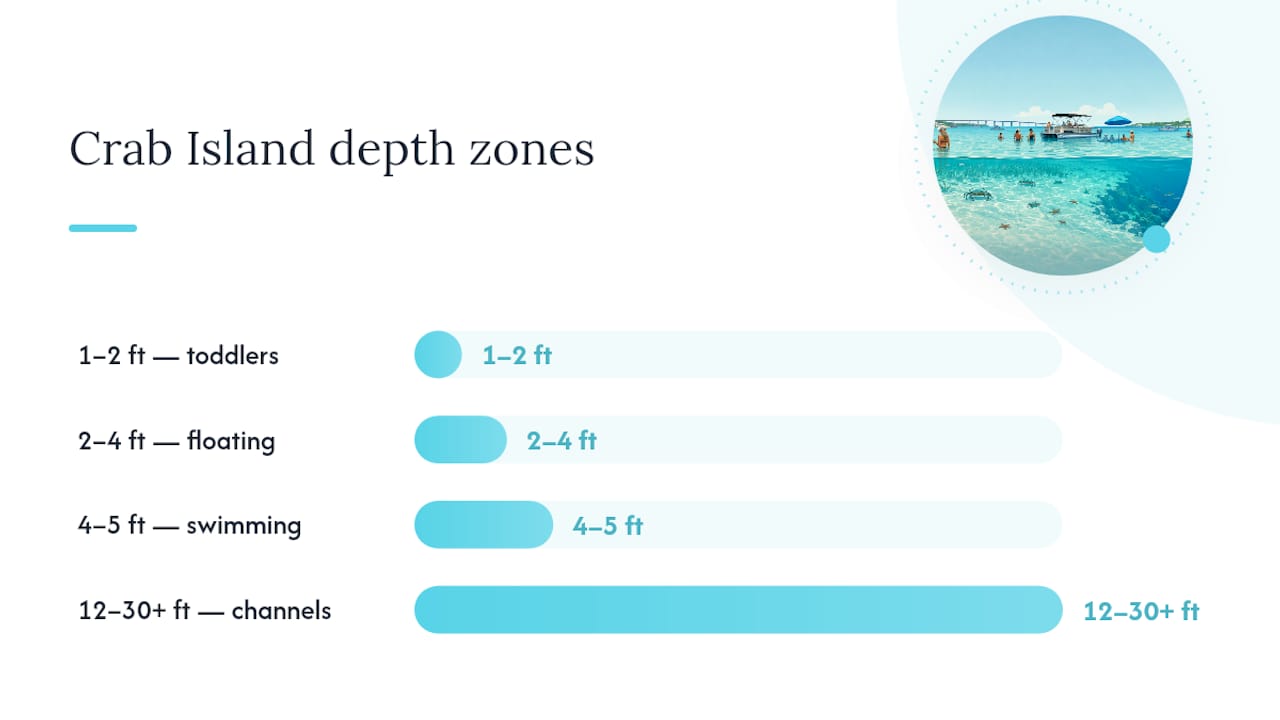
Move slightly off-center and you’ll find pockets with somewhat deeper water, suitable for floats and paddleboards rather than standing games, and they’re usually where boats anchor when the shallowest sand is already crowded. Here’s what those zones actually mean once you’re in the water:
1 to 2 feet: ankle to knee deep, best for toddlers and casual wading
2 to 4 feet: waist to chest deep on most adults, the sweet spot for floating and games
4 to 5 feet: comfortable swimming depth, still sandbar footing underneath
12 to 30+ feet: the surrounding channels, no footing at all, strong current possible
That last number is the one that catches people off guard. The edges of the sandbar don’t taper gradually into deep water. They drop, sometimes within a few feet of where you’re standing, into channels that can run 20 to 30 feet deep with real current running through them.
If you’ve seen conflicting depth numbers online, ranging anywhere from 1 to 4 feet on one site and 2 to 10 feet on another, it’s usually because different guides are measuring different spots or different tide stages. Both can be accurate for the specific patch of water they’re describing.
Crab Island Tide Conditions and the Best Time to Visit
Crab Island’s depth is not fixed. It’s tied directly to the tidal exchange between the Gulf of Mexico and Choctawhatchee Bay, and that exchange can shift water levels by a foot or more over the course of a few hours. Incoming tide pushes clearer Gulf water onto the bar, raising the depth and improving visibility. Outgoing tide drains it back out, exposing more sand and leaving shallower, sometimes murkier pockets.
Here’s a simple way to plan around it:
Check NOAA’s tide charts for the Destin/Choctawhatchee Bay area the morning of your trip, using official tide predictions rather than a general weather app.
Target the window one hour before to two hours after high tide for the deepest, clearest water, a timing guides commonly point to for the best swimming conditions.
Plan around low tide if you want sand exposure, since more of the bar surfaces and wading gets easier for young kids.
Watch the wind forecast, not just the tide. Sustained wind can push water out of the bay independent of the tide schedule.
That last point isn’t theoretical. In February 2026, a stretch of strong northerly wind combined with an already low tide to leave Crab Island and nearby harbor areas exposed, with boats sitting on dry ground that’s normally underwater. Tide charts tell you part of the story. Wind tells you the rest.
Where to Anchor Safely and What Hazards to Watch For
The center of the sandbar earns its popularity honestly. It’s shallow, it’s flat, and it’s where you’ll usually spot the vendor boats and the bulk of the crowd, because that zone is the safest bet for families with young kids. Local tourism guides point new visitors toward these central zones for exactly that reason.
The trouble starts at the edges, and the signs are usually visible if you know what to look for:
Color change: a visible shift from light sandy water to darker blue or green means depth is increasing fast.
Current seams: a line of choppier or moving water often marks the edge of a channel.
Boat traffic patterns: larger boats and passing traffic tend to stick to the channels, not the sandbar, so heavy boat movement nearby is a clue you’re near deep water.
Sudden footing loss: if your feet lose the bottom within a step or two, you’ve found a drop-off, not a gradual slope.
Pro Tip: Anchor a little farther from any visible channel line than feels necessary, then recheck your position after the tide shifts. A boat that was safely clear of the channel at low tide can drift closer to it as the water rises and your anchor line goes slack.
Give larger boats room. They draft deeper and need more clearance, which is part of why they tend to cluster near the channel edges rather than the shallow center.
Anchoring, Jumping, and Supervising Kids Safely
Anchoring on a sandbar is different from anchoring in open water, mostly because the bottom is firm sand and the depth around you can change while you’re parked. A few rules keep the day simple:
Match your anchor scope to the depth you’re actually in, not the depth you saw when you first arrived, since tide changes shift both.
Recheck your anchor every hour or so, especially around a tide change, when drag is most likely.
Never dive or jump headfirst without checking depth in more than one spot first. A sandbar can have a 3 foot difference within a few feet of distance.
Assign one adult as the designated watcher for kids in the water, separate from whoever is managing the boat or the grill.
Keep young or inexperienced swimmers on flotation devices and well clear of any channel edge, since channels near the sandbar can run 20 to 30 feet deep with real current.
That last figure is worth sitting with for a second. A channel that deep, sitting a short swim from water you can stand in, is exactly why local guides warn against long swims toward shore or toward passing boats. The distance looks manageable. The depth and current underneath it are not.
How to Check the Water Depth Yourself Before You Anchor
A basic depth finder or fishfinder gives you the most reliable read, and the pattern to watch for isn’t the number itself but how fast it changes. A steady reading that suddenly jumps from 3 feet to 15 feet within a couple of boat lengths is your drop-off warning, not a sensor glitch.
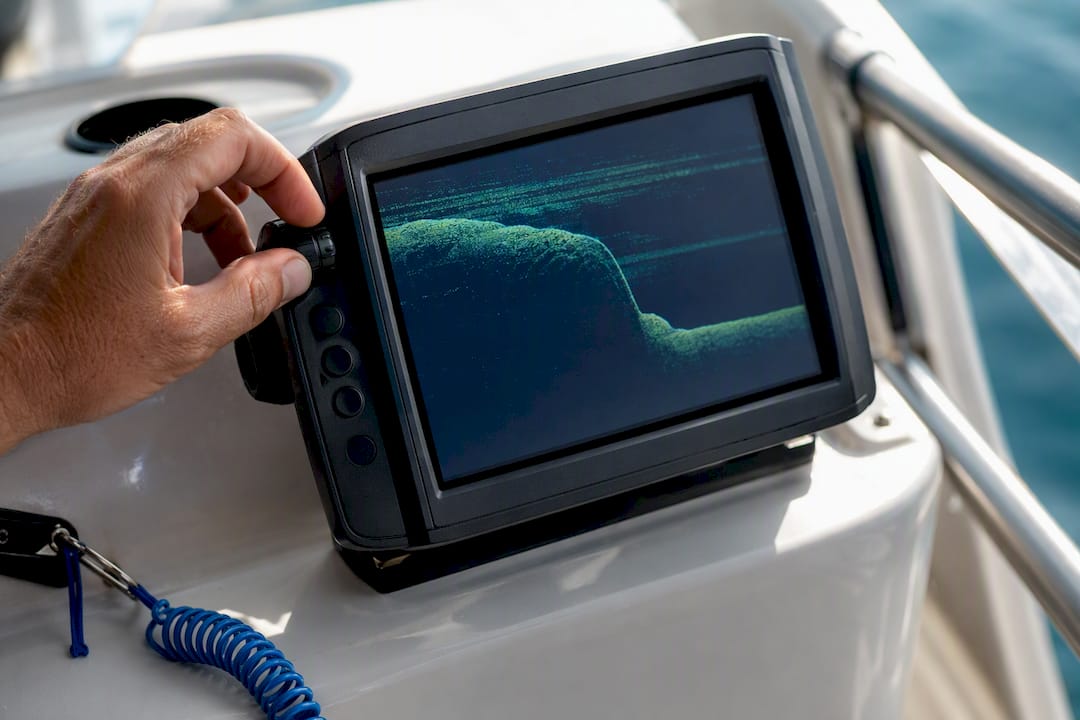
Without electronics, hand-sounding works fine. Use a paddle or a pole, probe ahead of where you’re walking or idling the boat, and keep one eye on the current as you go; a pole that suddenly finds no bottom is your cue to stop.
Visual clues back this up:
Lighter, sandy-colored water usually means shallow footing.
Darker blue or green patches signal deeper water nearby.
Visible current lines or choppy seams often trace the edge of a channel.
If none of that feels like something you want to manage while also watching kids and unloading a cooler, an experienced captain who already knows the day’s tide window and safe anchoring zones removes the entire problem.
Why a Guided Tour Skips the Depth Guesswork Entirely
Reading tide charts and hand-sounding for drop-offs is manageable once you know the routine. Most first-time visitors don’t, and that’s the gap a guided trip fills. An experienced captain already knows how the tide window is shaping depth that day and picks an anchoring spot accordingly, without you having to interpret a fishfinder or hunt for color changes in the water.
That’s the practical case for booking a guided sandbar trip instead of piecing together a DIY plan: someone else is already handling the tide math, the anchor checks, and the onboard restroom and floats, so the day stays about the water and not the logistics.
These trips can be booked as straightforward, budget-friendly packages for families and groups who’d rather show up and float than second-guess a depth reading.
— Troy
Sources
Recommended
Comments