.png)
Is Crab Island Safe? What You Need to Know Before You Go

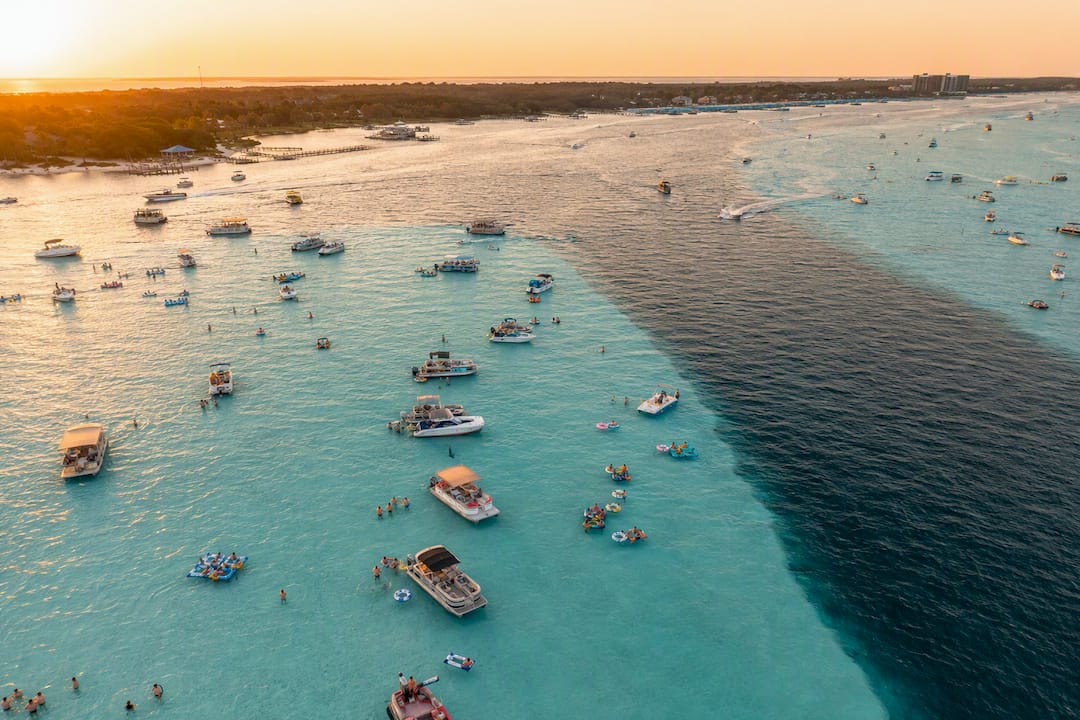
Crab Island is safe for the vast majority of visitors who wear a life jacket, avoid the outer channel edges, and don’t put an impaired person behind the wheel. Most serious incidents trace back to alcohol, currents at the sandbar’s fringes, or missing safety gear, not the sandbar itself. Three sources matter more than any blog post: the Florida Fish and Wildlife Conservation Commission for boating law, NOAA for tides, and local marine patrol for real-time conditions and enforcement.
Wear or have life jackets within arm’s reach at all times.
Keep the boat’s operator sober and boater-education certified.
Stay off the outer edges where the sandbar drops into the channel.
Quick fact: Local visitor guides consistently link serious incidents at Crab Island to alcohol, poor judgment, and strong currents near channel drop-offs, not the sandbar’s shallow center.
Key Takeaways
Crab Island stays safe when visitors combine legally required gear with awareness of currents, alcohol limits, and crowd patterns near the sandbar’s edges.
Point | Details |
Life jackets always accessible | Every passenger needs a wearable PFD, and kids under 6 must wear one underway. |
Check tides and weather first | Review NOAA current charts and NWS forecasts the morning of departure. |
Avoid the outer edges | Channel drop-offs near the sandbar’s fringes cause most drift and current incidents. |
Keep the operator sober | BUI enforcement is active, and impairment is the leading factor in serious incidents. |
Guided tours remove the guesswork | Crab-island-tours supplies a captain, floats, life jackets, and an onboard restroom for a turnkey outing. |
Table of Contents
How to Get to Crab Island Safely
You’ve got three real ways in: a guided tour with a captain, a private rental you pilot yourself, or a jet ski/paddlecraft. Each carries a different risk profile. A guided tour hands off navigation, anchoring, and legal compliance to someone who does it daily. A private rental gives you freedom but puts you in charge of reading currents, boat traffic, and Florida law with zero margin for guesswork. Jet skis and paddlecraft are fun but offer no shelter and less visibility to bigger boats crossing the flat.
One rule trips up more visitors than anything else: a boat cannot drop passengers on the sandbar and motor off unattended. It has to stay anchored nearby or return with the group. Before booking or renting, ask:
Does the operator carry liability insurance?
Is the captain licensed, and does the rental company require a boater education card?
What safety gear is stocked onboard, and where is it stored?
What’s the plan if weather turns or someone needs medical help?
Pro Tip: Call the rental or tour company the morning of your trip and ask about current conditions. A company that hesitates to answer is one to skip.
What Florida Law Requires You to Have Onboard
Florida’s boating rules aren’t optional suggestions. The FWC requires a wearable life jacket for every person on board, and children under 6 must wear one anytime the vessel is underway. Anyone born on or after a certain date must carry a boater education card to legally operate a powered vessel, which is why most rental companies check ID and paperwork before handing over the keys.
Required gear typically includes:
A U.S. Coast Guard approved wearable PFD for every passenger.
One throwable flotation device on boats over 16 feet.
A sound signaling device, like a whistle or horn.
A fire extinguisher on boats with enclosed engine compartments.
Navigation lights for any operation after sunset.
Standard to know: Boater education requirements follow NASBLA-aligned standards that most states, including Florida, use as the baseline for certification courses.
Marine patrol inspections at Crab Island usually focus on PFD counts matching passenger counts, visible registration numbers, and whether the operator shows signs of impairment. Missing gear is the most common citation, not overcrowding or noise.
Why the Sandbar’s Edges Are More Dangerous Than the Middle
Crab Island looks like one giant shallow flat, but it isn’t. The center sits in a few feet of water, while the outer edges drop sharply into boat channels where currents run fast and visibility drops. Local guides consistently point to these channel drop-offs as the spot where swimmers get pulled into deeper water without realizing how quickly the bottom disappeared.
Check NOAA’s tide and current charts before you leave the dock. Outgoing tides pull water, and anything floating with it, toward the pass, which strengthens the current right where the sandbar meets the channel. Pair that with a National Weather Service marine forecast, since summer afternoon storms build fast along the Gulf Coast and can turn a calm morning into a lightning risk by 2 p.m.
Warning signs to watch for on the water:
Visible color change where sand gives way to darker, deeper water.
Increased boat wake or traffic near the edges.
A noticeable pull on your legs while standing in waist-deep water.
Pro Tip: Anchor toward the center of the sandbar, not near the edges, so a dragging anchor doesn’t pull your boat into the channel while you’re in the water.
Alcohol Rules and Behavior That Prevent Most Incidents
Florida treats Boating Under the Influence the same way it treats drunk driving, and the FWC actively enforces BUI laws on Crab Island during peak season. Operators face citations, arrest, and loss of boating privileges for impairment, and passengers aren’t exempt from responsibility either.
The pattern behind most serious incidents is consistent: alcohol plus poor judgment plus a sudden current does the damage, not the sandbar itself. A few group rules cut that risk fast:
Designate one sober person to operate and supervise the boat all day.
Skip glass containers; Florida law and most marinas ban them near swim areas.
Keep heavy drinkers away from the outer edges and deeper water.
Set a check-in time so nobody drifts off unnoticed for hours.
Local patrol officers cite unsecured PFDs and visible intoxication near the channel far more often than noise complaints.
Keeping Kids and Weak Swimmers Safe on the Sandbar
Start with fit, not just presence, of the life jacket. A loose PFD rides up and can slip off in the water, so cinch every strap and do a lift test under the arms before anyone gets in. Kids under 6 must wear one whenever the boat is moving, per Florida law, and it’s smart to keep it on even after anchoring.
Pair every child with a buddy and write a phone number on their wrist with a waterproof marker.
Keep young or inexperienced swimmers within the shallow center, away from channel edges.
Set water breaks every 30 to 45 minutes for shade, sunscreen, and hydration.
Practice a quick reboarding drill so kids know exactly how to climb back onto the swim platform.
Pro Tip: If a child starts drifting, don’t swim after them against a current. Throw a flotation device first and call for help if they can’t self-correct within seconds.
What to Pack for a Safer Trip
Pack for sun, hydration, and the unexpected. Bring sunscreen rated SPF 30 or higher and reapply every couple of hours, plus at least one liter of water per person for a half-day trip. Know exactly where onboard life jackets are stored before you leave the dock, and pack a basic first-aid kit and a reboarding ladder or rope if your vessel doesn’t already have one.
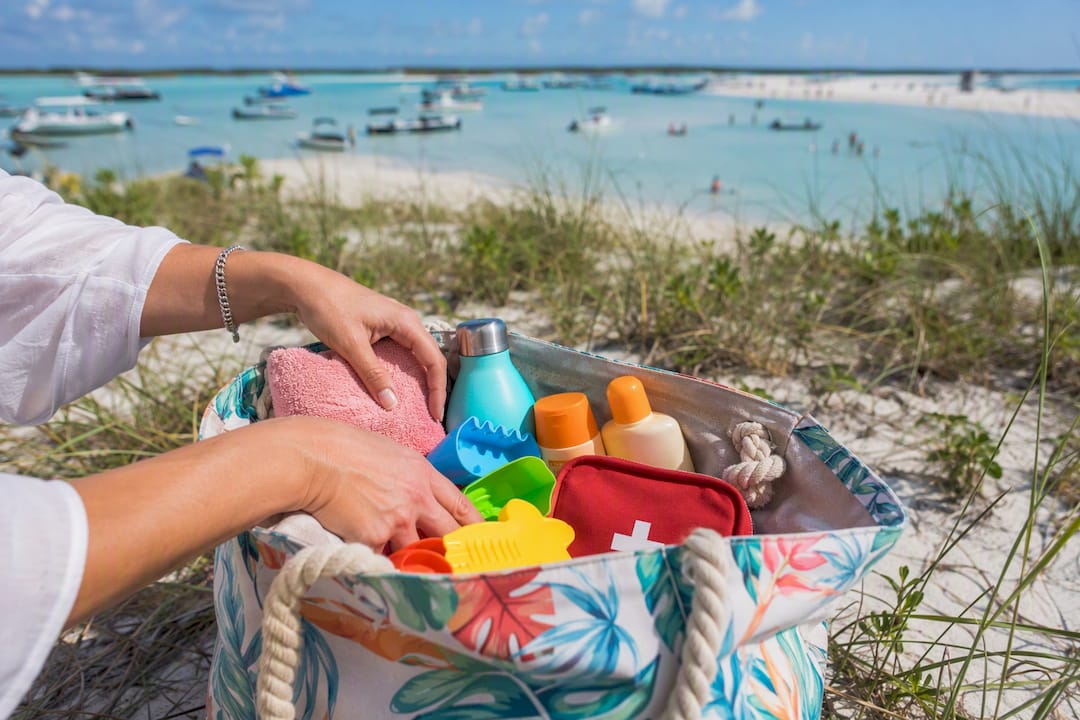
Skip glass bottles entirely, since they’re both a legal issue in swim zones and a cut risk in shallow water. Secure coolers so they don’t become floating hazards in heavy boat traffic, and think twice before bringing large inflatable toys into the busiest stretches of the sandbar. For electronics, a simple dry bag beats a “hope it doesn’t get wet” approach every time.
What to Do in an Emergency and Who to Call
If someone goes under or starts struggling, don’t jump in blind. Throw a flotation device first, keep eyes on the person at all times, and guide them back to the boat’s reboarding point.
Stay in visual contact with the person in distress.
Throw a PFD or cushion rather than swimming out against current.
Reboard using the ladder or swim platform, not by climbing over the side.
Call for help on VHF Channel 16, or dial 911 if you’re closer to shore with cell signal.
Save these contacts before you leave the dock:
U.S. Coast Guard Station Destin handles water rescues and major medical emergencies offshore.
Okaloosa County Sheriff’s marine unit patrols Crab Island directly and responds to BUI and safety violations.
Local EMS coordinates with marine units for medevac when a patient needs transport to shore.
When you call, be ready to give your boat’s position, the patient’s condition, and the number of people aboard. That single detail speeds up a response more than anything else you can say.
Why a Guided Tour Removes Most of the Guesswork
Guided tours solve the four biggest risk factors in one package: an untrained operator, missing gear, poor anchoring judgment, and no emergency plan. Crab-island-tours provides an experienced captain, supplied life jackets and floats, and an onboard restroom, so nobody has to swim to shore or improvise safety gear mid-trip.
Guided operators that run pre-launch safety orientations and carry trained crews consistently reduce the most common risks tourist groups face on the water.
That structure matters most when you’re traveling with:
Young children who need constant supervision near currents.
Large groups where coordinating gear and headcounts gets complicated fast.
Anyone who’d rather skip boat logistics entirely and just show up.
The Checklist Nobody Follows, and Why That’s the Real Risk
Most Crab Island safety advice online reads like a list of obvious warnings: wear a life jacket, don’t drink too much, watch the currents. None of it is wrong. The problem is nobody actually checks NOAA’s tide charts or the NWS marine forecast before leaving the dock, even though both take under two minutes to review. That gap between knowing the rule and actually following it is where most incidents happen.
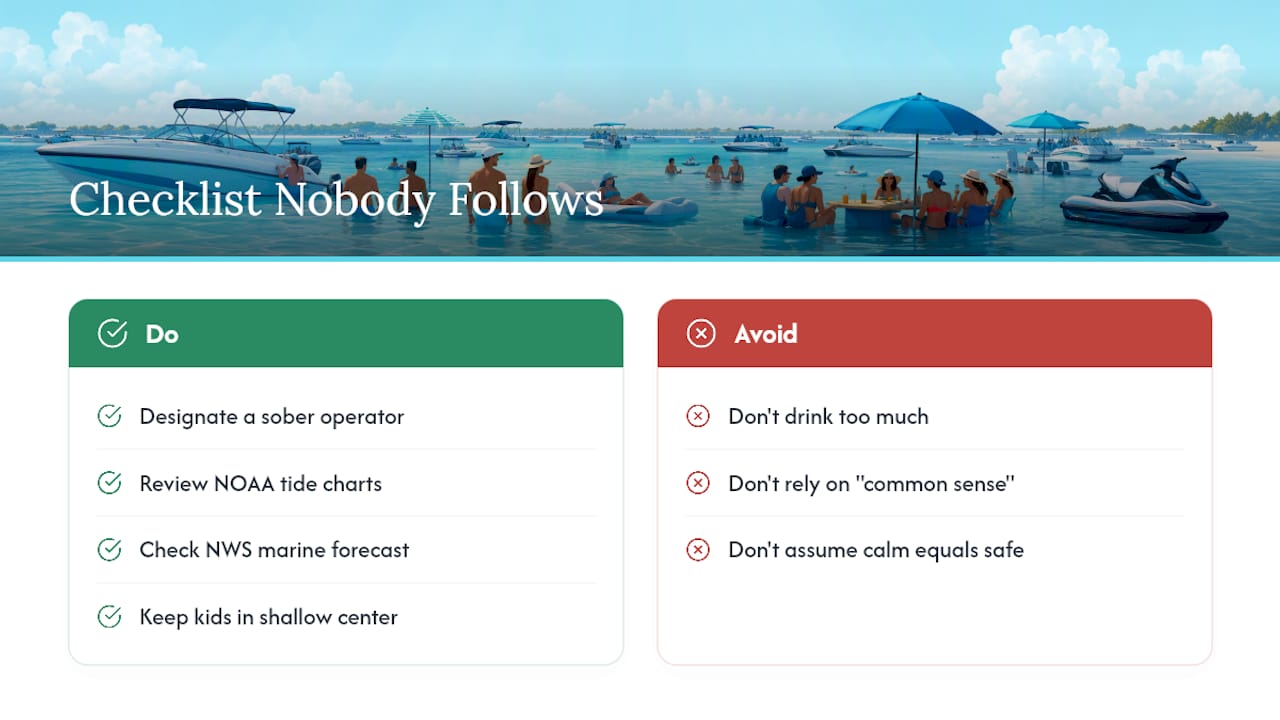
The overrated piece of advice is “just use common sense.” Common sense doesn’t tell you where a channel drop-off starts, and it doesn’t stop a friend who’s had four drinks from deciding they’re fine to run the boat. What actually works is removing the decision points: designate a sober operator before you leave shore, check tides and weather that morning without exception, and keep kids and weak swimmers in the shallow center regardless of how calm it looks.
If you’re weighing a private rental against a guided outing, the honest answer depends on your group. Confident boaters with kids or a hectic group would likely reduce risk more by handing navigation and gear to a captain than by handling it themselves. That’s not a knock on rentals. It’s a recognition that safety often comes down to who’s making the real-time calls on the water.
— Troy
A Safer, Simpler Way to Enjoy Crab Island
If you’d rather skip the boat logistics, licensing questions, and gear checklists altogether, Crab-island-tours gets you on the water without any of it. Every trip includes an experienced captain, supplied life jackets and floats, and an onboard restroom, so your only job is showing up ready for a four-hour outing.
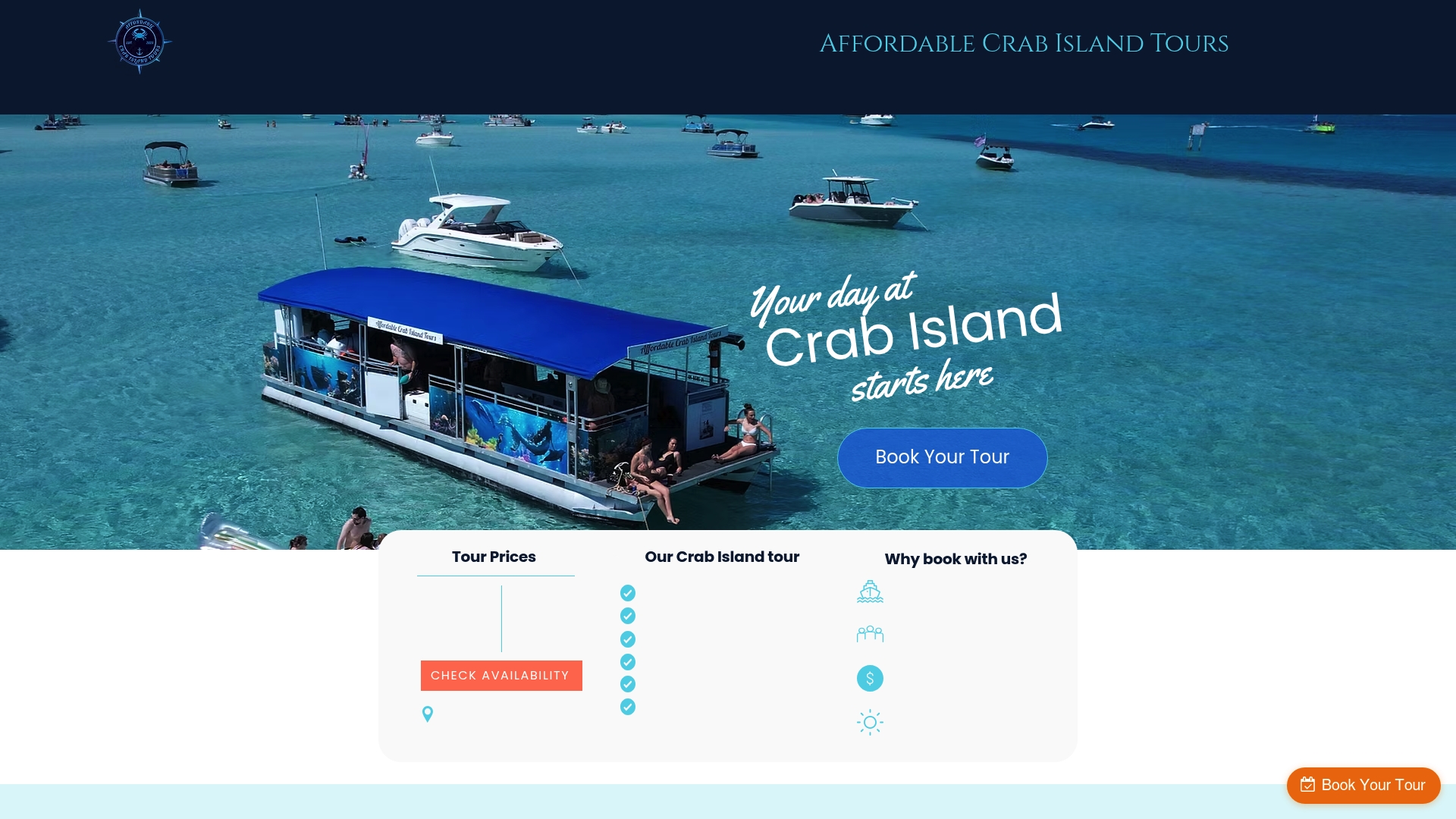
That setup solves the exact risks this guide covers: no impaired operator, no missing PFDs, no guesswork on anchoring near the sandbar. It’s built for families with young kids, groups who don’t want to split logistics duties, and anyone who’d rather spend four hours relaxing instead of managing a rental. Seating fits up to 31 passengers, and you’re welcome to bring your own drinks aboard. Check available dates and book your Crab Island tour directly through Crab-island-tours to lock in a safety-first outing.
Sources
Check these before every trip, not just your first one:
Recheck all four the morning you leave. Conditions on the Gulf Coast shift fast enough that yesterday’s forecast won’t cut it.
Recommended
Comments