.png)
No Glass, Cans Only: Okaloosa County Crab Island Cooler Policy

Yes, you can bring a cooler and alcohol to Crab Island. Pack it in cans or plastic, though. Glass containers are banned across the sandbar, vendors are not allowed to sell you alcohol under Okaloosa County rules, and your boat operator’s own policy always overrides whatever you assumed was fine. Skip the glass, check with your captain before you board, and designate a sober driver for the ride home.
TL;DR:
Most boat operators prefer small, soft-sided coolers that can be easily stowed and do not pose a tripping hazard, unlike large hard-shell containers.
Glass containers are strictly prohibited at Crab Island, and all alcohol must be transferred into cans or plastic bottles before arriving.
Many operators restrict outside alcohol to non-commercial boats, and some enforce ID checks and sobriety policies, which vary by boat.
The county ordinance bans selling or distributing alcohol on floating structures but allows personal consumption on private vessels without legal issues.
Boating under the influence carries the same penalties as a DUI, so it is crucial to have a sober operator and follow safety guidelines for a safe visit.
Table of Contents
Crab Island Cooler Policy: Size, Materials, and Where It Goes on the Boat
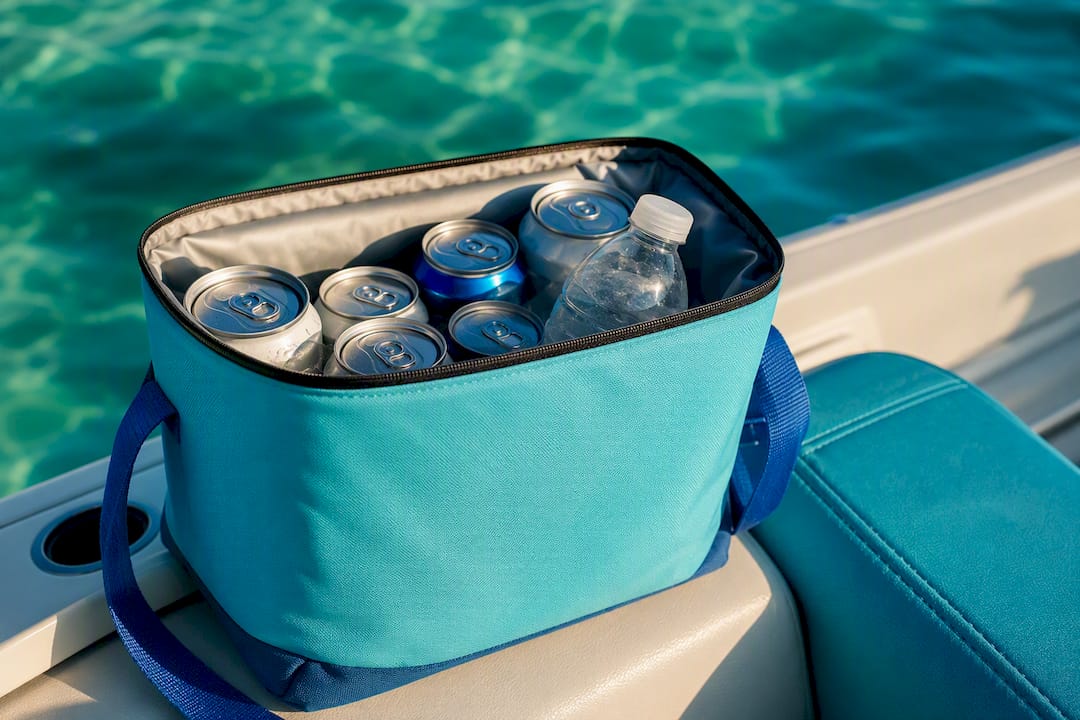
Most shuttle operators want a small, soft-sided cooler on board, roughly the size that holds a six-pack plus ice, not the 100-quart hard-shell chest you’d bring to a tailgate. Space on a 24 to 31-passenger boat is tight, and a hard cooler becomes a tripping hazard the second the vessel rocks. Soft coolers collapse flat, tuck under a bench seat, and don’t slide around when the captain throttles up.
Glass is the one rule nobody bends. Every operator FAQ and visitor guide covering the sandbar repeats the same line: cans and plastic only, because broken glass in shallow water near swimmers is a liability nobody wants to manage. Transfer wine or liquor into a flask or plastic bottle before you leave the dock.
Once you’re anchored at the sandbar itself, coolers typically come off the boat with you if you’re wading or floating nearby, or they stay lashed under a seat if you’re staying aboard. Either way, keep them out of walkways and away from prop zones when the boat is docking or departing.
A few packing habits keep the day from turning into a mess:
Double-bag ice in zip-seal bags so a melted cooler doesn’t flood the deck.
Keep raw food separate from drinks and trash to avoid cross-contamination in the heat.
Bring a small trash bag; sandbar cleanup is on you, not the crew.
Label your cooler or dry bag so it doesn’t get mixed up with someone else’s on a full boat.
Pro Tip: Freeze a couple of water bottles solid the night before and use them as ice packs. They keep drinks cold for hours and you get bonus drinking water once they thaw.
Can I Bring Alcohol to Crab Island? BYOB Rules and Operator Exceptions
Bringing your own alcohol to Crab Island is standard practice, and it has been the norm since vendors were barred from selling alcohol directly off boats and floating platforms at the sandbar. That prohibition traces back to county rules governing commercial activity on floating structures, which is exactly why you won’t see a floating tiki bar handing out mixed drinks anymore.
BYOB comes with conditions, though. Glass is out everywhere, some boats card for ID before letting anyone drink, and the biggest variable is your specific operator’s policy, not sandbar custom in general.
A meaningful share of licensed charter and shuttle boats restrict outside alcohol entirely because of their own liquor license, even when BYOB is fine once you’re anchored and off the boat. That’s a business decision tied to their permit, not a suggestion, and crew members will enforce it.
Before you book or board, confirm:
Whether your specific boat allows outside alcohol at all, or only once you’re off the vessel.
What container types are acceptable (cans and plastic, never glass).
Whether the crew checks ID and at what age.
Who’s driving the boat back sober, because that decision needs to happen before drink one, not after.
What the Okaloosa County Ordinance Actually Says
The legal backbone of the entire alcohol conversation at Crab Island is a county ordinance, not sandbar tradition. Okaloosa County amended Chapter 19 of its code to prohibit selling, distributing, or consuming alcoholic beverages in connection with commercial activity on floating structures inside the Crab Island Entertainment Area. That’s the clause that ended the era of floating bars serving drinks straight off a pontoon.
The ordinance’s licensing provisions go further than alcohol alone. Any floating structure operating commercially in that zone needs a license, pays administrative fees, and follows anchoring and mooring restrictions tied to the season. Those provisions exist mainly to manage congestion and safety in a sandbar that draws hundreds of boats on a busy Saturday, and they apply to operators, not to your personal pontoon or the cooler in your lap.
The practical line to remember: personal consumption on a private vessel is a different legal category from commercial sale or distribution. The ordinance targets the second category. A family bringing a case of canned beer aboard their own rental boat isn’t the activity this law was written to stop. A vendor running a floating bar without a license is.
Rules like these get amended, and a fee schedule or seasonal window listed today could shift. If you want the exact current wording, the official ordinance PDF is the primary source, not a blog post summarizing it secondhand, including this one.
Key distinctions worth remembering:
Private BYOB consumption on your own vessel is treated differently from commercial sale.
Licensing and fee requirements apply to floating structures operating commercially, not to personal boats.
Anchoring and mooring rules can shift by season, so what applied last summer may not apply this one.
BUI Enforcement and Staying Safe on the Water
Boating Under the Influence, or BUI, carries the same legal weight in Florida as a DUI behind the wheel. Get caught operating a vessel while impaired and you’re looking at arrest, fines, potential jail time, and civil liability if anyone gets hurt. Crab Island’s shallow water and packed anchorage make it an easy place for marine patrol to notice erratic boat handling, and they do patrol it.
Marine law enforcement treats a private pontoon the same as a licensed charter boat when it comes to BUI. The number of passengers or whether you’re on a rental doesn’t change the legal exposure of the person at the helm.
A short safety checklist keeps the day fun instead of a headline:
Pick your sober operator before anyone opens a drink, not after everyone’s had two.
Keep personal flotation devices accessible for kids and non-swimmers, even in shallow water.
Stow coolers and gear away from the outboard’s prop zone before pulling anchor.
Check NOAA tide predictions before you go; water depth at the sandbar shifts enough with the tide to strand a boat or flood a low spot where people are standing.
Confirm weather with a source like BoatUS Florida marine safety guidance before departure, since afternoon storms build fast on the Gulf.
Pro Tip: Set a hard “last call” time an hour before you plan to leave. It gives your designated operator a buffer to sober up mentally and physically before restarting the engine.
Your Crab Island Packing Checklist
Pack light, pack smart, and skip anything that turns into a hassle at the dock. Here’s what actually earns a spot on the boat:
A small soft-sided cooler with canned drinks or plastic water bottles.
Sunscreen, a hat, and water shoes for wading over shells and sand.
A dry bag for phones, keys, and anything that can’t get wet.
A trash bag for your own cleanup, since the sandbar has no dumpsters.
Zip-seal bags for ice, plus an absorbent towel or liner to catch condensation.
Leave the following at home: glass bottles or jars, kegs, drink dispensers with taps, inflatable toys big enough to block walking space, and anything that needs to be tied to a fixed structure that isn’t there. If you’re unsure what a specific operator allows, their FAQ page usually spells it out, and a quick call before you book saves an argument at the dock. For a broader packing gut check beyond drinks and coolers, a general beach packing checklist covers the sun and gear basics that apply anywhere on the Gulf Coast.
How a Guided Crab Island Tour Handles Coolers and Compliance
Booking with an operator that manages the boat, the rules, and the logistics removes most of the guesswork above. Affordable Crab Island Tours runs 4-hour outings with an experienced captain, floats and snorkel gear included, and an onboard restroom, which matters more than people expect once you’re four hours into a sandbar day with kids.
Guests can BYOB within the same practical limits covered here (cans and plastic, no glass), and the crew handles anchoring, safety checks, and the return trip so nobody in your group has to be the designated boat operator worrying about BUI while everyone else is floating. That’s the real value of a managed tour over a private rental: someone else is accountable for the parts of the day that carry legal and safety weight.
Groups get comfortable seating for up to 31 passengers, which keeps per-person cost down compared to chartering a private boat solo. Confirm current packing specifics directly on the booking page before your trip, since seasonal policies can shift.
The Real Takeaway on Crab Island’s Rules
Most of the confusion around Crab Island’s cooler and alcohol rules comes from conflating two different things: county law and individual boat policy. The ordinance is narrow. It stops vendors from selling drinks off floating platforms and requires licensing for commercial structures. It was never written to police what a family packs into their own cooler.
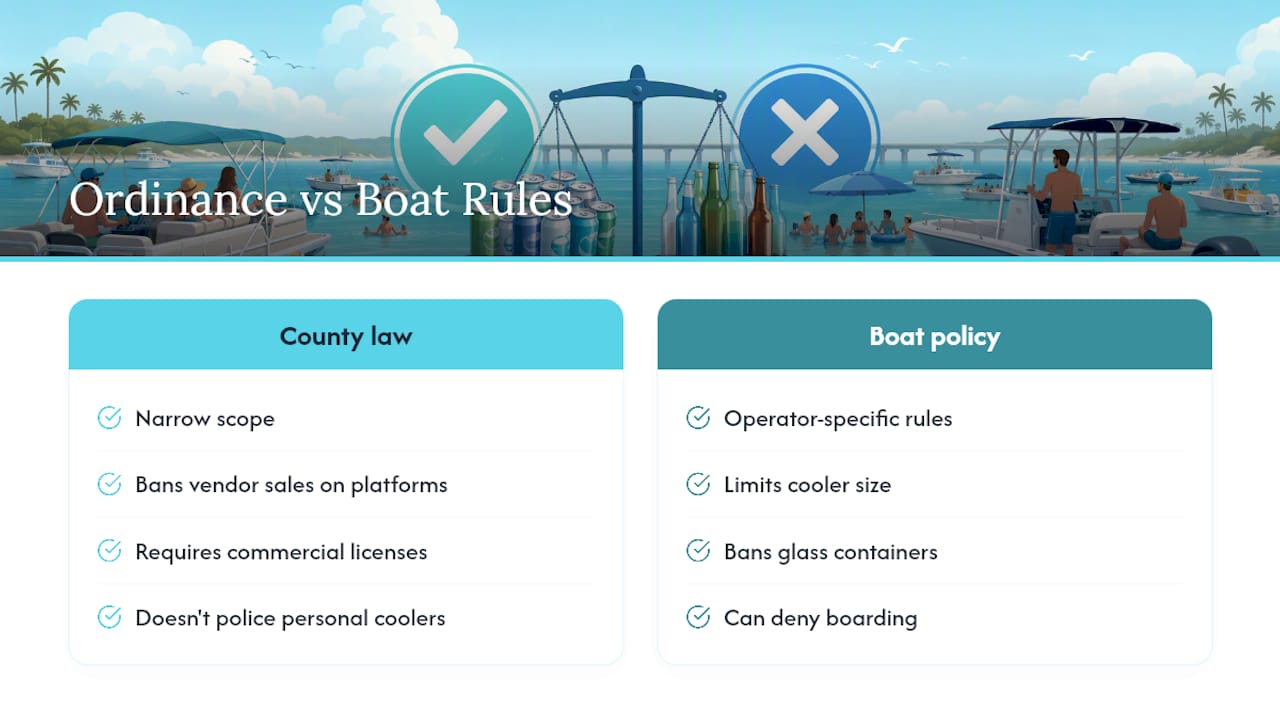
The bigger risk isn’t legal, it’s logistical. Showing up with a hard cooler the size of a chest freezer, or a case of glass bottles, doesn’t get you arrested. It gets you turned away at the dock or stuck rebagging drinks in the parking lot while your charter time ticks away. That’s the detail most generic guides skip: the practical friction point is almost always container type and cooler size, not alcohol itself.
If there’s one thing worth prioritizing above everything else in this guide, it’s confirming your specific boat’s policy before the day arrives, not assuming sandbar norms apply universally. The ordinance sets the floor. Your operator sets the actual rules you’ll live with for four hours.
— Troy
Sources
Recommended
Comments