.png)
Avoid Citations at Crab Island: Anchor Rules After Corridor Removal

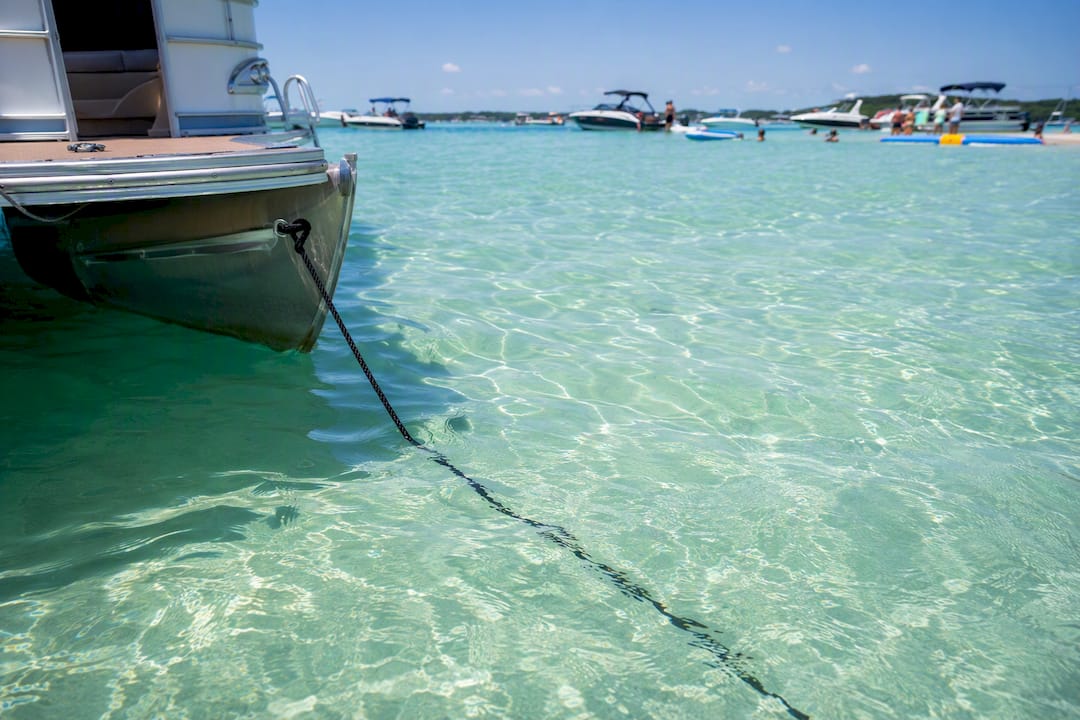
Do not anchor inside marked navigation channels, and never tie your boat to a buoy, marker, or bridge piling. Okaloosa County, the Florida Fish and Wildlife Conservation Commission (FWC), and the National Park Service jointly enforce Crab Island’s anchoring rules, with commercial overnight anchoring restricted to licensed operators. Before you launch, confirm your boater education card is aboard and give neighboring boats 10 to 30 feet of swing room.
TL;DR:
Boaters must avoid anchoring inside marked channels or tying to buoys, markers, or bridge pilings to prevent citations or accidents.
Using a wide-fluke or sandbar stake anchor with a 3:1 scope and checking bottom conditions helps secure vessels in shifting shallow sands.
Maintaining proper distance from neighboring boats, especially during tide changes, reduces collision risks and ensures safe swinging room.
Commercial vessels require county and federal permits to anchor overnight, and private boats should verify current regulations before overnight stays.
Roving patrols by the FWC, county marine patrol, and National Park Service enforce rules, issuing citations for infractions like anchoring in channels or missing boater education cards.
Table of Contents
Crab Island Anchor Rules at a Glance
Crab Island rewards boaters who know the rules before they drop anchor, not after an officer flags them down. These are the fundamentals that keep you legal and out of trouble:
Never anchor inside a marked navigational channel, even briefly.
Approach and depart at idle speed. No wake zones extend around the sandbar’s edges.
Do not tie off to buoys, markers, or bridge pilings. It is a federal offense, not a local custom.
Commercial vessels cannot anchor overnight without county and National Park Service authorization.
Carry your boater education card if you were born on or after January 1, 1988.
Leave a safe clearance distance between your boat and the next one to accommodate swinging.
Check the tide chart before you commit to a spot. Depth here changes fast.
Skip any one of these and you risk a citation, a grounded hull, or a genuinely bad afternoon for everyone anchored nearby.
Where You Can (and Cannot) Anchor at Crab Island
Anchoring inside a marked channel is illegal under both Florida law and federal boating regulations, and it is one of the fastest ways to get a patrol boat pulling alongside you. Channels exist so boat traffic keeps moving safely between the sandbar and the pass. Anchor in one and you are a stationary obstacle in a lane other captains expect to be clear.
Spotting a channel used to be easier when Crab Island had a marked exclusion corridor. Okaloosa County voted in 2025 to remove that buoyed safety corridor, citing maintenance costs and shifting sand that made the buoys unreliable anyway. That decision puts more responsibility on individual boaters to judge traffic flow and leave working lanes open, especially for emergency vessels.
Practical spacing matters as much as location. Give neighboring boats a safe clearance distance, since tide shifts can swing anchored vessels into each other within an hour.
Pro Tip: Anchor bow-first into the current or wind, then watch how your boat settles for five minutes before you unpack coolers and floats. If it swings toward another boat’s stern, you’re too close.
Anchoring Gear and Technique for Sandbar Conditions
Standard fluke anchors can drag across Crab Island’s loose, shifting sand, especially once boat traffic and wave action stir up the bottom. A few adjustments make the difference between a secure afternoon and a slow drift into your neighbor’s swim ladder.
Use a sandbar stake or wide-fluke anchor. These bite into loose sand better than a compact anchor built for mud or rock.
Keep at least a 3:1 scope, meaning 3 feet of anchor line for every foot of water depth, even though Crab Island’s water is shallow.
Set a bow-and-stern anchor pair in stronger current. This prevents the boat from swinging in a wide arc and colliding with neighbors as the tide turns.
Mark your anchor line with a visible flag so swimmers and paddlers see it before they cross it.
Recheck your anchor’s hold every 30 to 45 minutes. Sand shifts, current changes, and a hold that felt solid at 11 a.m. can slip by early afternoon.
A pontoon-specific anchoring guide covers similar shallow-water principles if you’re running a pontoon, which makes up a large share of the boats anchored at Crab Island on any given weekend.
Pro Tip: Keep your swim platform and stern clear of anchor line. It’s the most common tripping hazard when kids are climbing back aboard.
Idle Speed, No-Wake Zones, and Swimmer Safety
Idle speed at Crab Island means your engine is barely pushing the boat forward, not “slow for you.” If your wake is rocking anchored boats or swimmers nearby, you’re going too fast, and that’s exactly the kind of thing that draws a citation fast.
Cut your engine entirely before anyone steps off the boat into the water.
Keep glass containers off the sandbar. Sharp debris in shallow sand is a real injury risk for bare feet.
Watch for paddleboards and kayaks weaving between anchored boats. They’re low to the water and easy to miss.
Avoid crossing another boat’s anchor line when you’re navigating in to find your own spot.
A little courtesy, like slowing down well before you reach the crowd, prevents most of the near misses that lead to complaints and enforcement stops.
Commercial Operations, Permits, and Overnight Anchoring
Commercial vessels can’t simply anchor overnight at Crab Island and call it a floating business. Okaloosa County requires floating structure licenses for any commercial operation working these waters, and most commercial boats must return to a marina each night rather than anchoring on site.
Because Crab Island sits partly within Gulf Islands National Seashore waters, commercial operators also need a Commercial Use Authorization from the National Park Service on top of county approval. That dual requirement, county plus federal, is a genuine hurdle: a lot of would-be operators underestimate how much paperwork stands between “I have a boat” and “I can legally run tours here.”
For private boaters, the takeaway is simpler:
You are not licensed for commercial overnight anchoring even if a friend’s boat does it.
Confirm current guidance through the county’s waterway safety page before assuming any overnight arrangement is legal for a private vessel.
Overnight anchoring off the sandbar in general anchorage areas follows different rules than anchoring directly at Crab Island itself.
Who Enforces Crab Island’s Rules, and What Gets Cited
Three agencies patrol these waters: the FWC, Okaloosa County Marine Patrol, and the National Park Service where jurisdiction overlaps with the national seashore. Each has authority to stop a vessel, check paperwork, and issue citations.
The most common infractions are predictable: anchoring inside a channel, tying off to a buoy or marker, and missing a boater education card for anyone born in 1988 or later. If an officer approaches your boat, keep your registration, ID, and education card within easy reach. Answer directly, stay anchored where you are unless told to move, and don’t argue the point on the water. Citations get contested in court, not from the deck of your boat.
Tides, Shifting Sand, and the End of the Safety Corridor
Crab Island’s depth can change enough within a single tide cycle to strand a boat that was floating comfortably an hour earlier. Check a tide chart before you commit to a spot, and plan your exit window rather than assuming you can leave whenever you want.
The 2025 removal of the buoyed safety corridor means there’s no longer a marked lane guaranteed clear for emergency access. That makes self-regulation genuinely important, not just a suggestion.
Scout your entry and exit route before anchoring, especially at low tide.
Watch for boats idling in shallow spots. Prop strikes happen most often in water people assumed was deeper.
Time your visit around midday high tide if you’re new to the sandbar. It gives you the most margin for error.
Your Pre-Launch Checklist Before Heading to Crab Island
A little preparation on the dock saves a lot of stress on the water. Run through this before you leave the ramp:
Paperwork: boat registration, valid ID, and boater education card if required for your birth year.
Safety gear: life jackets for every passenger, plus a throwable flotation device.
Anchor gear: primary anchor, a backup anchor, extra line, and a flag to mark your line.
Contingency plan: know what you’ll do if your anchor drags. That usually means re-anchoring immediately, not waiting to see if it holds.
Tide check: confirm depth and your exit window before you commit to a spot.
Pro Tip: If reading permit rules and packing backup anchor gear sounds like more hassle than vacation, a captain-led tour handles all of it for you. That’s a legitimate option, not a compromise.
Environmental Protection Guidelines for Anchoring at Crab Island
Crab Island’s sandy bottom looks tough, but the surrounding grass flats and shallow habitat nearby are more fragile than they appear from the deck. Dragging an anchor across seagrass or shallow bottom disturbs habitat that fish, rays, and other marine life depend on for cover and feeding.
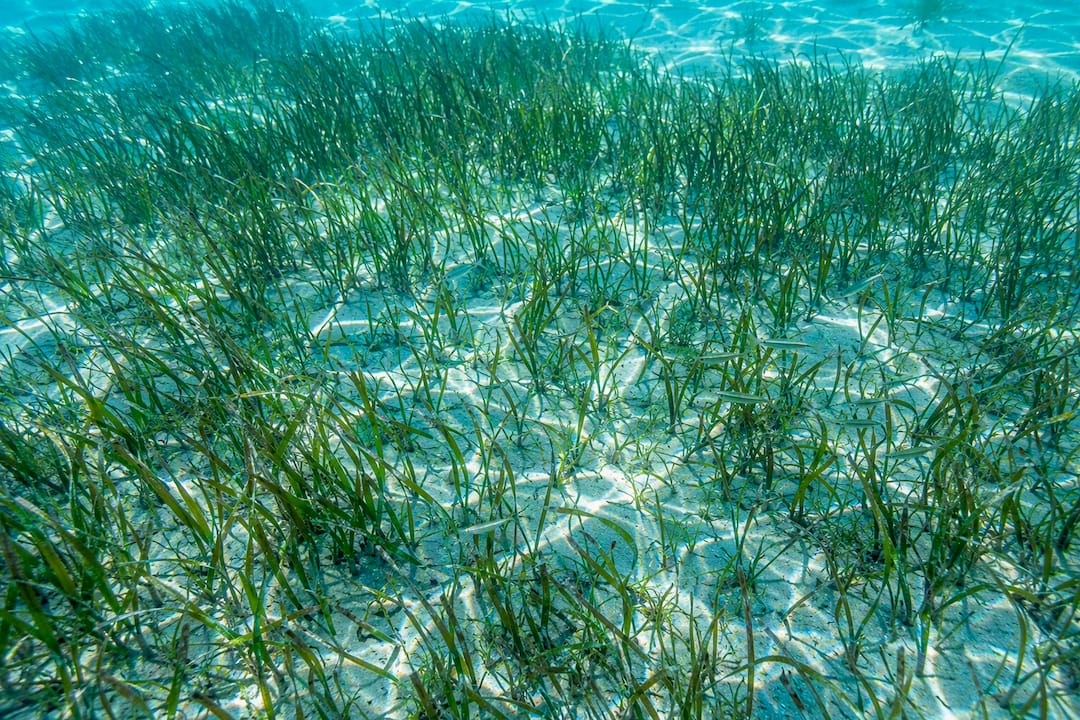
The basic principle is simple: anchor over sand, not vegetation. If you can see grass beds through clear water, move to a sandy patch instead, even if it means anchoring slightly farther from the main crowd. Prop wash in very shallow water can also stir up sediment and damage bottom habitat, so idle in and idle out rather than gunning the throttle near the shallows.
Trash management matters just as much as anchor placement. Food wrappers, cups, and bottle caps blow off boats constantly at Crab Island, and they end up in the water where wildlife can ingest them. Bring a small trash bag you can seal and stow, and do a quick sweep of your deck before you leave.
Fuel and oil discharge is another overlooked issue. A poorly maintained engine leaking even small amounts of fuel into shallow, slow-moving water creates a visible sheen that lingers longer than it would in open Gulf water because there’s less current to disperse it. Keep your engine well maintained and check bilge pumps aren’t discharging anything but water.
None of this requires expert-level environmental knowledge. It requires slowing down, looking at what’s under your boat before you drop anchor, and treating the sandbar’s ecosystem as something you’re a guest in for a few hours.
Wildlife Protection Rules Near Crab Island’s Waters
Crab Island sits within Gulf Islands National Seashore boundaries, waters shared with dolphins, rays, and seabirds that use the shallows and nearby grass flats regularly. Federal law protects marine mammals under the Marine Mammal Protection Act, which means approaching, feeding, or harassing dolphins that swim through the anchored crowd is not just bad etiquette. It’s illegal.
Dolphins show up at Crab Island often, drawn by boat activity and, unfortunately, sometimes by people feeding them. Do not feed dolphins, no matter how close they swim. Feeding trains them to approach boats and beg, which increases the odds of a prop strike or an aggressive interaction down the line.
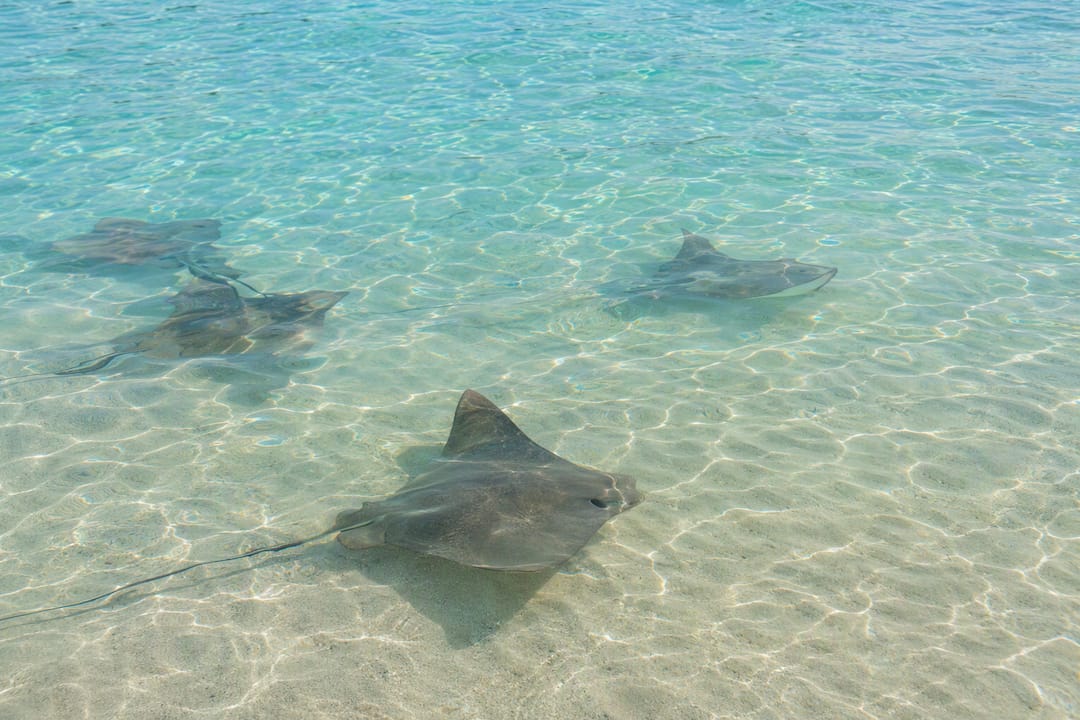
Stingrays are common in the shallow sand around the sandbar, and they’re a bigger everyday concern for most visitors than dolphins are. Shuffle your feet when walking in the shallows instead of taking normal steps. It gives rays a chance to move away rather than getting stepped on directly.
Seabirds nesting or resting on nearby shoreline areas also deserve a wide berth. Running a boat close to shore to get a better anchoring spot can flush nesting birds off eggs or chicks, and disturbing protected shorebird species carries its own regulatory exposure under both state and federal wildlife rules.
The pattern across all of this: give marine life room, keep your hands and food to yourself, and treat every animal you see as something passing through your afternoon, not something to interact with.
Anchoring Techniques That Protect Seagrass Beds
Seagrass beds near Crab Island support the small fish, crabs, and juvenile marine life that larger species depend on, and a single dragged anchor chain can tear a scar into a grass bed that takes years to recover. The fix isn’t complicated, but it does require a moment of attention before you drop anchor.
Look at the water before choosing your spot. Clear, light-colored sand bottom is safe to anchor over. Darker, patchy green or brown areas usually indicate grass, and that’s where you want to avoid setting your hook. If visibility is poor, ease in slowly and use a paddle or boat hook to check the bottom before committing.
Once you’ve picked a sandy spot, lower the anchor rather than tossing it, and avoid dragging it across the bottom to reposition. If your anchor doesn’t grab on the first try, pull it straight up and reset it instead of dragging it sideways looking for a hold, since dragging is exactly what tears up grass beds.
When you leave, retrieve your anchor by pulling it straight up rather than motoring away with it still set. That single habit, common among experienced Crab Island regulars, prevents most of the accidental grass damage that happens when boaters get impatient at the end of a long day.
Emergency Procedures if Something Goes Wrong While Anchored
If your anchor drags and you start drifting toward another boat or shallow water, act immediately rather than waiting to see if it resolves itself. Restart your engine, put it in gear, and create distance before attempting to re-anchor somewhere with more room.
For any on-water emergency, including injuries, a grounded vessel, or a serious collision, call the U.S. Coast Guard on VHF Channel 16 or dial 911, which routes to local marine and county emergency response in the Destin area. Keep your VHF radio on and monitoring Channel 16 any time you’re anchored, since it’s the fastest way for nearby boats or patrol vessels to reach you if conditions change quickly.
If you witness another boater in trouble, whether that’s a swimmer in distress, a boat taking on water, or a medical emergency, report it to the Coast Guard or county marine patrol rather than assuming someone else already has. Crab Island gets crowded enough that bystander assumption is a real risk.
Keep a basic first aid kit aboard and know where your nearest exit route back to a marina or boat ramp is before you anchor, not after something happens.
Why a Guided Tour Removes Most of This Risk Entirely
Reading through permit requirements, anchor scope math, and channel markers is a lot to manage before you’ve even left the dock. Crab-island-tours puts an experienced captain in charge of all of it: legal anchoring, safe approach speed, and reading tide conditions in real time. Every tour includes an onboard restroom, floats, and a full 4-hour outing where you show up and everything else is handled.
For groups, families, and anyone who isn’t confident navigating shallow-water anchoring or permit questions themselves, that’s the more practical choice. You skip the paperwork confusion around commercial licensing entirely, because you’re not the one who needs it.
— Troy
Skip the Permit Confusion With a Captain Who Already Knows the Rules
You’ve just read through channel markers, anchor scope, tide windows, and dual permitting requirements between the county and the National Park Service. Crab-island-tours exists so you don’t have to manage any of it yourself. Every trip comes with an experienced captain who already knows where to anchor legally, an onboard restroom, and floats included for the whole group, all inside one flat-rate 4-hour outing.
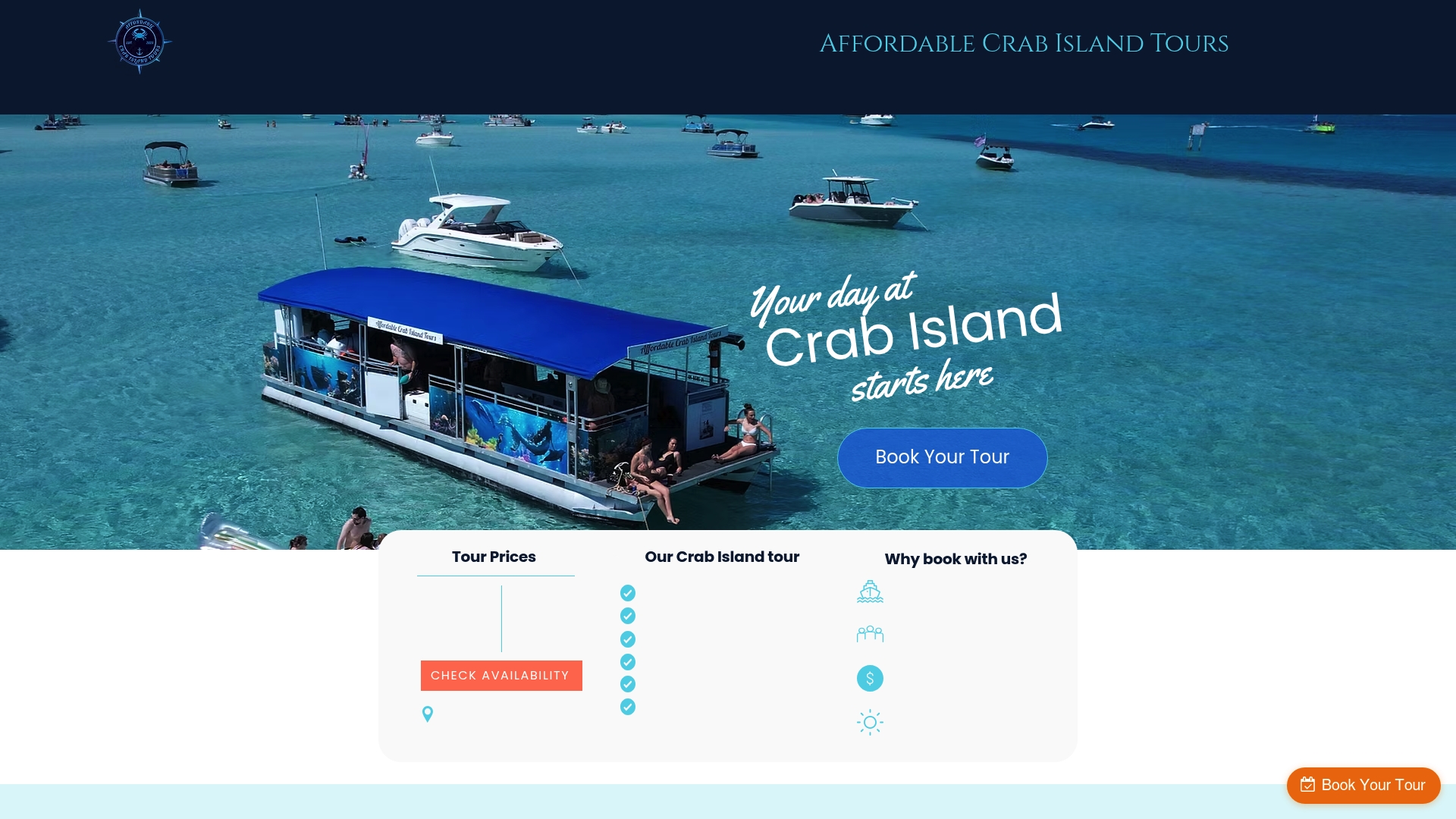
That means no researching boater education requirements, no guessing at safe anchor spacing near other boats, and no last-minute scramble to check if your anchoring spot is inside a channel. You show up, and the crew handles the water. If you’re planning a Destin trip and want the sandbar experience without becoming an expert in Okaloosa County ordinances first, check available dates and book your Crab Island tour directly through Crab-island-tours.
Sources
Recommended
Comments