.png)
How Group Boat Tours Work: a Practical Guide


Planning a day on the water sounds simple until you realize you have no idea how group boat tours work. Most people assume they can show up, grab a seat, and enjoy the ride. The reality involves advance reservations, payment deadlines, mandatory safety briefings, and boarding windows that wait for no one. Whether you are organizing a family reunion, a birthday celebration, or a casual outing with friends, understanding the logistics before you book makes the difference between a smooth, memorable experience and a frustrating one.
Table of Contents
Key takeaways
Point | Details |
Book early for groups | Groups of 10 or more typically need advance reservations, often with full payment required weeks ahead. |
One person handles payment | Most operators require the group leader to collect and submit a single full payment, not individual transactions. |
Arrive before check-in closes | Check-in windows are strict; late arrivals risk missing the tour entirely. |
Shared vs. private matters | Choosing between a shared tour and a private charter significantly changes your experience and flexibility. |
Assign a group coordinator | One designated point of contact reduces confusion and keeps logistics moving for everyone. |
How group boat tours work from booking to boarding
The most misunderstood part of the whole process is the booking itself. Groups do not simply purchase individual tickets and meet at the dock. Most operators treat groups of 10 or more as a single reservation, which means one person takes responsibility for the entire booking. Group bookings of 20 or more typically require full payment for the entire group at least 30 days in advance, with no split payments allowed and no refunds after that deadline.
That single-payment structure is worth understanding clearly. The group organizer collects money from everyone, submits one payment, and locks in the headcount. If someone drops out after the deadline, you generally lose that seat’s cost. This is not fine print to skim. The payment and final headcount deadline is the structural core of how group bookings operate, and treating it seriously saves real money.
Larger groups also benefit from tiered pricing. Many operators offer group discounts around 20% for bookings of 20 or more tickets. That savings only applies when the reservation is made correctly and on time. Waiting until a week before the tour to organize 25 people is a recipe for missing the discount entirely or finding the date sold out.
Pro Tip: Set your internal payment deadline at least a week before the operator’s deadline. Chasing down the last two payments the night before a group cutoff adds stress nobody needs.
One more thing about the booking process: most operators want a firm guest count before they confirm your reservation. Saying “probably around 15 people” is not a booking. Operators use exact headcounts to manage vessel capacity, staff ratios, and safety compliance. Come prepared with a real number, and build in a small buffer if your group size is uncertain.
What to expect during check-in and boarding
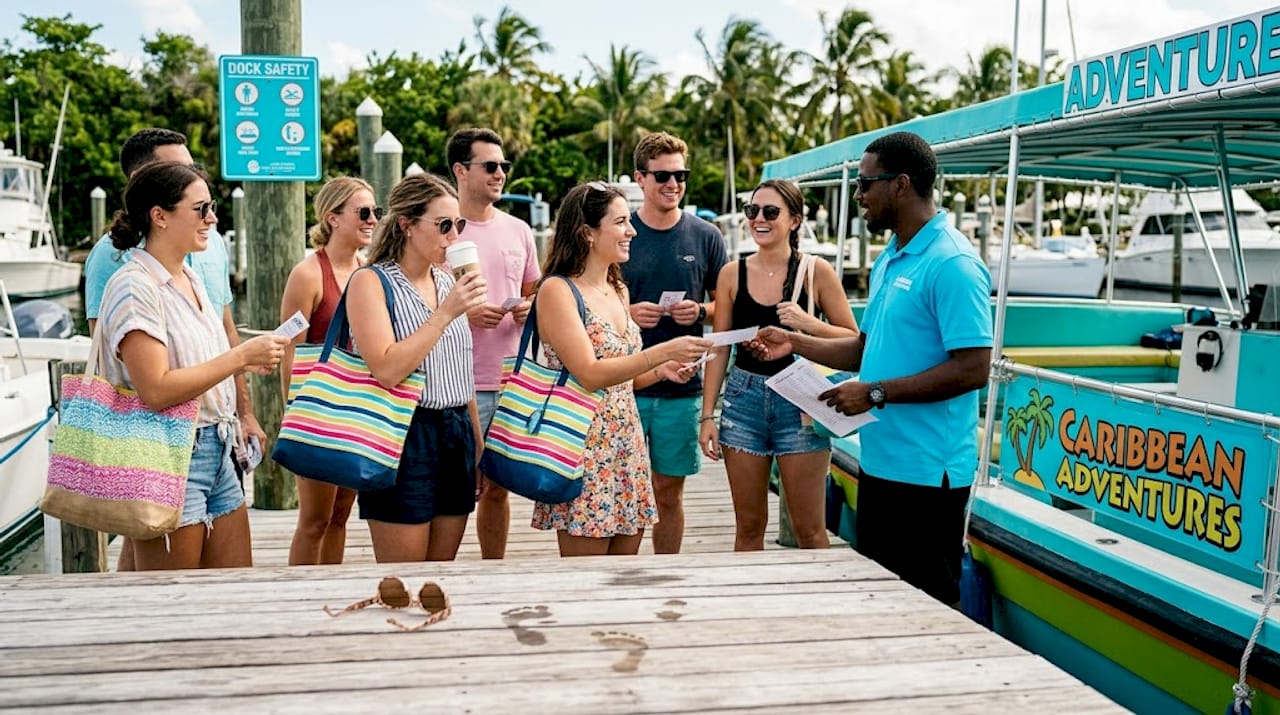
Knowing what to expect at the dock removes a lot of day-of anxiety. The check-in window is typically 15 to 30 minutes before departure, and that window closes. Operators run scheduled, capacity-managed departures to keep vessels on time. They will not hold the boat for late arrivals, even if you called ahead.
Here is a realistic picture of how boarding usually unfolds:
Arrive during the designated check-in window. The operator issues boarding passes or wristbands after confirming your reservation and group count.
Wait for general boarding to open. On public group sightseeing cruises, boarding typically starts about 20 minutes before departure and seating is first-come, first-served unless you specifically purchased reserved seating.
Attend the mandatory safety briefing. Arriving 15 to 20 minutes early is strongly advised to accommodate the safety orientation before the boat leaves the dock.
Find your seats or positions on the vessel. For large groups, this is where arriving early pays off most.
The captain or crew conducts a pre-departure safety review covering life jackets, emergency procedures, and onboard rules.
For groups traveling together, step four deserves a plan. Do not assume your whole party can wander on board separately and magically end up seated near each other. Designate a meeting spot on the dock before boarding opens and move as a group. This is especially important for families with kids or groups where some members have mobility considerations.
Pro Tip: Have one person from your group board first to hold a section of seating while the rest check in. This only works if your operator allows it, so confirm the policy when you book.
If someone in your group is prone to motion sickness, the boarding window is actually the time to act on that. Taking seasickness medication about 30 minutes before boarding and applying sunscreen before arrival are two preparation steps that pay off immediately once you are on the water.
Shared tours vs. private charters: what changes for groups
This is the decision that shapes everything else about your outing. Shared tours and private charters are fundamentally different products, not just different price points.
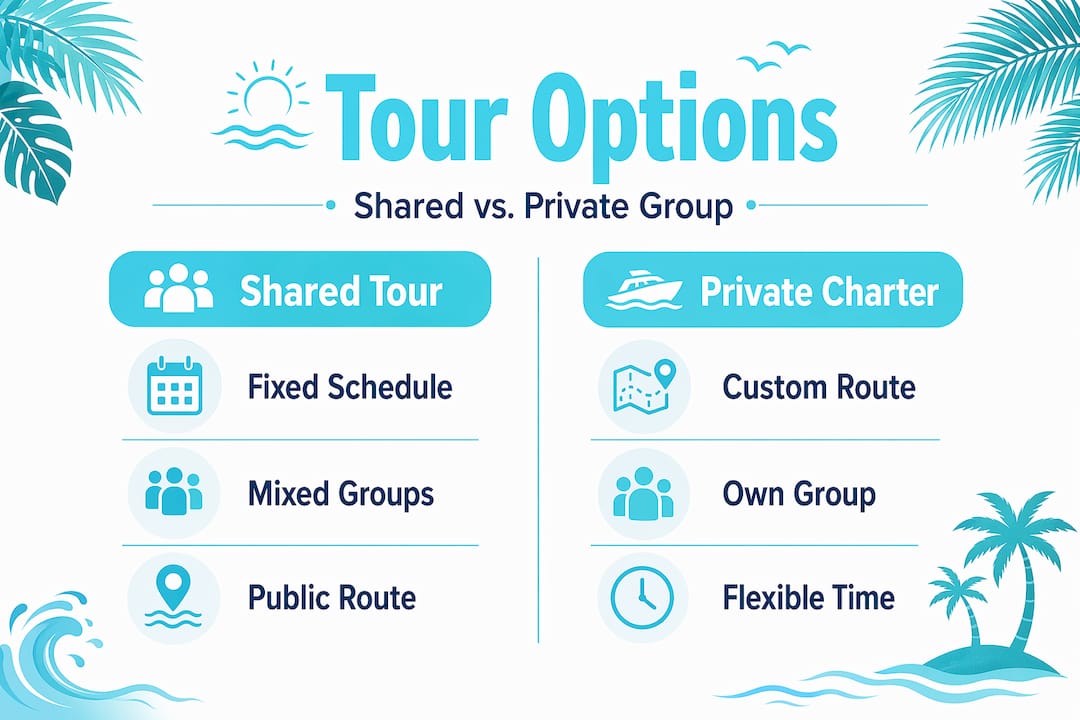
Feature | Shared group tour | Private charter |
Who’s on board | Mixed public passengers | Your group only |
Route flexibility | Fixed schedule and stops | Customizable within limits |
Timing | Set departure and return times | Negotiable windows |
Coordination | Minimal, self-managed | Dedicated coordinator available |
Best for | Smaller groups or budget travelers | Celebrations, large groups, special events |
Typical duration | Half-day to full-day options |
Shared tours function like a maritime bus. The schedule is fixed, the route is predetermined, and other passengers share the space. You get the experience at a lower price, but you give up control. For a group of six friends who just want to see the coastline, this works well.
Private charters flip that equation. Your group books the entire vessel, which means the route, pace, and vibe are entirely yours within whatever the operator permits. Private charters often use a single coordinator point of contact to handle logistics and communication, which makes a real difference when you have 20 or 30 people to manage.
For very large groups, there is a third option most people never consider. Large-group boat days often operate as a coordinated fleet of boats traveling together with scheduled raft-ups rather than cramming everyone onto one vessel. This approach gives groups over 30 or 40 people a much better experience because it keeps individual boats feeling comfortable while still creating a unified group outing. Coordinated stops, shared meals on the water, and flexible movement between boats are all possible in this format.
The choice between shared and private also shapes how you prepare. Shared tour participants need to self-manage everything because the operator’s crew is focused on the full vessel, not your specific group. Private charter groups benefit from being proactive about communicating preferences, dietary needs, or special requests before departure day. Assigning one group coordinator reduces the back-and-forth that bogs down both operators and organizers.
Benefits of group boat tours and smart planning tips
When planned well, group boat tours deliver something that is genuinely hard to replicate on land. The combination of a shared physical environment, no distractions from daily life, and a shared focus on the water creates real bonding moments.
The financial benefits of group booking are real too. Group discounts for larger bookings can bring per-person costs well below what individuals pay for the same experience. For celebrations like birthdays or bachelorette parties, splitting a private charter often costs less per person than people expect.
Here are the planning tips that actually move the needle for group outings:
Assign one coordinator. This person is the single point of contact with the operator, collects payments, and fields questions from the group. Everything runs faster with one decision-maker.
Communicate the group boat tour itinerary in advance. Tell everyone what time to arrive, where to park, what to bring, and what the operator’s cancellation policy is. Surprises create friction.
Pack smart for the whole group. Sunscreen, hats, and layers matter more than most people plan for. Sun exposure on the water is significantly more intense than on land.
Check the waiver situation before the day. Many operators require signed liability waivers. Getting 20 people to fill those out at the dock wastes everyone’s time.
Build in buffer time. Traffic, parking, and bathroom stops are all slower with a group. If the check-in window opens at 10:00 AM, aim to arrive at 9:30.
Managing different expectations within a group is also real work. A group where half the people want to swim and half want to sightsee needs a tour that accommodates both. Talk to your operator before booking about what the itinerary includes and whether adjustments are possible. This conversation is free and prevents post-trip complaints.
Pro Tip: For groups with first-timers on the water, connect them with a group tour preparation guide so they know what onboarding procedures look like. Informed participants make better group members.
My honest take after years of watching groups succeed and struggle
I have watched dozens of group outings either click perfectly or fall apart, and the difference almost never comes down to the tour itself. It comes down to preparation.
The groups that struggle share a predictable pattern: the organizer assumes everyone understands the logistics, skips the early arrival advice, and tries to figure out the payment situation the week before departure. Every one of those decisions compounds. By the time they are scrambling to collect money, confirm a headcount, and text 18 people about where to meet, the stress has already infected the day.
The groups that have a genuinely great time do one thing differently. They treat the planning phase seriously. That means the coordinator has confirmed the exact headcount 30 days out, every participant knows the arrival time, and the waiver situation is handled before anyone gets in a car.
What I find people consistently underestimate is the boarding process. Most first-timers think “15 minutes early” means showing up at the scheduled departure time minus 15 minutes. It does not. That window exists for check-in, boarding pass collection, and a mandatory safety briefing. Operators are not being rigid for fun. They run on schedules because strict check-in windows keep tours operating on time for everyone, not just your group.
My honest advice: stay in close contact with your operator from booking through departure day. Ask every question you have. The best operators expect and welcome those questions, and the answers will always make your group’s experience better.
— Troy
Plan your next group outing with Crab-island-tours
If you are planning a group outing in the Destin area and want everything handled without the usual boat rental headaches, Crab-island-tours is built exactly for that.
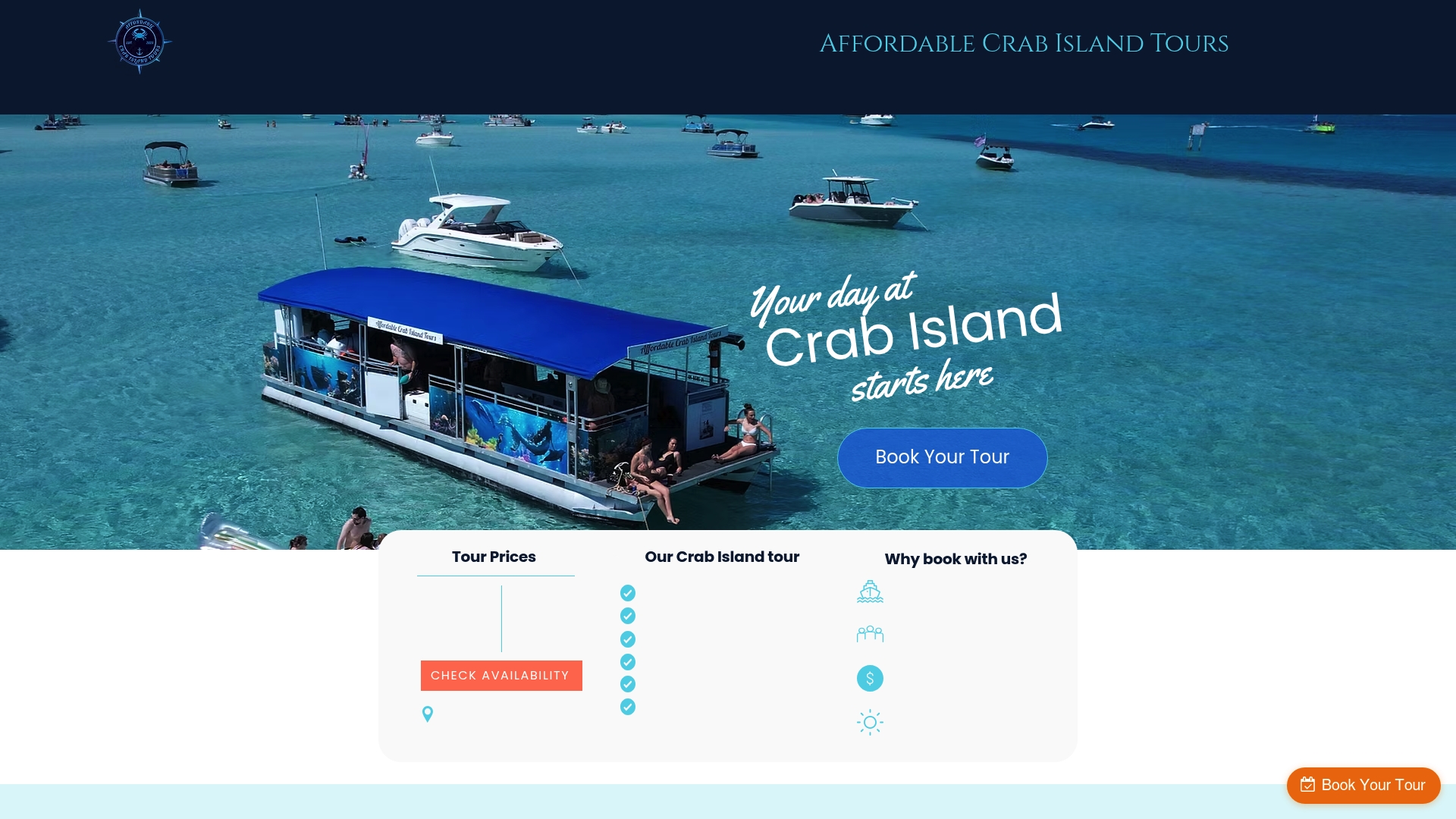
Crab-island-tours offers affordable group party boat tours to Crab Island with no logistics stress. Floats, an onboard restroom, and experienced captains are included in every package. Your group simply shows up and enjoys a full four-hour tour at a price that actually makes sense. Families, friend groups, and celebration parties consistently highlight the attentive crew and the sheer ease of the experience. There is no boat to rent, no equipment to coordinate, and no complicated booking process. Check availability and explore group pricing directly on the Crab-island-tours website to start planning a trip your group will talk about for years.
FAQ
How far in advance should groups book a boat tour?
For groups of 10 or more, booking at least 30 days in advance is strongly recommended. Many operators require full payment at that same 30-day mark and will not hold spots without it.
Can individuals in a group pay separately?
Most operators do not allow individual payments for group bookings. The group organizer typically collects all funds and submits one payment covering the entire party.
What happens if someone arrives late for boarding?
Late arrivals risk missing the tour entirely since operators maintain fixed departure times. Check-in windows close before the boat leaves the dock.
What is the difference between a shared tour and a private charter for groups?
A shared tour places your group alongside other public passengers on a fixed route. A private charter books the entire vessel for your group, offering flexible routing, timing, and a dedicated coordinator.
What should every group member bring on a boat tour?
Sunscreen applied before arrival, a hat, and any seasickness medication taken 30 minutes before boarding are the three most practical preparation steps for first-time participants.
Recommended
Comments