.png)
How Crab Island Floating Market Works: A Visitor's Guide

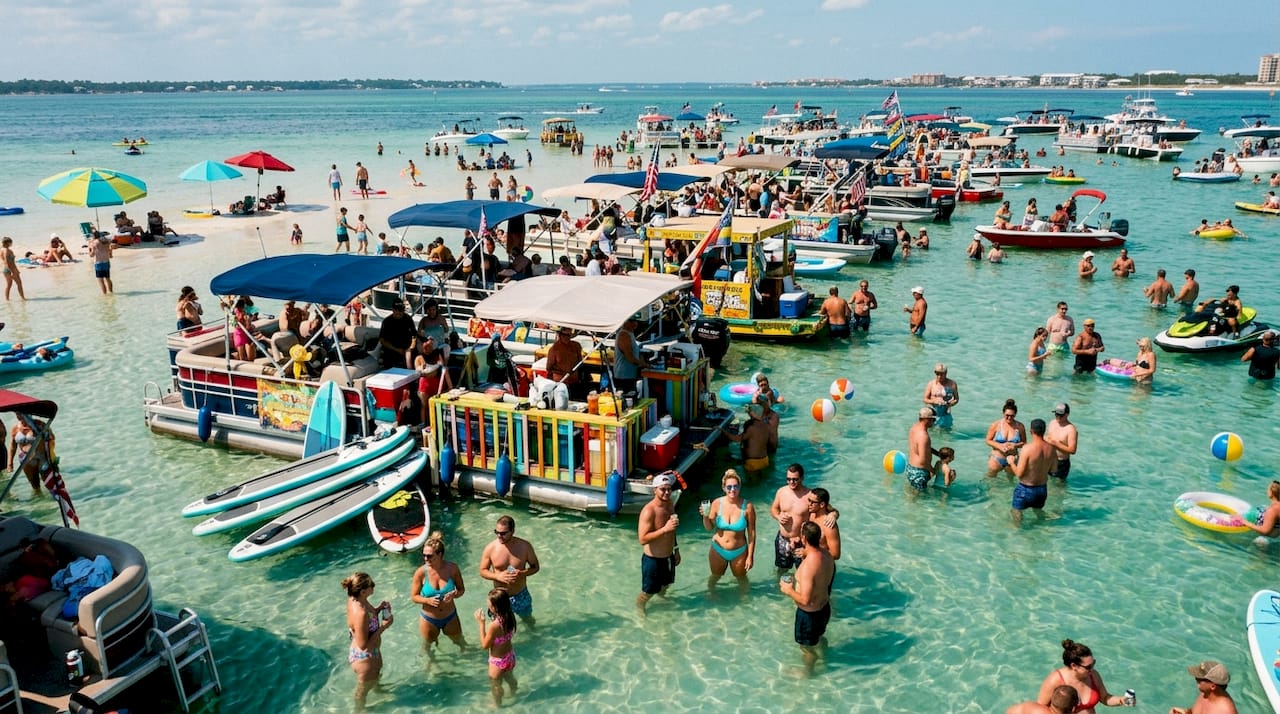
Crab Island’s floating market is defined as a spontaneous, vendor-on-water marketplace operating on a submerged sandbar in Choctawhatchee Bay, roughly 1,000 feet north of the Destin Bridge in Florida. Understanding how crab island floating market works means recognizing it as a social boating phenomenon first and a retail experience second. Vendors float in and out on boats and barges, selling food, drinks, and recreational gear directly to visitors anchored on the sandbar. There is no fixed schedule, no permanent stalls, and no guaranteed lineup. What you get depends entirely on the crowd, the weather, and the day.
How does the Crab Island floating market work?
The Crab Island floating market operates as a spontaneous aquatic marketplace where vendors navigate the sandbar on boats and barges, pulling up alongside anchored visitors to sell their goods. Unlike a traditional market with fixed stalls and posted hours, this one assembles itself organically each day. Vendors read the crowd, the weather, and the season before deciding whether to show up. That informality is exactly what makes it unlike anything else in the Gulf Coast region.
The sandbar sits in shallow, emerald-green water that stays calm enough for swimming and socializing. On busy summer weekends, dozens of boats anchor side by side, creating a floating neighborhood. Vendors weave between them, hawking everything from cold drinks to fresh coconuts. The whole setup functions more like a floating block party than a structured market.
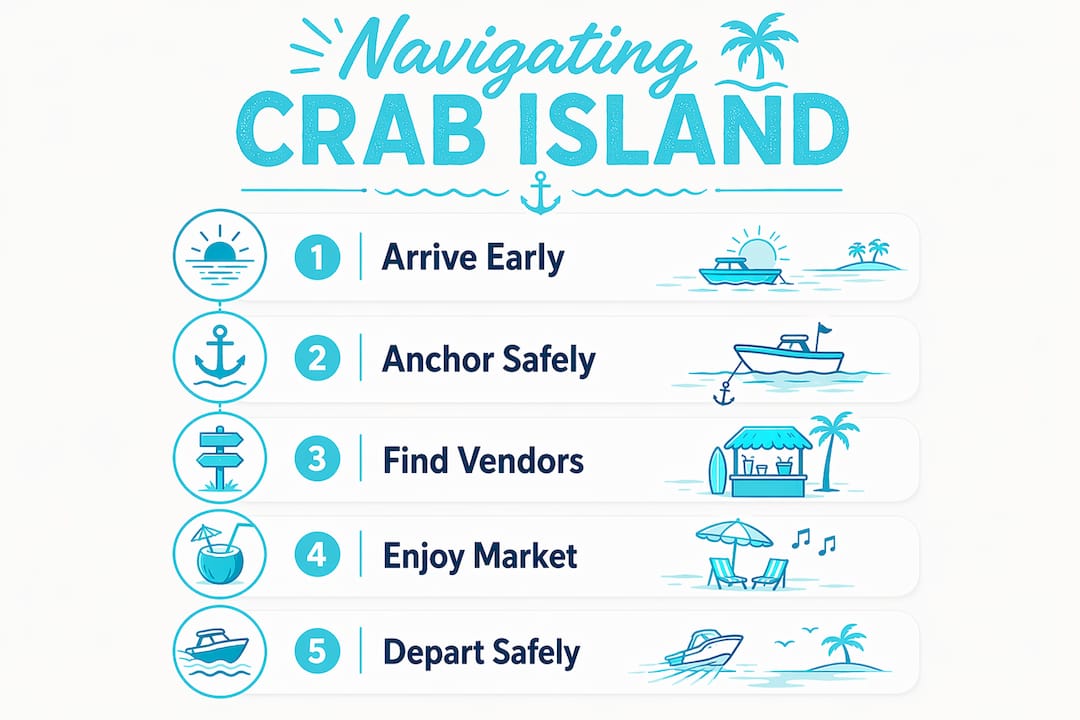
How to navigate and anchor at Crab Island for market access
Getting to Crab Island requires a boat. Most visitors travel through Destin Harbor and pass under the Destin Bridge to reach the sandbar. The route is short, but boat traffic on peak summer days is heavy, so patience and awareness matter.
Anchoring correctly shapes your entire experience. The sandbar fills up fast, and where you drop anchor determines how easily vendors can reach you. Peripheral anchoring is the standard recommendation among experienced boaters. Positioning on the outer edge of the pack gives vendors room to maneuver their barges and lets you enter and exit without fighting through a wall of boats.
Tides also matter more than most first-timers expect. High tide conditions increase water depth, improve swim safety, and make anchoring easier. Low tide can leave the sandbar exposed and navigation tricky. Checking a local tide chart before you leave the dock is one of the simplest ways to improve your visit.
Anchor type affects how well you hold position. Fluke-style anchors and sandbar stakes both work well in the soft sandy bottom. Bring a backup anchor if your group plans to stay for several hours, since wind and current can shift your position.
Check the tide chart before departure and aim to arrive at or near high tide.
Use a fluke-style anchor or sandbar stake for the soft sandy bottom.
Anchor on the outer edge of the crowd to give vendors clear access to your boat.
Bring a backup anchor if you plan to stay more than two hours.
Approach slowly through Destin Harbor and watch for jet skis and other boat traffic.
Pro Tip: Arrive early on weekends. The best anchoring spots fill up by mid-morning in peak season, and peripheral positions go first.
What do vendors sell at the Crab Island floating market?
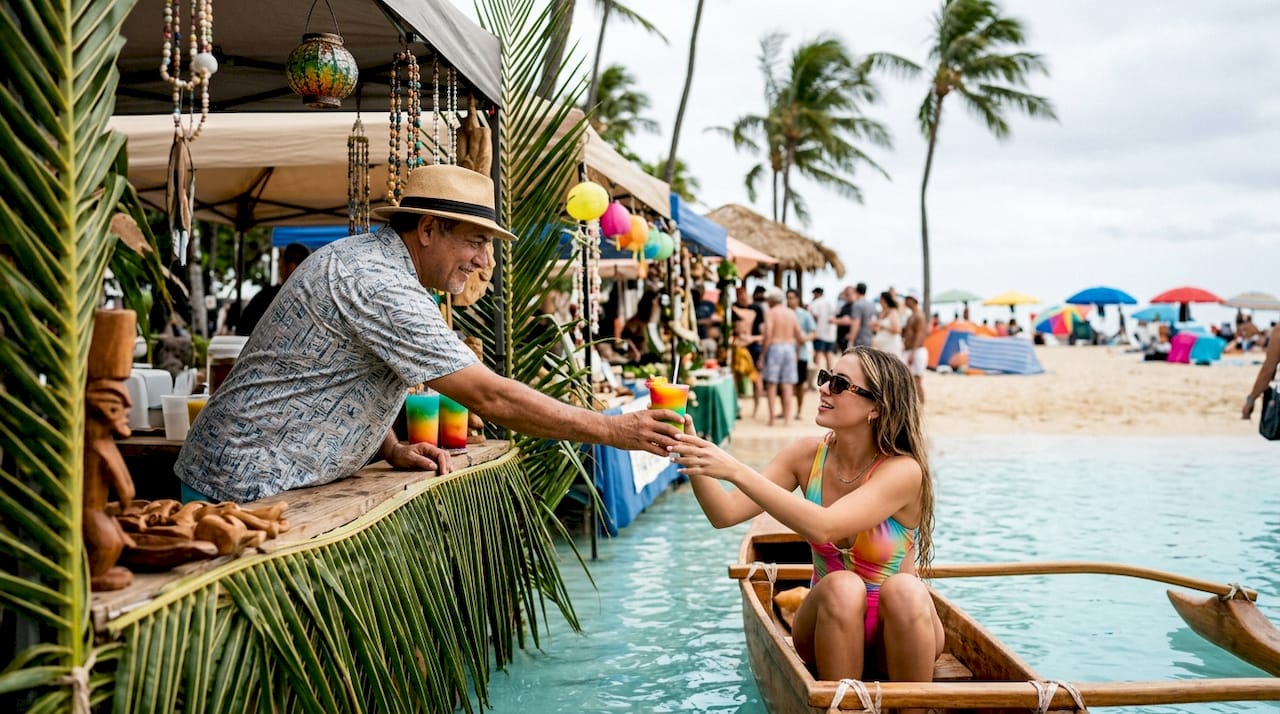
Vendor offerings at the Crab Island floating market reflect its informal, crowd-driven nature. There is no permanent food court and no guaranteed menu. Availability changes daily based on demand, weather, and how many vendors decide to show up. Treat vendor services as a bonus, not a given.
On a good day, the lineup can be genuinely impressive. Floating bars serve cocktails and cold beer. BBQ boats grill food to order. You might find sushi, Dippin’ Dots, fresh coconuts cracked on the spot, or even Chick-fil-A delivered by water. Recreational rentals, including paddleboards, water trampolines, and inflatable slides, also float through the crowd. The variety rivals a small food festival, just without the predictability.
Food: BBQ, sushi, novelty snacks, and fresh coconuts
Drinks: Floating bars with cocktails, beer, and non-alcoholic options
Recreation: Paddleboard rentals, inflatable water slides, and floating mats
Convenience items: Sunscreen, floats, and basic beach supplies
Seasonal and weather-dependent availability is the biggest variable. Vendors are most active from late may through early september, with the highest concentration on holiday weekends. Rainy or windy days thin the vendor fleet significantly. Bringing your own snacks and drinks as backup is always a good call.
Pro Tip: Cash moves faster with most vendors. Some accept card payments via mobile readers, but connectivity on the water can be unreliable. Bring both.
How does Crab Island’s market compare to traditional floating markets?
Traditional floating markets are a different concept entirely. Markets like Damnoen Saduak in Thailand operate on fixed schedules, selling locally grown produce and prepared foods as part of a community trade system that has existed for generations. These markets serve a functional economic role for river-based communities. Indonesian floating markets follow a similar model, with vendors selling tropical fruits and traditional foods from floating kitchens, originally for local trade and now partly for tourism.
Crab Island’s version shares the water-based setting but almost nothing else. It is tourist-centered, recreational, and entirely spontaneous. No agricultural goods change hands. No community depends on it for daily commerce. The market exists because boaters gather on the sandbar and vendors follow the crowd. That distinction matters when you set your expectations before visiting.
Feature | Traditional floating markets | Crab Island floating market |
Schedule | Fixed, predictable hours | Spontaneous, crowd-dependent |
Primary goods | Local produce, traditional foods | Food, drinks, recreational gear |
Purpose | Community trade and commerce | Recreation and social gathering |
Infrastructure | Established waterway routes | No fixed infrastructure |
Visitor role | Buyer in a working market | Anchored participant in social scene |
Crab Island reflects modern American boating culture at its most social. The market is a byproduct of the gathering, not the reason for it. That framing helps visitors enjoy it for what it is rather than expecting a structured shopping experience.
Tips for visiting the Crab Island market safely and enjoyably
Preparation separates a great day from a frustrating one. Recommended supplies include floating mats, umbrellas, towels, backup snacks, and sunscreen. The sandbar offers no shade, and the Florida sun is unforgiving from june through august.
Plan around the tide. High tide gives you better water depth, safer swimming, and easier anchoring. Check a local tide chart the night before.
Arrive before 10:00 AM on weekends. The sandbar fills quickly, and early arrival secures better anchoring positions.
Bring your own food and drinks. Vendor availability is not guaranteed. Treat anything you buy on the water as a treat, not a meal plan.
Respect anchoring etiquette. Leave space between boats, avoid blocking vendor lanes, and never anchor directly in front of another group’s view.
Watch children closely near vendor boats. Barges and motorized vendor crafts move through the crowd, and the water stays active all day.
Keep noise and music at a reasonable level. The sandbar is a shared space, and the community vibe depends on mutual respect.
Safety on the water requires the same attention as any boating trip. Wear life jackets for children at all times. Designate a sober driver for the boat. Know your anchor’s holding strength before you commit to a spot.
Pro Tip: Bring a Bluetooth speaker and a shade canopy. The sandbar has no trees, no umbrellas for rent, and no quiet corners. Your comfort gear is your responsibility.
Key Takeaways
The Crab Island floating market works as a spontaneous, vendor-driven social experience on a sandbar, not a structured retail market, and preparation determines how much you enjoy it.
Point | Details |
Informal vendor setup | Vendors float in and out based on crowd size and weather, with no fixed schedule or guaranteed offerings. |
Peripheral anchoring wins | Anchoring on the outer edge of the sandbar gives vendors access and makes entry and exit easier. |
Tide timing matters | Visiting at high tide improves water depth, swim safety, and overall anchoring conditions. |
Bring your own supplies | Floats, shade, snacks, and cash are not reliably available from vendors, so pack them yourself. |
Expect a social scene | Crab Island’s market is a boating culture gathering first and a shopping experience second. |
What I’ve learned from watching people get Crab Island wrong
Most visitors who leave disappointed made the same mistake. They showed up expecting a floating version of a farmers market or a food festival with a set menu and reliable vendors. That expectation sets you up for frustration.
The Crab Island floating market experience is better when you treat it like a beach day that happens to have vendors, not a vendor event that happens to be on water. The food and drinks are a bonus. The real draw is the atmosphere: dozens of boats anchored together, music drifting across the water, kids on floats, and the kind of easy socializing that only happens when everyone is already relaxed.
Timing is where most people leave points on the table. Arriving at 1:00 PM on a Saturday in july means fighting for an anchoring spot, dealing with the hottest part of the day, and finding the best vendor spots already taken. Arriving at 9:00 AM means you pick your position, set up in the shade before the crowd arrives, and watch the market build around you.
The other thing worth saying plainly: vendor reliability is genuinely unpredictable. I have seen days with ten vendor boats and days with two. Weather, season, and pure chance all play a role. The sandbar visit guide from Crab-island-tours lays this out clearly. Pack your own supplies and treat every vendor boat as a welcome surprise rather than a planned stop.
— Troy
How Crab-island-tours makes the floating market easier to enjoy
Getting to Crab Island without your own boat used to mean expensive rentals and complicated logistics. Crab-island-tours solves that directly with a budget-friendly, fully equipped tour that handles everything from anchoring to onboard restrooms.
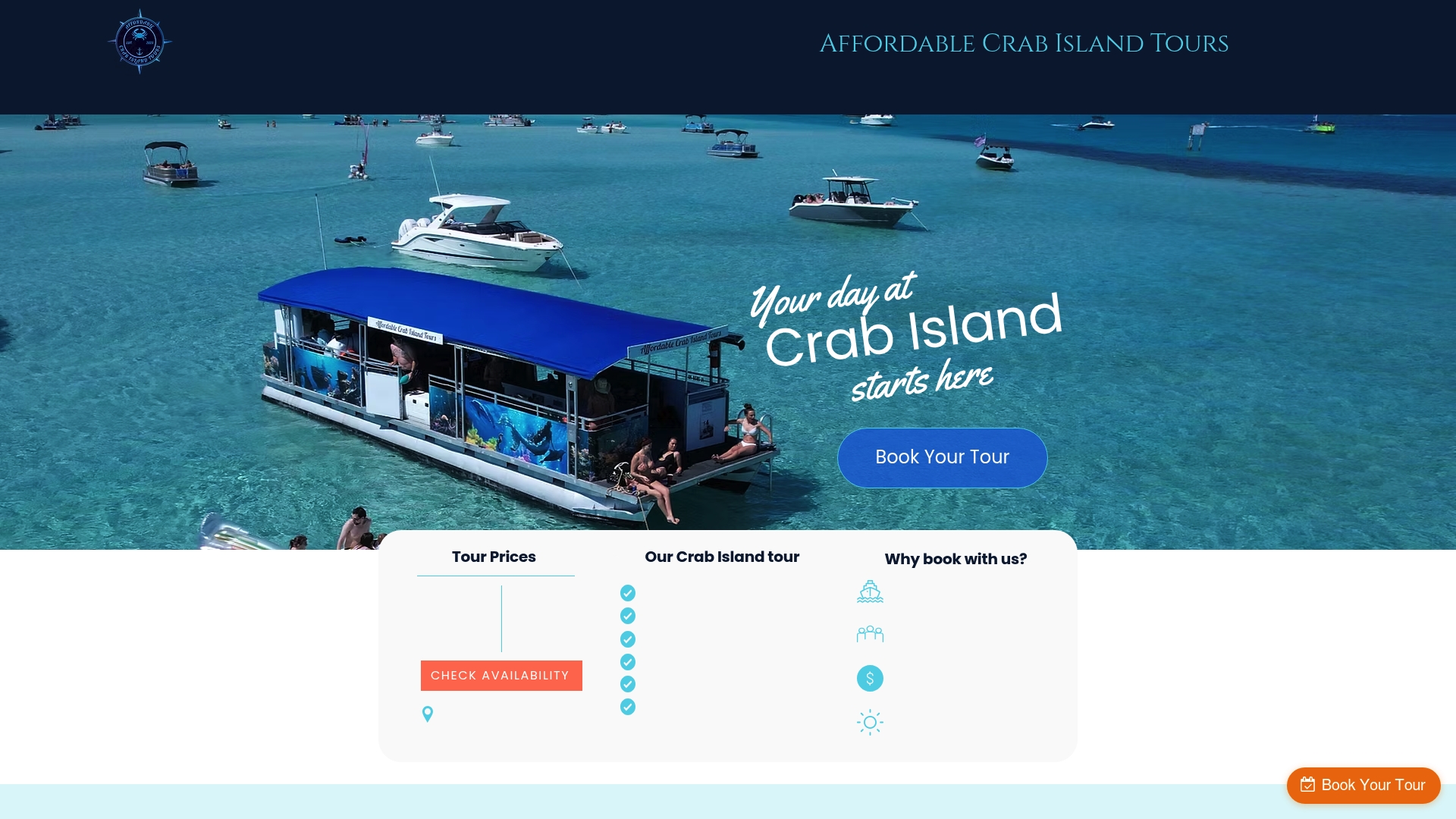
The 4-hour tour includes floats, an experienced captain, and a restroom on board, so families, couples, and groups can focus on the floating market experience instead of boat management. You show up, board, and let the crew handle the rest. Crab-island-tours has built a strong reputation in the Destin area for attentive service and genuine value. If you want a stress-free way to reach the sandbar and enjoy everything the market offers, book your tour and skip the hassle entirely.
FAQ
What is the Crab Island floating market?
The Crab Island floating market is an informal, spontaneous gathering of vendor boats and barges on a submerged sandbar in Choctawhatchee Bay near Destin, Florida. Vendors sell food, drinks, and recreational gear directly to visitors anchored on the sandbar.
When is the best time to visit the Crab Island market?
The best time to visit is during high tide on a weekday morning from late may through early september. High tide improves water depth and anchoring conditions, and weekday mornings mean fewer crowds and better anchoring positions.
Do I need my own boat to access the Crab Island floating market?
A boat is required to reach the sandbar. Visitors can rent a boat, join a guided tour like those offered by Crab-island-tours, or arrange a water taxi from the Destin Harbor area.
Are vendors always available at the Crab Island floating market?
Vendor availability is not guaranteed. Offerings depend on crowd size, weather, and the season, with the highest vendor concentration on summer weekends and holiday periods.
How should I anchor at Crab Island for the best market access?
Anchor on the outer edge of the sandbar crowd using a fluke-style anchor or sandbar stake. Peripheral positioning gives vendor barges room to reach your boat and makes entering and exiting the area easier.
Recommended
Comments