.png)
Crab Island Sandbar Visit Guide 2026

Planning a Crab Island day trip without the right information is how you end up stuck in a traffic jam of boats, anchored in the wrong spot, or turned away for a missing boater card. This crab island sandbar visit guide 2026 covers everything you need to know before you leave the dock: how to get there, what to expect on the water, when to go, and what the 2026 rules actually require. Whether you’re a first-timer or returning after a few years away, the sandbar has changed enough that a quick refresh is worth your time.
Table of Contents
Key takeaways
Point | Details |
Access by watercraft only | You must arrive by boat, jet ski, kayak, or paddleboard. There is no land access to Crab Island. |
Boater education card required | Anyone born on or after January 1, 1988 operating a motorized vessel must carry a Florida Boater Education Card. |
High tide is the sweet spot | Plan your visit during the two-hour window before and after high tide for the best water depth and clarity. |
Arrive before noon on weekends | Boat traffic peaks mid-morning on weekends. Early arrival means better anchoring spots and less congestion. |
Guided tours skip the hassle | Booking a tour means no boat logistics, no anchoring stress, and no licensing worries for most visitors. |
Your 2026 Crab Island sandbar visit guide: access and regulations
Crab Island is a submerged sandbar located roughly 1,000 feet north of the Destin Bridge in Choctawhatchee Bay. It is not an island you walk to. There is no parking lot, no beach entrance, and no ferry service run by the city. You get there by water, and that means you need to understand your options before you book anything.
Getting there: your transportation choices
Your main options are a private or rented boat, a jet ski, a kayak, a paddleboard, or a guided tour. Each comes with different costs, effort levels, and licensing requirements.
Private or rented motorized boat: Most popular for groups. Requires the most preparation, including fuel, navigation knowledge, and proper documentation.
Jet ski: Great for couples or solo riders. Fast and fun, but limited on storage for gear and food.
Kayak or paddleboard: Physically demanding and weather-dependent, but no licensing required. Only realistic if you are launching from a nearby put-in point.
Guided tour: The simplest option. You show up, someone else handles the boat, the navigation, and the anchoring.
2026 Florida boating license requirements
This is where a lot of visitors get tripped up. In Florida, operators born after January 1, 1988 must carry a Florida Boater Education Card when operating any motorized vessel with 10 or more horsepower. The card is valid for life, but you must carry it alongside a valid photo ID while on the water. Renting a boat from a local marina does not exempt you from this rule.
Boating license requirements also depend on vessel horsepower, not just your age. Some visitors assume their out-of-state boating certificate covers them in Florida. It may, but you need to verify this before you rent. Getting flagged by a Florida Fish and Wildlife officer near Crab Island is not how you want to start your vacation.
Safety rules you cannot ignore
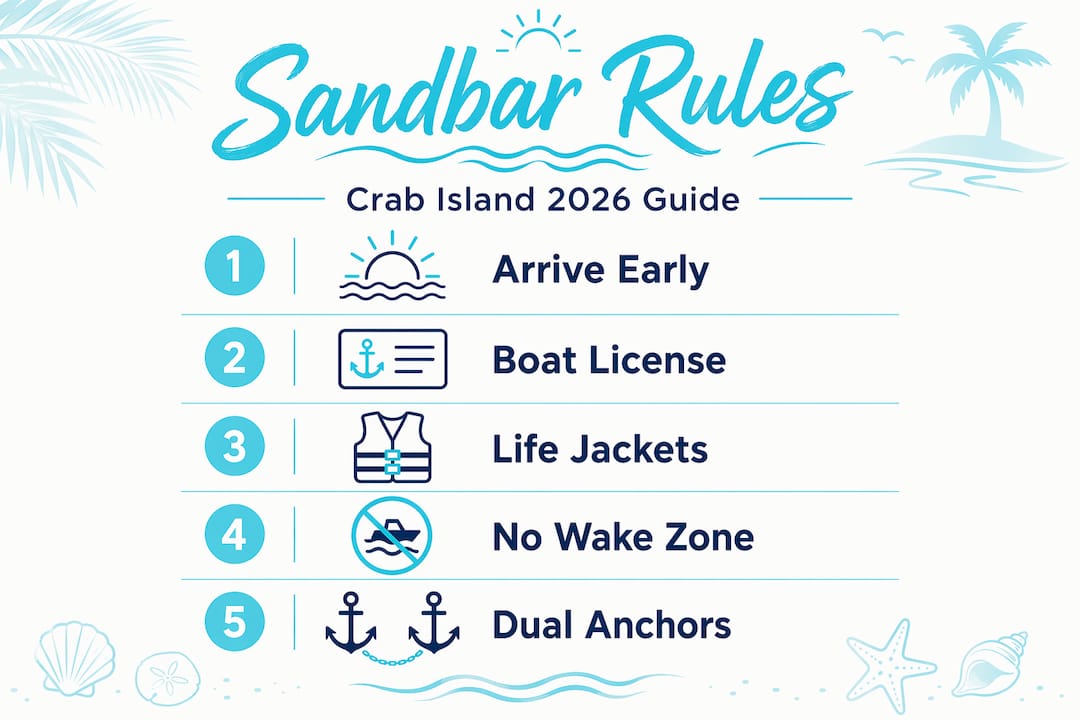
Children under 6 must wear a life jacket at all times while the vessel is underway, and life jackets must be available for every passenger on board. Florida Fish and Wildlife officers actively enforce these rules around Crab Island during summer months. Beyond the legal requirement, life jackets are just smart. The bay has boat traffic, currents, and unpredictable wakes.
Pro Tip: If you are renting a boat, confirm with the rental company that properly sized life jackets for children are included. Not all rentals stock the right sizes automatically.
Best time to visit Crab Island
Timing your visit well is one of the most underrated Crab Island travel tips. Go at the wrong time and you will be fighting for anchoring space, dealing with murky water, or floating in water so shallow your anchor drags. Go at the right time and the whole experience feels effortless.
Here is how to time your trip for the best conditions:
Check the tide chart first. The optimal visit window is the two hours before and after high tide. Water depth at Crab Island ranges from 1 to 6 feet depending on tidal stage, and high tide keeps the sandbar swimmable and comfortable.
Go on a weekday when possible. Weekend and holiday boat traffic resembles rush hour on a highway. Weekdays are noticeably calmer, especially Tuesday through Thursday.
Arrive before 10 a.m. on weekends. If a weekend is your only option, get there early. Arriving before noon gives you a real shot at a good anchoring position before the crowd fills in.
Monitor the weather forecast. Destin sees fast-moving afternoon thunderstorms in summer. Check the National Weather Service forecast the morning of your trip and have a plan to leave early if storms are building.
Avoid holiday weekends if crowds bother you. Fourth of July, Memorial Day, and Labor Day weekends push Crab Island to its absolute capacity. If you can shift your trip by even one day, you will notice the difference.
Pro Tip: Download a free tide chart app like Tides Near Me before your trip. Cross-reference the high tide time with your planned departure so you hit the sandbar during the best window, not the tail end of it.
What to do at Crab Island in 2026
The best way to describe Crab Island is a floating block party in emerald water. Popular activities include swimming, snorkeling, floating on inflatables, paddleboarding, and buying food and drinks from the floating vendors that anchor nearby. Visiting Crab Island with kids is genuinely fun because the shallow water is forgiving and the atmosphere is festive without being overwhelming.
Here is what you can expect on site:
Swimming and floating: The water is warm, clear, and shallow enough for kids and non-swimmers to enjoy. Bring an inflatable float or rent one from a vendor.
Snorkeling: The sandy bottom and clear water make for decent snorkeling, especially earlier in the day before boat traffic stirs up sediment.
On-site rentals: Kayaks, paddleboards, and inflatable toys are available for rent directly at the sandbar from floating vendors.
Floating food and drink vendors: Multiple vendors sell everything from tacos and cold drinks to frozen treats and souvenirs. Prices are higher than on land, so bring some cash and budget accordingly.
Crab Island dining options: The floating vendor scene is the main dining experience on the water. If you want a full sit-down meal, plan to head back to shore for that.
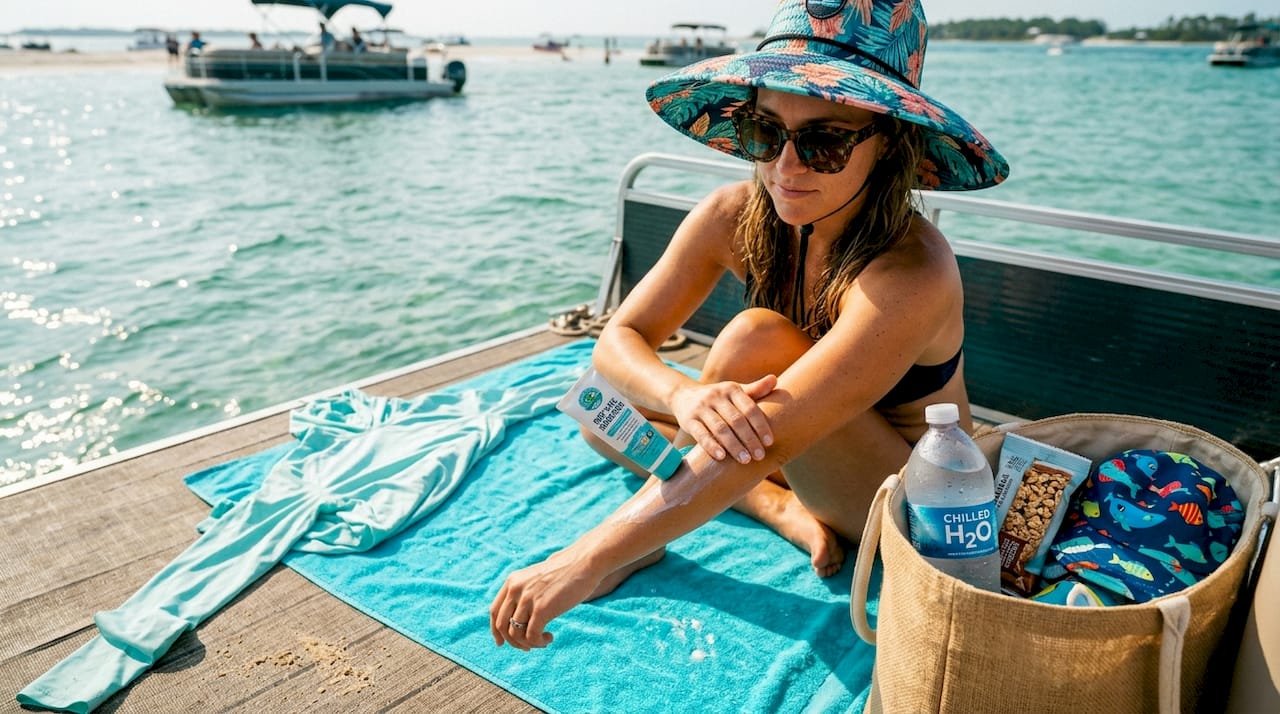
As for what to bring, sun protection is non-negotiable. The sandbar offers zero shade. Pack reef-safe sunscreen, UV-protective clothing, polarized sunglasses, and plenty of water. Dehydration sneaks up fast when you are out on the water all day.
Anchoring and navigation: how to do it right
Most Crab Island boating rules center on navigation, anchoring behavior, and speed controls rather than traditional beach restrictions. That distinction matters because many first-time visitors underestimate how much skill and etiquette goes into getting positioned correctly.
Situation | What to do | What to avoid |
Approaching the sandbar | Follow marked channels; reduce speed early | Cutting through shallow flats or ignoring buoys |
Choosing an anchor spot | Pick a spot with room to swing; account for tide shift | Anchoring too close to other boats or swimmers |
Anchor type | Fluke or sand anchors work best in sandy bottoms | Heavy plow anchors that drag in soft sand |
Speed near swimmers | Slow to idle well before the crowd | Maintaining speed until the last second |
Leaving the sandbar | Back out carefully and check for swimmers | Gunning the engine in a crowded area |
No-wake zones near Crab Island are strictly enforced. A wake from a passing boat can knock a child off a paddleboard or push a swimmer into another vessel. Officers patrol the area regularly, and citations are issued. Slow down well before you reach the crowd, not when you are already in the middle of it.
One of the most common mistakes visitors make is arriving late and trying to squeeze into a spot that does not exist. When the sandbar fills up, latecomers often anchor in poor positions that put them in the path of boat traffic or too far from the action to enjoy it. The fix is simple: arrive early, pick your spot deliberately, and set your anchor with enough scope to hold through a tidal shift.
Pro Tip: Set two anchors if you are staying for more than two hours. One off the bow and one off the stern keeps your boat from swinging into neighbors as the tide changes direction.
My honest take on visiting Crab Island in 2026
I have seen a lot of first-time visitors treat Crab Island like a spontaneous stop rather than a destination that rewards preparation. That mindset leads to frustration. You show up at 1 p.m. on a Saturday in July, spend 45 minutes looking for an anchoring spot, and then wonder why everyone else seems to be having more fun.
In my experience, the single biggest factor in a great Crab Island day is how early you commit to leaving the dock. Not just arriving early, but deciding early. People who plan their high tide window the night before, pack the cooler the morning of, and pull out of the marina by 8:30 a.m. consistently have better trips than people who figure it out as they go.
I also think the guided tour option is genuinely undervalued. Most people assume it is the “lazy” choice or that it limits your freedom. What it actually does is remove every logistical friction point from your day. No rental paperwork, no anchoring stress, no worrying about whether your boater card is current. You just show up and enjoy the water. For families with young kids especially, that trade-off is worth every dollar.
The sandbar does get crowded. That is real and it is not going to change. But the congestion is manageable if you treat it like a social scene rather than a quiet beach escape. Crab Island is loud, lively, and packed on peak days. Go in knowing that, and you will have a great time.
— Troy
Plan your Crab Island day trip with ease
Figuring out boat rentals, licensing, anchoring, and timing on your own adds a lot of friction to what should be a fun vacation day. Crab-island-tours takes all of that off your plate.
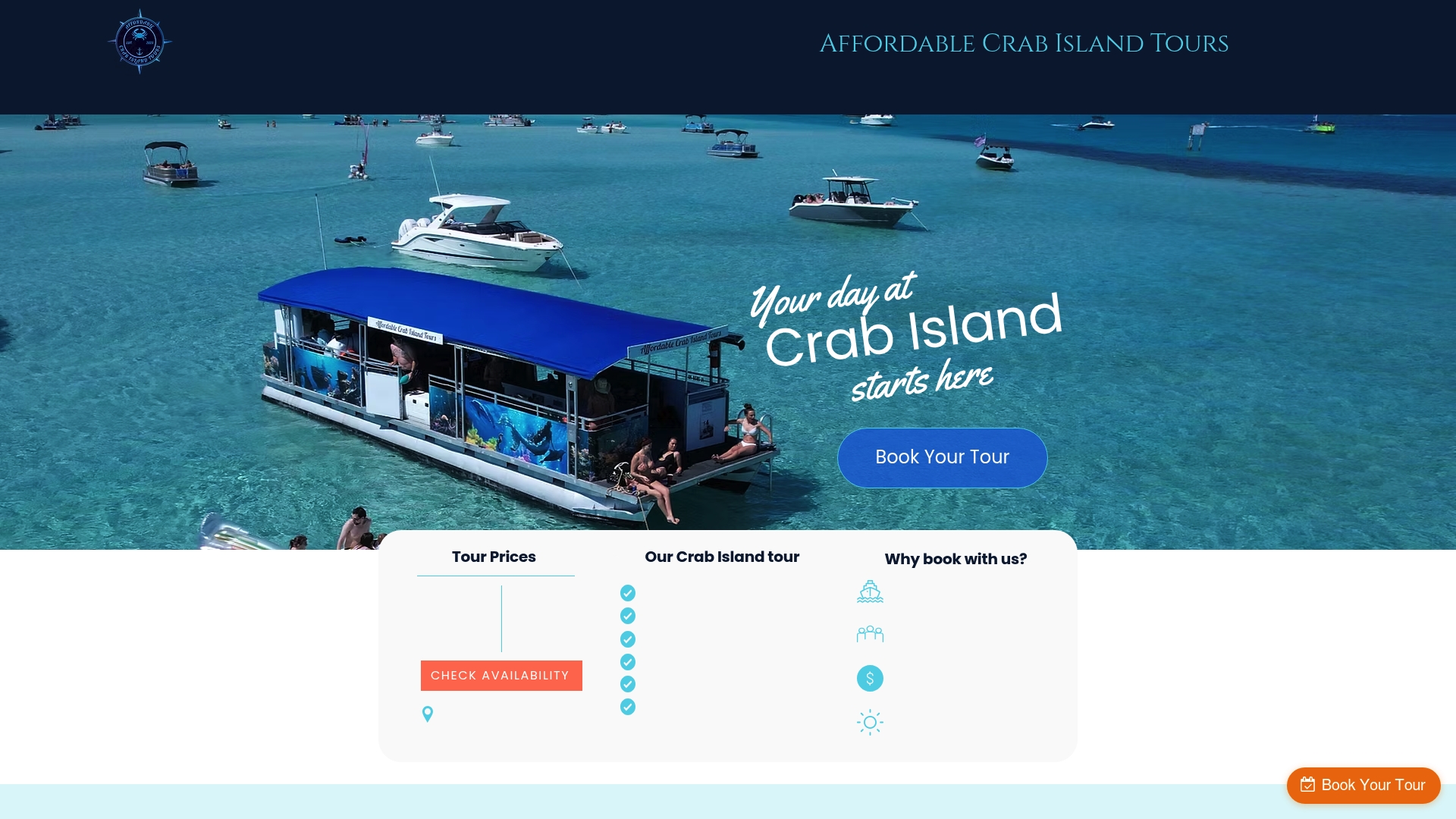
Crab-island-tours offers affordable 4-hour party boat tours that include floats, a restroom on board, and experienced captains who know exactly where to anchor and when to go. You just show up. No boat logistics, no licensing stress, no guesswork. It is one of the best-value options in Destin for families, couples, and groups who want a real Crab Island experience without the planning headache. Spots fill up fast during peak season, so book your Crab Island tour in advance and lock in your date before it is gone.
FAQ
What exactly is Crab Island?
Crab Island is a submerged sandbar located about 1,000 feet north of the Destin Bridge in Choctawhatchee Bay, Florida. It is not a traditional island. Water depth ranges from 1 to 6 feet depending on the tide.
Do you need a boating license to visit Crab Island?
Anyone born on or after January 1, 1988 who operates a motorized vessel with 10 or more horsepower in Florida must carry a Florida Boater Education Card. The card is valid for life and must be carried with a photo ID.
When is the best time to visit Crab Island?
The best time is during the two-hour window before and after high tide on a weekday morning. This gives you the best water depth, clearer conditions, and far less boat traffic than weekend afternoons.
Can you visit Crab Island with kids?
Yes. The shallow, warm water makes it family-friendly, and visiting Crab Island with kids is a popular choice. Children under 6 must wear a life jacket while the vessel is underway, and life jackets must be available for all passengers.
What food and drinks are available at Crab Island?
Floating vendors sell food, cold drinks, frozen treats, and souvenirs directly at the sandbar. Prices run higher than on land, so bring cash and pack your own snacks and water to supplement the Crab Island dining options available on the water.
Recommended
Comments